

You spot undervalued investment properties by identifying a defensible gap between the asking price and realistic value—not by chasing the cheapest listing. Compare recent, similar sales, estimate achievable rent and operating costs, and inspect repairs that could affect returns. Look beyond the property, too: employment growth, new businesses, infrastructure plans, and zoning changes may signal rising demand. Build relationships with local agents and owners to hear about off-market opportunities early. Before offering, set your walk-away price and verify the numbers. The next steps show how to apply this process with confidence.
Key Takeaways
- Build relationships with local agents, contractors, and owners to hear about potential sales before listings go public.
- Monitor public records for liens, inherited properties, ownership changes, and other signs that owners may consider selling.
- Track employment, population, business openings, zoning, and infrastructure plans to spot neighborhoods with durable growth potential.
- Compare recent nearby sales and realistic rental income with the asking price, adjusting for property condition and repair costs.
- Set a walk-away price using contractor estimates, rental demand, and target returns; make a well-supported offer without overbidding.
Define What Makes an Investment Property Undervalued
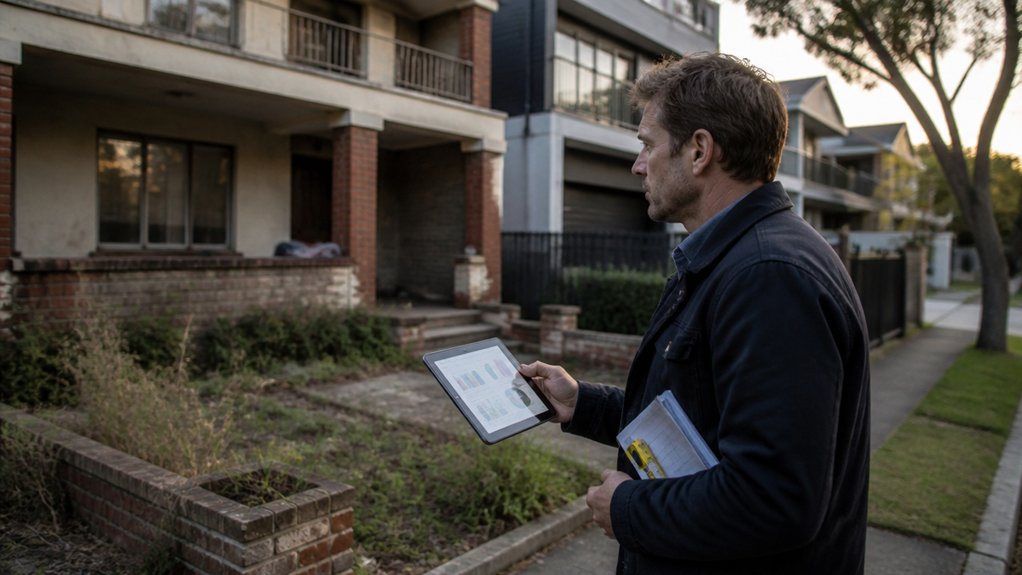
An investment property is undervalued when its price falls below what its income potential, condition, location, and comparable sales reasonably support—not simply because it looks inexpensive.
A property is undervalued when its price falls below what its income, condition, location, and comparable sales reasonably support.
To assess Market undervaluation, compare the asking price with realistic rental income, operating costs, repair needs, and recent sales of similar properties. Then test whether the numbers still work after accounting for vacancies, financing, taxes, and maintenance.
A low price can reflect genuine property disparities, such as deferred repairs or weaker demand, rather than a hidden bargain. You should distinguish temporary drawbacks from lasting risks: cosmetic updates may be manageable, while declining employment or persistent vacancies can undermine returns.
An undervalued property offers a defensible gap between price and underlying worth, with risks you can identify, quantify, and reasonably address before you commit.
Find Off-Market Investment Property Deals
You can find off-market deals by building local relationships with agents, contractors, and property owners who hear about sales early.
Monitor public records for signs of financial pressure or ownership changes that may signal a motivated seller.
Then contact owners directly with a clear, well-researched offer.
Build Local Relationships
Build relationships with local agents, property managers, contractors, and landlords to hear about potential sales before they reach public listings. These professionals often learn when owners face vacancies, repairs, financial pressure, or plans to relocate. You can become a trusted first call by explaining your buying criteria, responding promptly, and closing reliably.
Don’t ask contacts to find bargains blindly; share target neighborhoods, property types, budgets, and repair limits so they can recognize a genuine fit.
Community networking also helps you understand who owns which properties and what motivates local sellers. Pair these conversations with neighborhood analysis: learn typical rents, renovation costs, and buyer demand. That context lets you assess referrals quickly and make credible offers.
Keep in touch without pressuring people; consistent, useful communication builds trust and surfaces opportunities competitors may never see.
Monitor Public Records
Local relationships can surface leads, while public records help you spot owners whose circumstances may create a buying opportunity. Check county assessor databases, deed filings, tax records, and probate notices for clues such as long ownership, unpaid taxes, inherited properties, or recent liens.
These signals don’t guarantee a discount, but they can reveal situations other buyers overlook.
Compare records with Market trends to judge whether an owner’s property may be mispriced or simply reflects wider shifts. Use Neighborhood analysis to identify blocks where sales, rents, and property conditions diverge from area averages.
Track changes over time; one filing may mean little, while several indicators can strengthen your assessment. Verify details across sources, since records may lag or contain errors.
Organize promising leads by property, signal, and date so you can evaluate opportunities consistently.
Contact Property Owners
Once public records reveal a promising lead, a respectful, direct approach can uncover an off-market opportunity. Contact the owner with a brief letter or call that explains who you are, why the property interests you, and how you can make a straightforward offer.
Don’t assume a tax delinquency or deferred maintenance means the owner wants to sell; ask about their plans and listen before discussing price.
Use what you’ve learned to make the conversation relevant. If real estate taxes have risen or the property appears vacant, ask whether those pressures affect the owner’s decision.
For a rental, inquire about property management challenges, not just the asking price. Keep your outreach professional, follow up once or twice without pressure, and record responses.
A thoughtful conversation may reveal motivation—and terms other buyers never see.
Check Local Growth Signals That Affect Values
A property’s value can rise faster than its current price suggests when the surrounding area is gaining jobs, residents, and investment. Track employment announcements, population trends, and business openings to judge whether demand is strengthening. These Neighborhood indicators can reveal momentum before it appears in asking prices, but verify that growth is durable rather than tied to a short-lived project.
Watch zoning developments, transit plans, and public infrastructure budgets, too. A proposed station or expanded commercial district may improve access and attract employers, while restrictive zoning could limit future supply. Check planning documents, meeting minutes, and construction timelines instead of relying on rumors.
Then assess whether the property can benefit from these changes, considering its location and likely tenant appeal. You’ll spot stronger prospects when several independent signals point toward sustained local demand, not merely optimistic headlines or speculative promises.
Compare Recent Sales to Estimate Property Value

Recent comparable sales offer a practical benchmark for judging whether an asking price is fair. Start with properties sold nearby within the past few months, then compare location, size, age, and property type. Prioritize the closest matches; a broad search can distort your estimate. Adjust for meaningful differences, and note whether each sale closed above or below its original asking price. These valuation techniques help you distinguish a genuine discount from a price that merely looks attractive.
Pay attention to Market timing, too. Rising prices can make older sales less useful, while a cooling market may weaken yesterday’s benchmarks. Check several transactions rather than relying on one standout deal. Then compare your estimated value with the seller’s price and your target margin. If the gap is narrow, negotiate carefully; if it’s substantial, investigate before making an offer.
Assess Renovation Potential, Costs, and Rental Demand
A low purchase price matters only if the property’s condition and rental prospects support your returns. Inspect the roof, plumbing, electrical systems, foundation, and finishes to separate essential repairs from cosmetic upgrades. Get contractor estimates before you assume a dated kitchen or worn flooring offers easy value; hidden defects can erase your margin.
Effective Renovation budgeting includes permits, labor, materials, contingency funds, and time without rental income. Prioritize improvements tenants will pay for, not upgrades that merely suit your taste.
Then use Rental market analysis to check comparable rents, vacancy rates, tenant demand, and features renters expect in the neighborhood. Ask local property managers which upgrades shorten vacancies and which rarely justify their cost.
If demand is weak or achievable rent can’t support ongoing expenses, a seemingly inexpensive property may remain a poor investment. Your renovation plan and rental evidence should reinforce each other.
Make an Offer When the Investment Numbers Work
Once your repair budget and rental analysis support a viable return, set a maximum offer based on the property’s projected income, operating costs, financing, and a realistic contingency—not the seller’s asking price.
Then compare that ceiling with recent comparable sales and current competition. If the numbers leave room for your target cash flow and a margin of safety, submit a clear offer backed by financing evidence and a practical closing timeline.
Don’t inflate your bid to beat another buyer unless updated assumptions still support the return. Market timing can affect competition, but waiting for perfect conditions may cost you a sound opportunity.
Emotional buying can turn a disciplined investment into an expensive mistake, so define your walk-away price before negotiations begin. If the seller won’t meet it, protect your capital and move on.
Frequently Asked Questions
What Financing Options Are Available for Investment Property Purchases?
You can finance an investment property with conventional mortgages, portfolio loans, government-backed loans for eligible properties, hard-money financing, or cash.
Mortgage options differ in rates, down payments, repayment terms, and property requirements, so compare total costs—not just monthly payments.
Loan qualification typically depends on your credit, income, debt, reserves, and the property’s expected rental income.
You may strengthen your application by improving credit, reducing debt, and documenting reliable cash reserves before applying.
How Much Cash Should I Reserve for Unexpected Property Expenses?
Reserve at least three to six months of property expenses, including mortgage payments, taxes, insurance, utilities, and routine maintenance.
For older buildings or uncertain repair histories, target six to twelve months instead.
Your Emergency fund should also cover major surprises, such as roof leaks, plumbing failures, or vacancy-related costs.
A thorough Property inspection can reveal likely repairs, but don’t assume it’ll catch everything.
Keep these reserves separate from your down payment and closing costs.
What Tax Deductions Can Property Investors Typically Claim?
You can typically deduct eligible mortgage interest, property taxes, insurance, repairs, management fees, advertising, and other ordinary rental expenses.
You may also claim depreciation on the building and qualifying improvements, though land isn’t depreciable.
Strong depreciation strategies can improve cash flow, but they may affect your tax basis and future sale taxes.
Tax credits are less common and depend on your property and location.
Keep detailed records, and confirm current rules with a qualified tax professional.
Should I Manage an Investment Property Myself or Hire a Property Manager?
You should hire a property manager if your time, distance, or limited experience makes self-management a costly gamble. A good manager handles tenant relations, coordinates property maintenance, and responds to problems before they grow.
Manage it yourself if you live nearby, understand landlord laws, and can reliably handle calls, repairs, and records.
Compare management fees with the value of your time and reduced risk; the cheaper option isn’t always the better investment.
How Can I Protect My Investment Property From Liability Risks?
Protect your investment property by reducing hazards, documenting inspections, and responding promptly to repair requests.
Carry Liability insurance with limits that match your exposure, and consider an umbrella policy for added coverage.
Use Legal protections, including a properly structured ownership entity and a carefully drafted lease reviewed by an attorney.
Screen tenants consistently, follow housing laws, and keep maintenance records.
These steps won’t eliminate risk, but they can limit claims and strengthen your defense.