


Reclaimed cast iron radiators give your period home authentic character, lasting warmth, and a more sustainable alternative to buying new. Their substantial sections retain heat and release it gradually, helping rooms feel comfortable long after the heating cycles off. Choose a style that suits your home’s era, then check its condition, size, and compatibility with your heating system before purchase. With careful restoration and modern controls, you can preserve a striking original feature and discover how to make it perform beautifully for years.
Key Takeaways
- Reclaimed cast iron radiators preserve the authentic character and historical integrity of Victorian, Edwardian, and other period homes.
- Their ornate or period-appropriate designs create distinctive focal points that complement a home’s architecture.
- Durable cast iron retains heat, providing gradual, even warmth that continues after the heating system switches off.
- Reusing original radiators can be more cost-effective and sustainable than replacing them with new units.
- With professional inspection, suitable sizing, and regular maintenance, reclaimed radiators can provide dependable, long-term performance.
Are Reclaimed Radiators Right for Your Room?
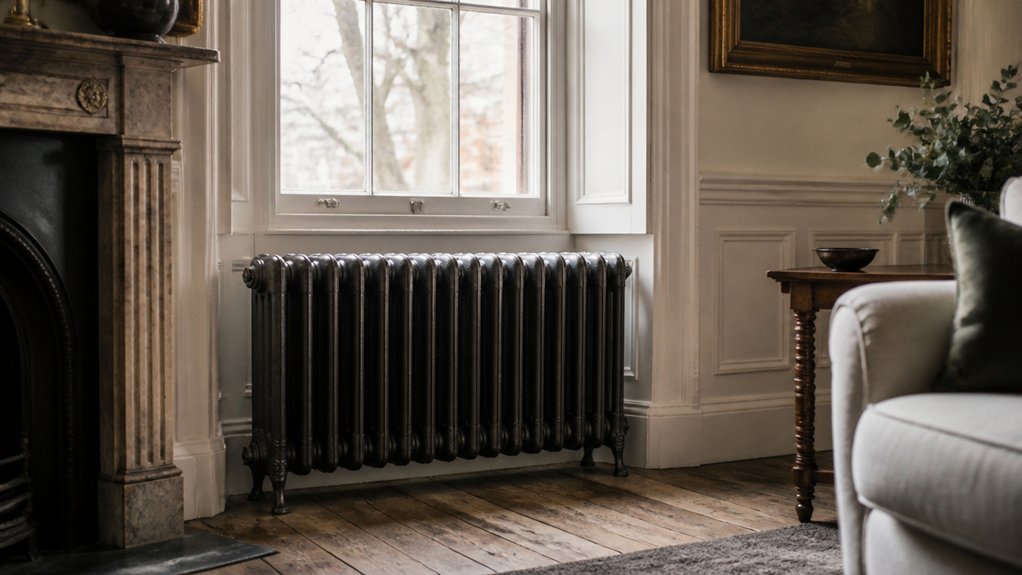
A reclaimed cast iron radiator can add period character and dependable heat, but it needs to suit your room as well as your style. Before you commit, consider the space’s dimensions, insulation, window exposure, and heating demand.
A large, draughty room may benefit from a substantial radiator, while a compact bedroom could feel crowded by an oversized model. Cast iron warms gradually and retains heat, which can support comfort, but it won’t automatically improve energy efficiency.
Your boiler, controls, and household habits matter, too. Check that the radiator’s condition and output match your heating system, and budget for professional testing and preparation.
Modern installation can integrate a reclaimed piece with contemporary controls and pipework, helping you balance authentic character with practical, reliable warmth. If your room’s needs align, it can be a lasting investment.
Choosing Reclaimed Cast Iron Radiators
Choose a reclaimed radiator with sound sections, secure joints, and no signs of active leaks to avoid costly surprises.
Then compare its proportions, detailing, and finish with your home’s period features. A well-matched piece preserves character while delivering lasting value.
Assessing Radiator Condition
Although reclaimed cast iron radiators bring character to a period home, their condition determines whether they’re a sound investment. Inspect each unit carefully, or ask a specialist to assess it before you buy. Look for cracks, corrosion, leaks, damaged sections, and signs of poor repairs; even small defects can lead to costly restoration.
Ask whether the radiator has undergone pressure testing and whether valves, plugs, and connections work properly. A reputable seller should disclose its history and provide clear photographs or inspection records.
Don’t judge performance by appearance alone: internal sludge can restrict heat output and undermine energy efficiency. Factor restoration, transport, and installation considerations into your budget, since a low purchase price may conceal substantial costs.
Choose a sound radiator with repair needs you can verify, price, and manage.
Matching Period Features
To make reclaimed cast iron radiators feel at home, match their proportions and detailing to your property’s period features. In a Victorian room, ornate columns and generous heights can echo original joinery; in a Georgian interior, simpler profiles may better suit restrained mouldings.
Measure carefully: a radiator that overwhelms a fireplace or sits awkwardly beneath a window can disrupt the room’s balance. Consider the finish, too. A carefully chosen colour can complement timber floors, stonework, or existing metalwork without turning the radiator into a visual afterthought.
Don’t sacrifice performance for authenticity. Check heat output against your room’s requirements, and ask a specialist how modern installation can preserve character while supporting energy efficiency.
The right reclaimed model won’t merely look appropriate; it’ll make your period home feel thoughtfully restored.
How Cast Iron Radiators Heat a Room
How do cast iron radiators warm a room so steadily? They heat through both radiation and convection. As hot water flows through the sections, the iron absorbs warmth and radiates it toward you, while warming nearby air that circulates around the room.
This substantial metal retains heat, so you’ll feel a gradual, even comfort rather than sharp bursts followed by rapid cooling.
That thermal mass can support energy efficiency when you pair the radiator with well-controlled heating and suitable insulation. You won’t automatically save energy simply by choosing cast iron; system design and operating habits matter.
A modern installation can connect reclaimed radiators to compatible boilers or heat pumps, with valves that help you manage output room by room. You gain dependable warmth, lasting performance, and a practical way to bring historic craftsmanship into everyday comfort.
Match Radiator Styles to Your Home’s Era
Choose a radiator that reflects your home’s architecture, and you’ll preserve its character while adding lasting value. Victorian and Edwardian profiles bring period-appropriate detail, while Art Deco and mid-century styles suit homes with cleaner lines.
Match the design to your era, then compare sizes and finishes to find a reclaimed radiator that fits your space.
Victorian and Edwardian Profiles
Victorian and Edwardian homes call for radiator profiles that complement their distinct architectural character. If your rooms feature ornate cornices, deep skirting boards, or high ceilings, choose a reclaimed cast iron radiator with decorative columns and substantial detailing. Its sculpted silhouette feels at home beside period joinery, while dependable heat adds everyday value.
For an Edwardian interior, you might prefer a lighter profile with simpler lines and balanced proportions. That restraint suits the era’s brighter rooms and refined finishes without sacrificing authentic character.
Before buying, compare radiator height and width with your available wall space, then check heat output against room size. A well-chosen model won’t just echo your home’s history; it’ll become a lasting focal point.
Though industrial design and contemporary applications can inspire new uses, keep the profile true to your period architecture.
Art Deco and Mid-Century Styles
If your home dates from the Art Deco or mid-century era, match its cleaner geometry with a reclaimed cast iron radiator that has streamlined columns and restrained detailing. You’ll preserve period character without introducing ornate flourishes that compete with the room’s crisp lines.
Choose a proportion that suits your windows and wall space; a well-scaled radiator can feel intentional, not merely functional. Reclaimed models also offer a distinctive alternative to mass-produced units, adding authentic material presence that buyers notice.
Pair yours with a carefully selected finish to complement original timber, terrazzo, or muted palettes. For Modern energy efficiency, have a heating specialist assess output and system compatibility before installation.
With the right controls and sizing, you can enjoy dependable warmth while maintaining Contemporary design. This considered choice connects your home’s history with everyday comfort.
Check Radiator Size and Heating-System Fit
Before buying a reclaimed cast iron radiator, confirm it can heat the room and connect to your system. Measure the space, then calculate the room’s heat loss using its dimensions, insulation, window area, and exposure. A radiator that’s too small may leave you cold; an oversized one can waste energy and crowd a period interior. Check the unit’s heat output at your system’s operating temperature, not just its dimensions.
Next, verify pipe connections, valve positions, and whether your boiler or heat source supports the radiator’s requirements. Ask a qualified heating professional to assess compatibility before you commit.
Modern installation can integrate reclaimed radiators with updated controls, helping you balance comfort and energy efficiency. Confirm delivery access and floor capacity, too: cast iron is heavy.
Careful checks protect your budget and validate the radiator suits your home.
Restore and Maintain Reclaimed Radiators
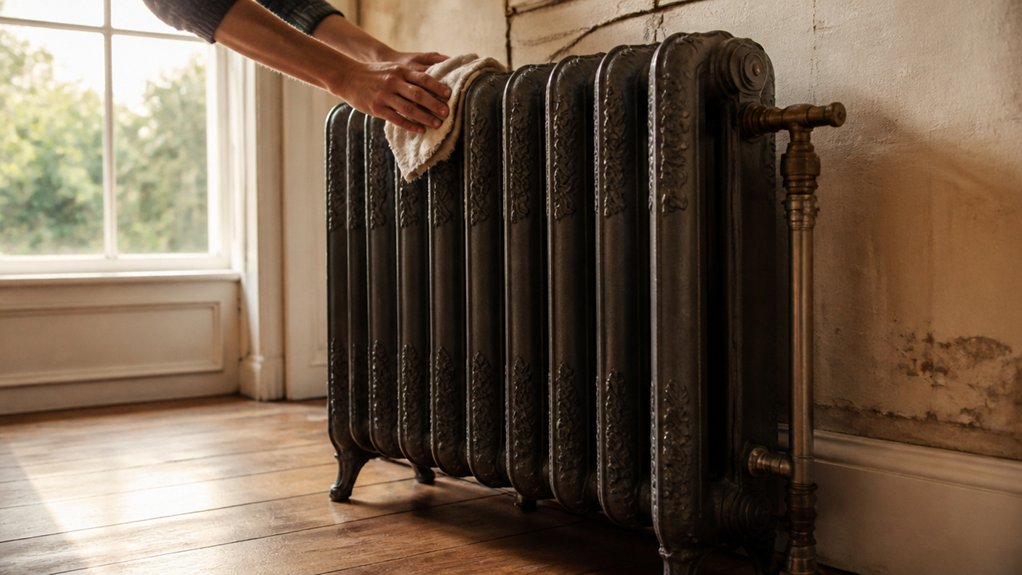
Once you’ve chosen a reclaimed radiator, inspect it for leaks, corrosion, damaged sections, and old paint that may contain lead. Have a qualified specialist pressure-test the unit and assess whether it needs blasting, repainting, new valves, or replacement sections. Lead-safe preparation protects your household and preserves the radiator’s finish.
Before installation, confirm your heating system can support the radiator’s weight and connections. Older units may bring installation challenges, including uneven floors, tight access, and incompatible pipework. Budget for skilled handling and any necessary upgrades; a careful restoration often costs less than replacing a distinctive period feature.
To improve Modern efficiency, pair the radiator with thermostatic valves and balance the system for even heat. Bleed it regularly, check joints for leaks, and keep painted surfaces clean. Routine professional servicing helps your reclaimed radiator deliver dependable warmth for years.
Frequently Asked Questions
Can Reclaimed Cast Iron Radiators Increase a Period Home’s Resale Value?
Yes, reclaimed cast iron radiators can boost your period home’s resale appeal, though they won’t guarantee a higher sale price.
Picture buyers noticing original details that make a house feel authentic: Vintage charm and aesthetic appeal can help your property stand out.
You’ll gain the most when radiators suit the home’s era, work efficiently, and look well maintained.
Ask a local agent whether buyers in your market value these features before investing.
Are Reclaimed Radiators Environmentally Friendly Compared With Newly Manufactured Models?
Yes, reclaimed radiators are generally more environmentally friendly than newly manufactured models because you reuse existing cast iron instead of demanding new raw materials and energy-intensive production. These eco-friendly benefits can reduce embodied carbon and keep bulky metal out of landfill.
Their material durability also matters: cast iron can serve for decades when properly restored and maintained. You’ll still want to check each radiator’s condition, efficiency, and transport distance before buying to confirm its overall environmental advantage.
Where Can Homeowners Find Authentic Reclaimed Cast Iron Radiators?
You can find authentic reclaimed cast iron radiators through architectural salvage yards, specialist radiator dealers, online marketplaces, and local demolition or renovation firms.
Ask sellers about provenance, original fittings, pressure testing, and refurbishment so you know what you’re buying.
Compare dimensions and heat output before committing, and request clear photographs of every section.
For vintage authenticity and striking decorative accents, choose a reputable supplier who offers restoration support, delivery, and transparent condition reports.
Do Reclaimed Radiators Qualify for Historic-Home Renovation Grants?
Yes, reclaimed radiators can qualify for historic-home renovation grants, but the rules aren’t set in stone. Your eligibility depends on the grant program, property designation, and whether the work preserves significant features.
Demonstrate historic authenticity and architectural integration with product records, photographs, and a clear restoration plan. Before buying, confirm the radiator meets program requirements and get written approval; otherwise, you could invest in a beautiful upgrade that won’t receive funding.
Can Reclaimed Radiators Be Paired With Smart Thermostats?
Yes, you can pair reclaimed radiators with smart thermostats, provided your heating system supports compatible controls.
Smart integration lets you schedule heating, adjust settings remotely, and improve temperature control without replacing the radiators themselves.
For best results, ask your installer to check your boiler, valves, and wiring before you buy.
Smart thermostatic radiator valves can control individual rooms, helping you preserve the radiators’ character while making everyday comfort more convenient and potentially reducing wasted energy.