
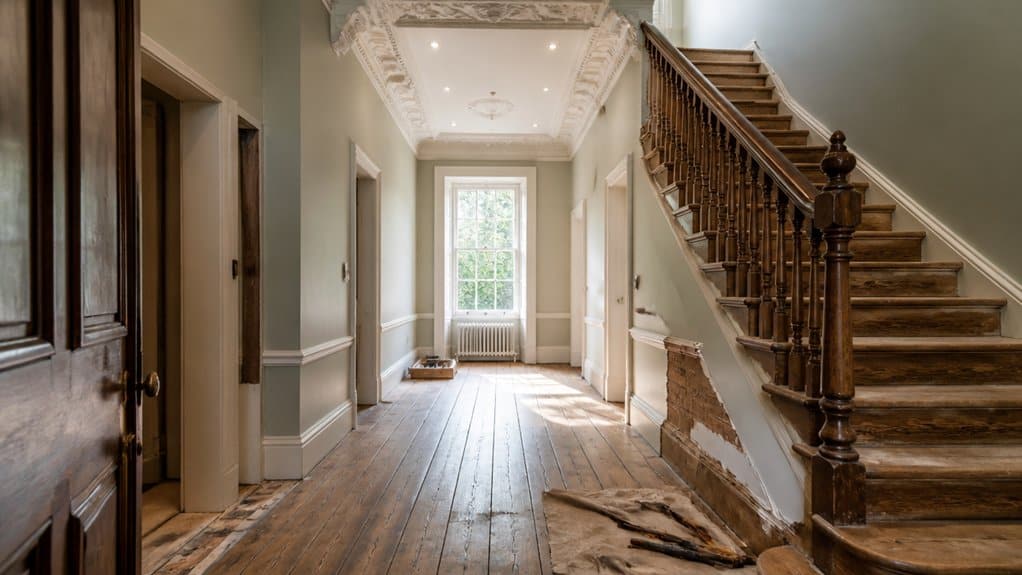
You can modernize a Georgian townhouse without sacrificing the details that make it distinctive. First, check whether listing or conservation-area rules require consent, then commission a thorough survey and plan repairs in priority order. Choose tradespeople experienced with historic properties, and repair original features wherever possible. Use breathable, period-appropriate materials, such as lime mortar, and upgrade heating, wiring, and lighting discreetly. With careful planning, you’ll protect your home’s character, comfort, and market appeal. The steps below show you how.
Key Takeaways
- Check listed-building and conservation-area rules with your local planning authority before altering façades, windows, interiors, or boundaries.
- Commission a thorough survey, document original features, and prioritize structural repairs, roof work, and damp control.
- Repair rather than replace Georgian details, using experienced heritage tradespeople and traditional, breathable materials such as lime mortar.
- Upgrade wiring, plumbing, heating, and insulation carefully, concealing services to protect historic fabric and preserve period sightlines.
- Integrate kitchens, bathrooms, lighting, and landscaping with the townhouse’s proportions and character, consulting heritage specialists where needed.
Check Planning Rules for Georgian Townhouses
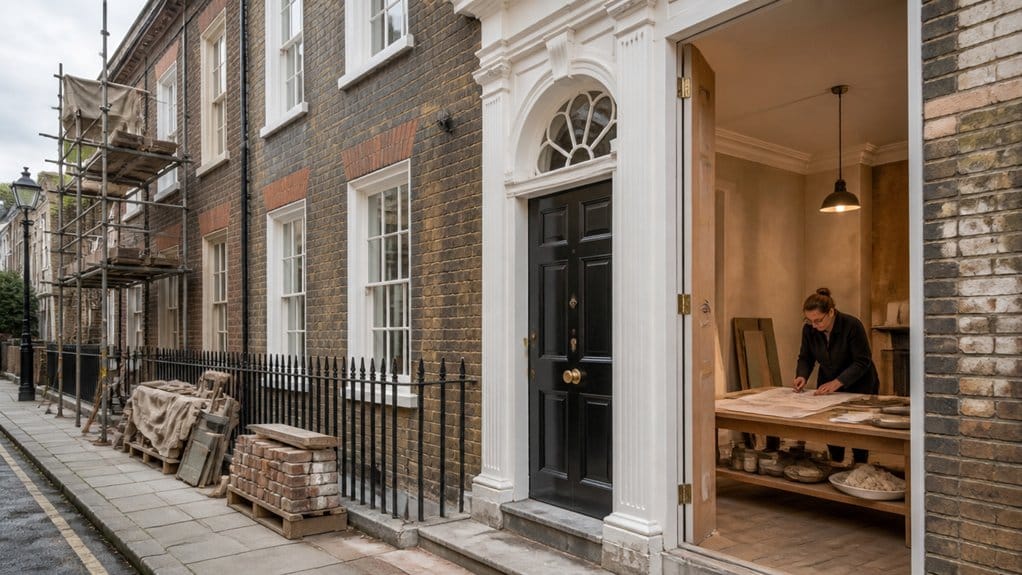
Before you plan any work, check whether the townhouse is listed or sits in a conservation area—both can restrict changes to its historic features and exterior. Contact your local planning authority to confirm which rules apply, and don’t assume that routine upgrades are exempt.
Listed status may require consent for alterations to original windows, doors, brickwork, or interior features. Conservation-area controls can also affect façades, extensions, and boundary walls.
Check Urban zoning policies, too: they may limit permitted uses, building height, or changes visible from the street. Ask whether you’ll need planning permission, listed building consent, or Building permits before appointing contractors.
Starting without required approvals can trigger enforcement, costly reversals, and delays that weaken your investment. Get written guidance early; clear compliance protects your budget, timetable, and the townhouse’s market appeal.
Survey and Plan Your Georgian Townhouse Restoration
Before you commit to a budget, commission a thorough survey to uncover structural issues, damp, and period features.
Use those findings to prioritize repairs and shape a restoration plan that protects your townhouse’s character and your investment.
A clear scope now helps you control costs and avoid expensive surprises.
Assess the Building
A successful Georgian townhouse restoration starts with a thorough survey, not a shopping list of upgrades. Walk every room, basement, and roof space, recording cracks, damp, timber decay, and signs of movement. Don’t mistake cosmetic damage for a minor issue: water ingress can conceal costly structural problems.
Ask a conservation-accredited surveyor to assess structural integrity and identify repairs that need specialist attention. Check original features, including sash windows, staircases, plasterwork, fireplaces, and floorboards; document their condition before anything is removed or altered.
Historical accuracy matters, but so does knowing which elements are later additions. Review available plans, previous surveys, and local heritage listings to understand the building’s history and constraints.
A clear, evidence-based picture helps you protect valuable character, avoid preventable surprises, and judge the property’s true restoration potential before committing further.
Plan the Restoration
Once the survey clarifies the townhouse’s condition and heritage constraints, turn its findings into a phased restoration plan. Prioritize urgent structural repairs, damp control, and roof work before cosmetic upgrades; this sequence protects your investment and prevents costly rework.
Set a realistic budget with a contingency, then obtain approvals for any listed-building or conservation-area changes before appointing specialists. Ask your architect to coordinate trades, materials, and timelines, preserving original joinery, plasterwork, and fireplaces wherever practical.
Plan modern comfort discreetly: upgrade services, improve energy performance, and layer interior lighting to complement historic proportions.
Include landscaping design early, so garden access, drainage, and period-appropriate planting align with the interior scheme.
Review milestones regularly, document decisions, and keep a reserve for surprises. A clear plan helps you control costs while protecting character and resale appeal.
Choose Tradespeople for Georgian Townhouse Repairs
Choose tradespeople who’ve restored Georgian properties, where period materials and detailing demand specialist judgment.
Verify their heritage experience, then check references from clients with comparable repairs.
This due diligence helps you protect your home’s character and avoid costly rework.
Verify Heritage Experience
Before you hire, verify that a tradesperson has hands-on experience with Georgian townhouses—not just general renovation work. Ask how they’ve handled period features such as sash windows, lime plaster, original joinery, and historic brickwork. Their answers should show they understand how traditional materials behave and why modern shortcuts can cause lasting damage.
Check whether they hold relevant Heritage certification, but don’t treat credentials as a substitute for practical skill. Ask what Preservation challenges they’ve encountered, from sourcing compatible materials to meeting conservation requirements, and how they adapted their methods.
A capable specialist will explain the reasoning behind each repair, identify risks before work begins, and distinguish what needs restoration from what should remain untouched. You’ll protect your home’s character, control costly surprises, and invest in workmanship suited to its architectural value.
Check Specialist References
A specialist’s heritage experience matters, but references show whether it consistently delivers. Ask for recent clients whose Georgian townhouse repairs resemble yours, then contact them directly. Find out whether the tradesperson met deadlines, controlled costs, communicated clearly, and handled surprises without compromising original features.
Go beyond polished testimonials. Request photographs of completed work and, where possible, visit a finished project. Ask clients whether the team maintained historical accuracy in details such as plasterwork, joinery, and stonework. Check how they approached material sourcing, including reclaimed or compatible materials, and whether substitutions were agreed before installation.
Confirm references independently, and look for consistent feedback across several projects. A reliable specialist won’t hesitate to connect you with past clients. Their candid accounts can reveal how your home will be treated—and help you choose confidently before signing a contract.
Repair Original Georgian Features First
When original Georgian features survive, repair them before considering replacements. A skilled conservator can assess timber sash windows, shutters, staircases, doors, and joinery, then recommend targeted work that retains their craftsmanship.
Don’t remove a sound feature simply because it looks worn; careful repairs often cost less than bespoke replacements and protect the details buyers value.
Restore Decorative plasterwork with specialist attention, since careless patching can erase crisp period profiles. Check that period appropriate fixtures remain serviceable, and repair them where possible rather than stripping out character.
Before work begins, photograph each feature and record its condition, so you can track progress and resolve disputes.
Prioritise urgent defects, such as water ingress or loose balusters, while preserving intact fabric. This approach safeguards authenticity, supports long-term value, and makes your restoration more compelling to discerning purchasers.
Choose Period-Appropriate Materials for Repairs
Choose repair materials that match the townhouse’s age and construction, not just its appearance. Georgian buildings rely on breathable materials and traditional joinery; modern substitutes can trap moisture, accelerate decay, and undermine future resale value. Before you buy, ask a conservation specialist to identify original finishes and specify compatible replacements.
For masonry, use lime mortar rather than hard cement, which can damage soft historic brick. Select period appropriate paint with a breathable finish, and test colors against surviving layers instead of guessing from a showroom sample.
Where boards need replacement, source timber that matches the species, width, and finish of your authentic floorboards. Keep invoices and material specifications with your restoration records.
Thoughtful choices protect architectural integrity, reduce costly rework, and give buyers confidence that your townhouse’s character is genuine—not merely recreated.
Add Modern Comforts Without Losing Character
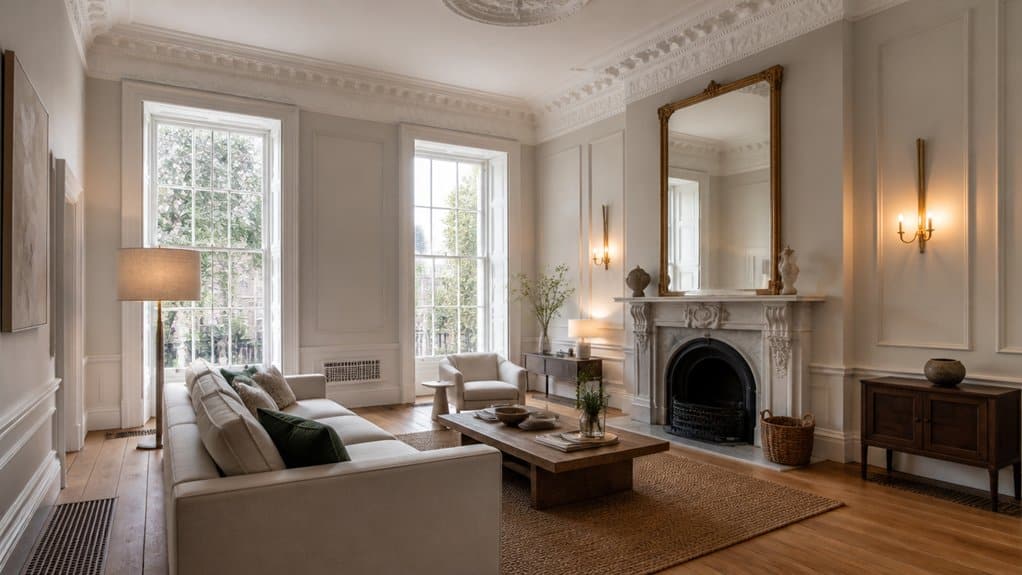
Preserve the townhouse’s historic character while upgrading the systems you rely on every day. Start with a careful assessment of wiring, plumbing, insulation, and heating before you plan contemporary upgrades. You’ll avoid costly rework and protect original plaster, timber, and decorative details.
Choose discreet solutions that improve comfort without competing with period features. Underfloor heating can sit beneath suitable flooring; slimline radiators and well-placed vents can keep rooms comfortable while preserving sightlines. Add efficient lighting and smart controls, but conceal cables and equipment wherever practical.
In kitchens and bathrooms, innovative design lets you integrate modern convenience behind cabinetry and finishes that respect the home’s proportions.
Work with specialists who understand historic fabric and local regulations. Thoughtful upgrades can reduce running costs, support resale appeal, and make daily life easier—without making your Georgian townhouse feel like someone else’s home.
Frequently Asked Questions
How Can I Research the History of My Georgian Townhouse?
Start with your local archive: more than 90% of England’s historic buildings aren’t formally listed, so your townhouse may hold untapped stories.
Search census returns, deeds, maps, newspapers, and planning files for former owners, alterations, and original uses.
Compare historical records with architectural details, such as sash windows, brickwork, and staircases.
Ask your council’s conservation officer or a local history group to verify clues and point you toward specialist sources.
What Grants or Tax Incentives May Support a Heritage Restoration?
You may qualify for local, regional, or national grants, preservation tax credits, and property-tax relief, depending on your townhouse’s designation, location, and proposed work. Contact your heritage office and tax adviser before starting; many programs require approval first and restrict materials or methods.
Strong applications document Historic craftsmanship, itemize eligible costs, and show public benefit.
Compare Preservation funding options carefully, since matching funds, deadlines, and repayment rules can affect your project’s budget and return.
How Do I Protect Original Features During Construction?
Shield delicate details with dust-tight barriers and clear rules before construction begins. Photograph each room, label original materials, and mark architectural details that crews mustn’t remove, cover, or alter.
Use preservation techniques such as padded protection, careful dismantling, and compatible repairs; require tradespeople to follow an approved method statement.
Inspect work regularly, store salvaged pieces securely, and document changes. You’ll reduce damage, control costly rework, and safeguard the property’s lasting value.
What Should I Do if Hidden Damage Is Discovered?
If you discover hidden damage, pause work in the affected area and document what you’ve found. Arrange a prompt Hidden damage assessment with a conservation-minded structural engineer, then ask for a written scope, cost estimate, and schedule before approving repairs.
Compare Structural reinforcement strategies that address safety while retaining original fabric. Don’t let contractors conceal problems with cosmetic fixes; verified, targeted repairs protect your investment, prevent escalation, and help preserve your townhouse’s character.
How Can I Document the Restoration for Future Owners?
Document your restoration with a clear, searchable archive that future owners can trust. Photograph each room before, during, and after work; label images with dates, locations, and contractor details.
Record repairs, finishes, product specifications, and Material sourcing, including suppliers and alternatives.
Add plans, invoices, warranties, and maintenance schedules.
Capture Interior detailing with close-ups and notes on original features.
Store digital copies securely, then leave a concise printed guide on site for easy access.