
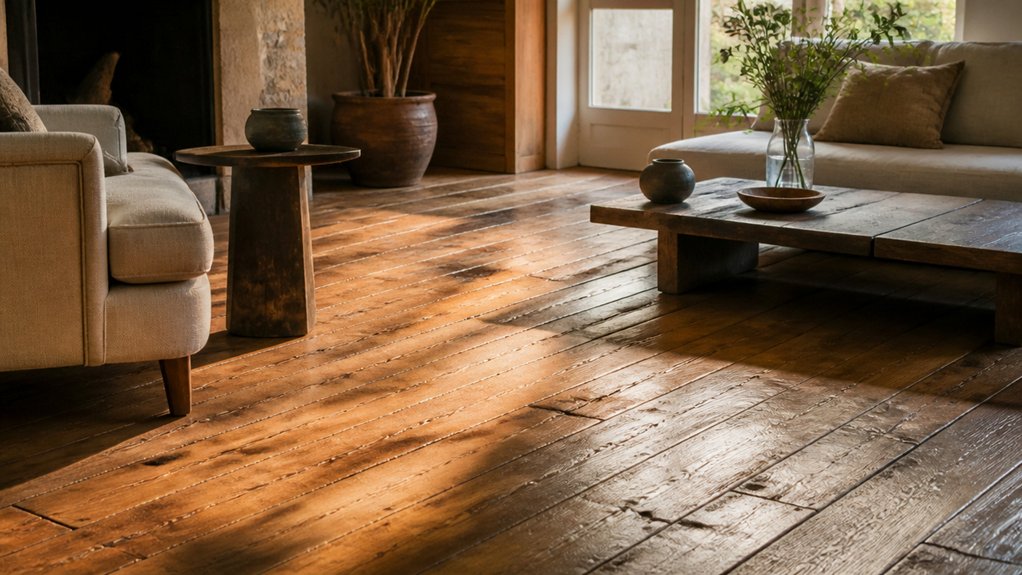
Reclaimed wooden floorboards give your home a depth of character new flooring can’t reproduce. Each plank carries distinctive grain, softened edges, old nail holes and wear marks shaped by years of use. Its natural patina brings subtle shifts from honey to deep brown, adding warmth and authenticity to period and modern interiors alike. You’ll also make a more sustainable choice by reusing timber. Discover how age, appearance and careful selection can help you choose boards that suit your home.
Key Takeaways
- Reclaimed floorboards carry unique grain patterns, patina, and color variations shaped by the wood’s growth and age.
- Nail holes, dents, softened edges, and wear marks preserve traces of past use and craftsmanship.
- Years of exposure deepen the timber’s tones and texture, creating a settled warmth new flooring cannot replicate.
- Every reclaimed plank differs, giving rooms authentic character and a sense of history.
- Reused timber adds distinctive appeal while reducing demand for newly harvested wood.
How Reclaimed Floorboards Differ From New Wood
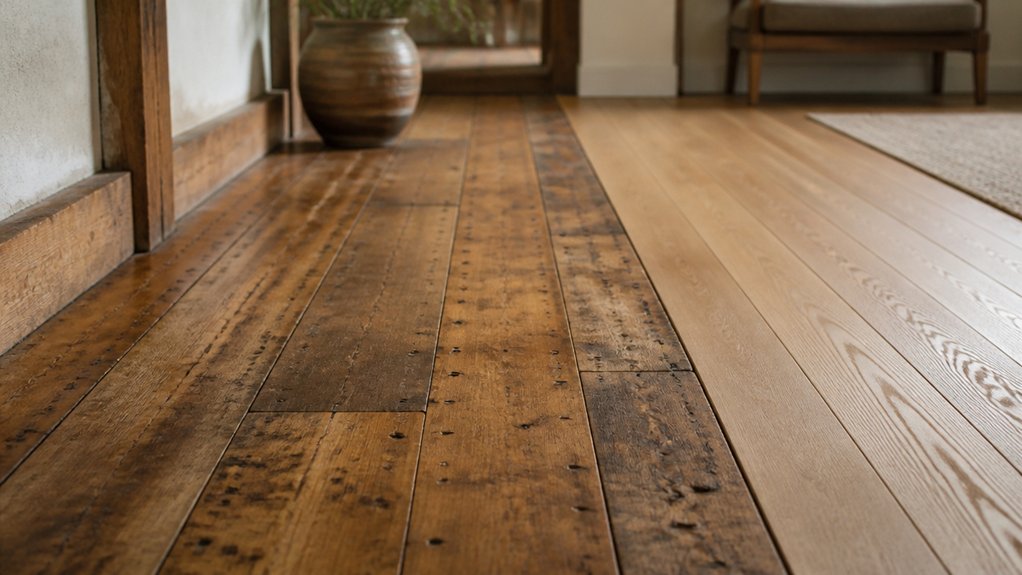
Reclaimed floorboards differ from new wood in both character and performance: salvaged from older buildings, they often show distinctive grain, patina and marks that give a property a sense of history. Unlike newly milled boards, reclaimed timber has already weathered decades of use, so its stability and condition can vary.
Reclaimed floorboards bring distinctive grain, patina and history, but their decades of use can mean variable condition and stability.
You’ll need a careful inspection for moisture damage, pests, and previous treatments before installation. A skilled fitter can assess each board, prepare it appropriately, and help you choose a finish suited to your rooms and daily use.
Sustainability benefits include reusing existing timber and reducing demand for newly harvested wood. Cost considerations depend on sourcing, preparation, and installation; reclaimed boards may cost more upfront than standard new flooring.
However, their durability can support long-term value when you select sound material and maintain it properly.
Why Reclaimed Wooden Floorboards Look Distinctive
Reclaimed floorboards give your property character through natural grain variation that makes each plank unique.
Timeworn surface details add depth and authenticity you won’t find in new flooring.
Their distinctive color patina brings warmth and a sense of history to your interior.
Natural Grain Variation
Because each board comes from a different part of a tree and a different moment in its life, reclaimed floorboards display grain patterns no new flooring can replicate. You’ll see lines that run straight, curl, or widen, creating a natural rhythm across the room.
Subtle shifts in colour and knot variation give each plank its own identity, while the boards still work together as a cohesive floor. This variation adds depth to your interior and helps a property feel considered rather than mass-produced.
In open-plan spaces, the changing grain can define zones without interrupting the overall design. Choose reclaimed boards when you want flooring with genuine individuality and enduring appeal.
Their distinctive timber character can also strengthen a home’s perceived quality, giving buyers and guests a memorable impression that standard, uniform planks rarely provide.
Timeworn Surface Details
Beyond varied grain, reclaimed floorboards carry surface marks that reveal years of use: softened edges, shallow dents, old nail holes, and subtle wear patterns. These details give each board a history you can see and feel, making the floor distinctive without relying on manufactured effects.
Surface texture adds depth underfoot and catches light differently throughout the day, lending rooms a grounded, lived-in quality. You can pair these boards with contemporary furnishings, letting their honest imperfections balance clean lines and polished finishes.
Their Vintage charm also helps a property feel established and individual, qualities that can strengthen its appeal to buyers. Unlike uniform new flooring, reclaimed boards bring authentic variation across the room.
Choose a finish that protects the wood while preserving its tactile character, and you’ll retain the marks that make your floor memorable.
Distinctive Color Patina
Years of exposure to light, air, and changing conditions give reclaimed wooden floorboards a distinctive color patina that new flooring can’t replicate. Subtle shifts in tone, from warm honey to deep brown, create depth and variation across your rooms.
Each board carries a distinct record of its former setting, lending your property a sense of authenticity that manufactured finishes can’t reproduce.
This patina also brings Historical significance into your home: the wood’s changing colors reflect years of use and exposure, making your floors a visible link to the past.
You can complement the natural palette with contemporary furnishings or preserve its heritage character with traditional details.
Choosing reclaimed boards also delivers Environmental benefits by reusing existing timber and reducing demand for newly harvested wood.
The result is flooring with lasting visual appeal and a more considered story.
How Age Shapes Reclaimed Wood’s Grain and Patina
As reclaimed floorboards age, their grain gains depth and their patina records years of use. This aging process changes how light moves across each board, bringing out natural figuring that new flooring often lacks. You’ll see richer variation in the grain as time and exposure deepen the wood’s tones, creating a surface with genuine visual dimension.
Surface aging also gives reclaimed timber a finish that feels settled into your home rather than freshly installed. Its patina develops gradually, so boards from the same source can still show subtle differences. That variation helps you create rooms with warmth and individuality, while the wood’s established character complements both traditional and contemporary interiors.
Choose reclaimed boards when you want flooring that adds lasting appeal and a sense of history to your property. Each floor offers a distinctive foundation that manufactured finishes can’t reproduce.
What Wear Marks Reveal About Reclaimed Boards
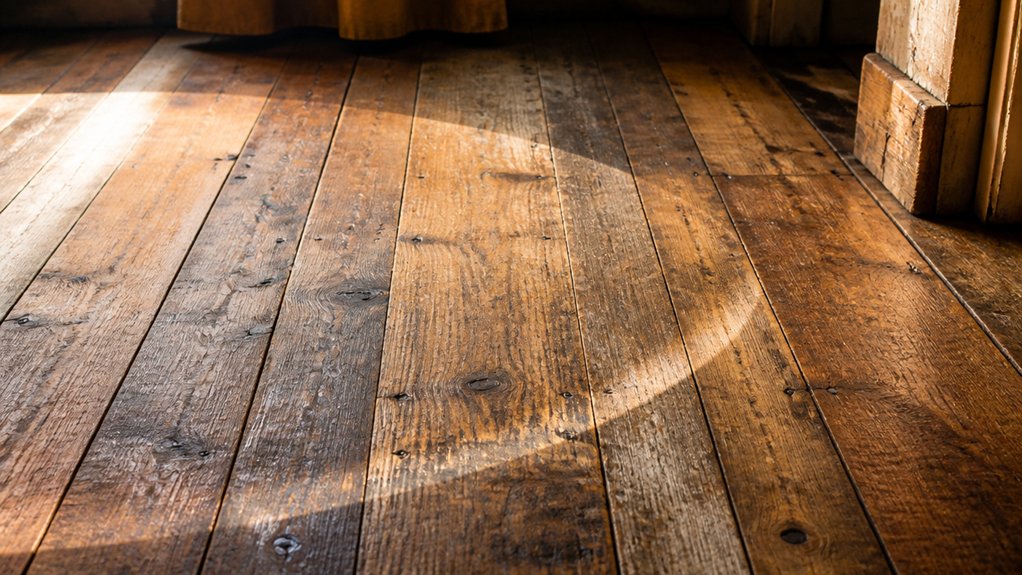
Wear marks let you read a reclaimed board’s history, from the traffic and daily routines that shaped its surface to the tools that left their trace. Look closely, and you’ll spot evidence of past craftsmanship in old saw cuts, hand-planed faces, and joinery marks.
These details give your property authentic character that new flooring can’t reproduce.
Marks Of Daily Life
What can a floor reveal at a glance? Reclaimed boards show where generations walked, gathered, and lived. Their softened paths, shallow dents, and subtle color shifts record ordinary routines, giving your property a sense of history that newly manufactured flooring can’t reproduce. These marks aren’t defects to disguise; they’re evidence of authentic use and enduring material.
Look closely, and you’ll find each board carries a distinct story. A worn threshold may suggest a well-used entrance, while varied patina adds depth across a room. This historical significance helps your home feel established, not staged, and gives buyers a tangible point of difference.
Choosing reclaimed timber also brings sustainability benefits: you reuse sound wood rather than demand new resources. With careful selection and finishing, you can preserve its honest character while creating a durable, valuable interior.
Signs Of Past Craftsmanship
Beyond recording daily use, reclaimed floorboards can reveal the skill of the people who made and installed them. Look closely at hand-planed surfaces, uneven board widths, and carefully fitted joints. These details show how earlier craftspeople worked with the timber rather than forcing it into uniformity.
Nail holes and tool marks can also indicate traditional fixing methods, while subtle variations in finish reflect patient, hands-on work.
When you choose boards with these signs of Vintage craftsmanship, you bring more than texture into your property. You add evidence of skilled construction that modern, machine-made flooring often lacks. Their historical significance can strengthen a period home’s character and give newer interiors a distinctive focal point.
Ask your supplier about each board’s origin and condition, so you can preserve its authentic details while ensuring a stable, practical floor.
How Reclaimed Wood Brings Warmth to a Room
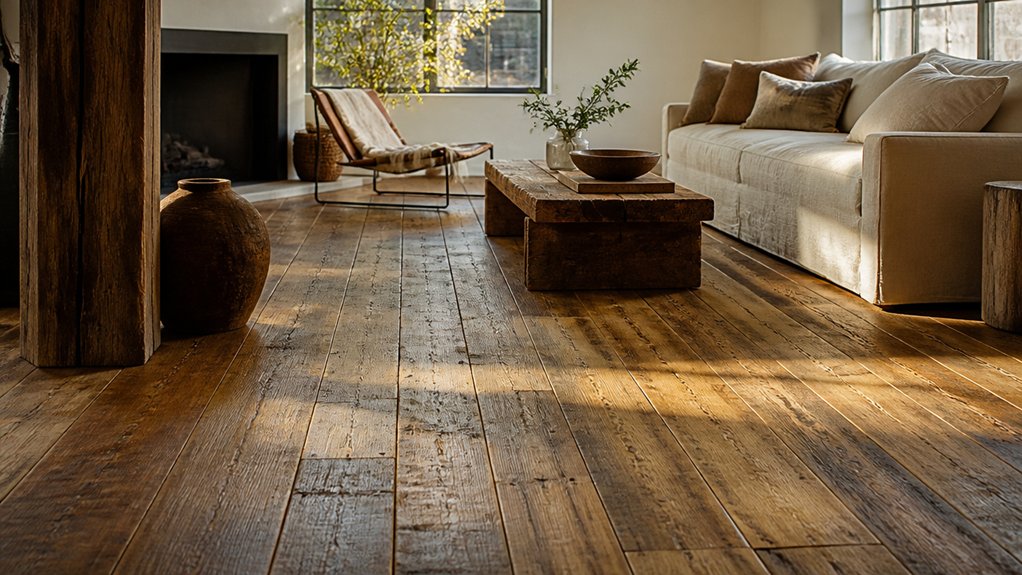
Reclaimed wooden floorboards bring warmth to a room through rich tones, varied grain, and the subtle marks of age. Their natural variation softens modern interiors and gives period properties a more authentic feel.
Reclaimed floorboards bring warmth and authenticity, with rich tones, varied grain, and the subtle character of age.
As you move through the space, the wood’s depth and texture create a welcoming atmosphere that paint and uniform finishes rarely achieve. Vintage charm comes from the patina, while Rustic elegance balances character with a refined, lasting look.
This warmth also supports your property’s overall appeal. Timber floors connect rooms visually, helping open-plan layouts feel cohesive and making smaller spaces feel more inviting.
Their earthy tones complement stone, brick, and contemporary furnishings, so you can build a considered interior without relying on excessive decoration. Choose reclaimed boards as a distinctive foundation, and your home gains comfort, individuality, and enduring character.
How to Choose Reclaimed Floorboards for Your Home
Choosing reclaimed floorboards starts with matching their character to your property and the way you use each room. Consider the board’s species, width, finish, and wear. Wide, timeworn planks can complement a period home, while cleaner boards may suit a contemporary renovation. Check each piece for sound structure, consistent thickness, and signs of pests or damage.
Ask your supplier about Eco friendly sourcing, including the wood’s origin and how it was salvaged. Responsible reuse can reduce demand for newly harvested timber while giving your rooms distinctive history.
Plan installation considerations before you buy. Measure carefully, then confirm the boards suit your subfloor, moisture levels, and heating system. Reclaimed timber may need acclimatisation, cleaning, or specialist fitting.
A knowledgeable installer can assess preparation needs and help you choose boards that deliver lasting performance and character.
Frequently Asked Questions
How Should Reclaimed Wooden Floorboards Be Cleaned and Maintained?
Clean reclaimed wooden floorboards with a soft-bristle broom or vacuum on a hard-floor setting. Then use a barely damp microfiber mop and a pH-neutral wood cleaner. These cleaning methods remove grit without soaking the boards or damaging their finish.
For effective maintenance tips, wipe spills promptly, fit protective pads beneath furniture, and control indoor humidity.
Avoid steam cleaners, abrasive products, and excess water; they can cause warping, staining, or costly repairs, reducing your property’s appeal and value.
Can Reclaimed Floorboards Be Installed Over Underfloor Heating?
Yes, you can install reclaimed floorboards over underfloor heating, provided you choose a stable species and follow the heating system’s temperature limits.
Have your installer check board thickness, moisture content, and subfloor compatibility before fitting.
Then raise the heat gradually to reduce movement and gaps.
You’ll preserve the floor’s historical significance while adding comfort and value to your property.
Choose boards from eco-friendly sourcing and use a qualified installer for lasting results.
Do Reclaimed Floorboards Require Special Installation Techniques?
Yes, reclaimed floorboards need careful installation, and the same irregularities that give them Vintage charm also demand precise preparation. You’ll want a specialist to inspect each board, check moisture levels, remove old fixings, and create a level, stable subfloor.
Allow the timber to acclimatise before fitting, and choose suitable fixings or adhesive. Done properly, this Eco friendly choice protects your property’s value while delivering a durable, distinctive finish that new flooring can’t replicate.
How Can Reclaimed Floorboards Be Checked for Pests or Contaminants?
Start with a thorough pest inspection: examine both sides, edges, and joints for holes, frass, larvae, and fresh sawdust. Tap boards and probe suspicious areas; active damage warrants professional assessment before installation.
For contaminant testing, ask a qualified laboratory to test representative samples for lead, asbestos, pesticides, or other hazards based on the boards’ age and history.
Don’t sand, cut, or install suspect timber until results confirm it’s safe for your property and household.
What Is the Typical Cost of Reclaimed Floorboards Compared With New Flooring?
You’ll usually pay more for reclaimed floorboards: around £40–£100 per square metre, compared with £20–£60 for new wood flooring. That cost comparison depends on species, condition, finish, and availability.
Key price factors include sourcing, grading, preparation, and installation; reclaimed boards may need extra cleaning or repairs.
For your property, weigh the upfront premium against the distinctive finish and potential resale appeal.
Get itemised quotes so you can compare materials and fitting fairly.