

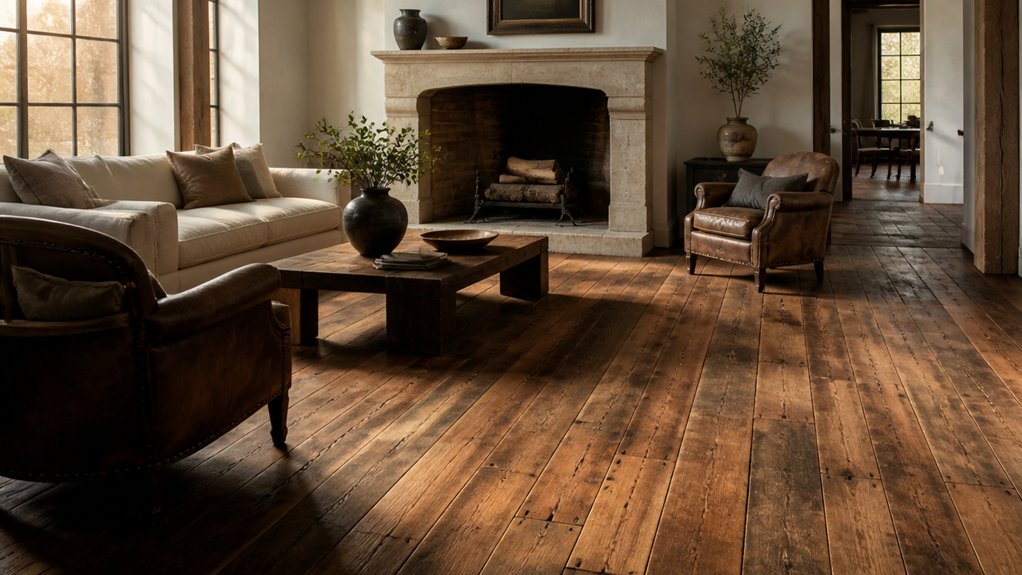
Reclaimed floorboards remain a designer favourite because they give your home authentic character that new flooring can’t replicate. Worn edges, nail marks and varied grain bring warmth, history and a one-of-a-kind focal point, while their natural patina helps minor wear blend in over time. You can pair them with minimalist, traditional or contemporary interiors and choose finishes to suit your space. They’re also a more sustainable choice, reusing timber and reducing demand for newly harvested wood. Discover what to check before you choose yours.
Key Takeaways
- Reclaimed floorboards bring authentic history, distinctive grain, and natural patina that give interiors depth and individuality.
- Their varied tones and textures complement contemporary, traditional, industrial, and minimalist styles.
- Existing wear helps disguise minor marks, while durable hardwood can withstand everyday use when properly prepared and maintained.
- Designers can tailor the look through board width, finish, and colour, then balance it with furnishings, rugs, and accents.
- Reusing timber reduces demand for newly harvested wood and keeps usable materials out of landfills.
Why Reclaimed Floorboards Add Instant Character?
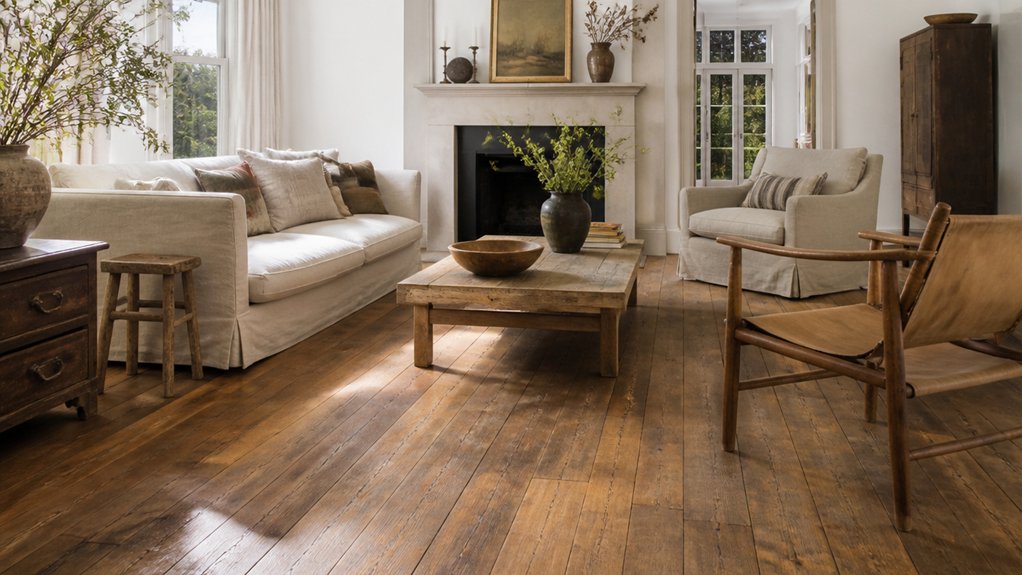
Reclaimed floorboards give a room character that new flooring can’t replicate: every worn edge, old nail mark, and variation in grain reflects years of use. When you choose them, you bring authentic history into your home, not a manufactured imitation.
Reclaimed floorboards bring authentic history home, with every worn edge and grain variation telling a story new timber can’t replicate.
Their individual tones and textures create a focal point that feels collected and considered, helping your space stand apart from predictable interiors. This Vintage charm also adds perceived value: buyers and guests notice materials with provenance and lasting quality.
Choose boards with a finish that suits your priorities, from gently restored surfaces to more visibly weathered planks. Either way, you gain rustic appeal without relying on decorative excess.
Because each board carries subtle differences, your floor feels genuinely unique, giving your design a distinctive foundation that’s difficult to reproduce with new timber.
How Reclaimed Floorboards Warm Any Interior Style?
Whatever your style, reclaimed floorboards bring warmth through their natural grain, rich patina, and varied tones. In a minimalist room, their subtle variation softens crisp lines and keeps the space from feeling stark. Pair them with pale walls and streamlined furniture for balance, or choose darker boards to anchor an open-plan layout.
If you favour traditional interiors, Vintage charm comes naturally: aged surfaces add depth without requiring ornate furnishings.
For contemporary schemes, the boards create contrast that feels considered, not contrived. Their Rustic appeal also complements industrial details, textured fabrics, and modern metal finishes.
You can tailor the mood through plank width, finish, and colour, making reclaimed flooring a flexible design investment. It gives your rooms a welcoming foundation, helps furnishings feel cohesive, and lends warmth that suits changing tastes.
Why Reclaimed Floorboards Are More Sustainable?
When you choose reclaimed floorboards, you keep usable timber out of landfills and give it a new purpose.
You also conserve natural resources by reducing demand for newly harvested wood.
And because reclaimed boards require less new production, you can lower your project’s carbon footprint.
Reduces Landfill Waste
Every reclaimed floorboard you install keeps usable timber out of landfill and gives it a second life in your home. That choice supports Landfill reduction by diverting boards from demolition debris and disposal sites. Instead of sending sound wood to be buried or burned, you give it a practical role in a finished interior.
Reclaimed flooring also makes Waste minimization visible in your design decisions. You can select boards salvaged from older buildings, then have them assessed, cleaned, and prepared for installation. This approach turns existing material into a distinctive feature, often with grain, patina, and character that new flooring can’t replicate.
For your project, the benefit is both environmental and aesthetic: less usable timber discarded, and a floor with a story. You make a considered choice without sacrificing style.
Conserves Natural Resources
Because reclaimed floorboards reuse timber already in circulation, they reduce demand for newly harvested wood and help conserve forests. When you choose them, you support resource conservation without sacrificing the character or quality your design demands.
Each salvaged plank makes better use of existing materials, easing pressure on forests and helping preserve habitats for future generations. You’ll also find that reclaimed timber brings distinctive grain, patina, and history that new flooring can’t readily replicate.
For designers and homeowners, this is a practical way to align style with eco-friendly practices and make a considered material choice. Specify reclaimed boards where they suit your project, and you can create a floor with lasting appeal while using fewer newly extracted resources.
It’s sustainability with tangible design value — not a compromise.
Lowers Carbon Footprint
Reclaimed floorboards can lower a project’s carbon footprint by avoiding some of the emissions associated with harvesting, processing, and transporting new timber. When you choose boards already in circulation, you give existing material another useful life and reduce demand for newly milled wood. That choice can also limit waste, especially when carefully sourced flooring would otherwise be discarded.
Your project’s environmental impact still depends on factors such as transport distance, restoration methods, and finishes. Ask suppliers where boards came from and how they’ve been prepared; local sourcing and low-impact treatments can strengthen the sustainability case.
Reclaimed flooring also delivers distinctive character, helping you create a considered interior without relying on resource-intensive new materials. For designers and clients alike, it’s a practical way to align aesthetic value with more responsible material choices.
What to Check Before Buying Reclaimed Floorboards?
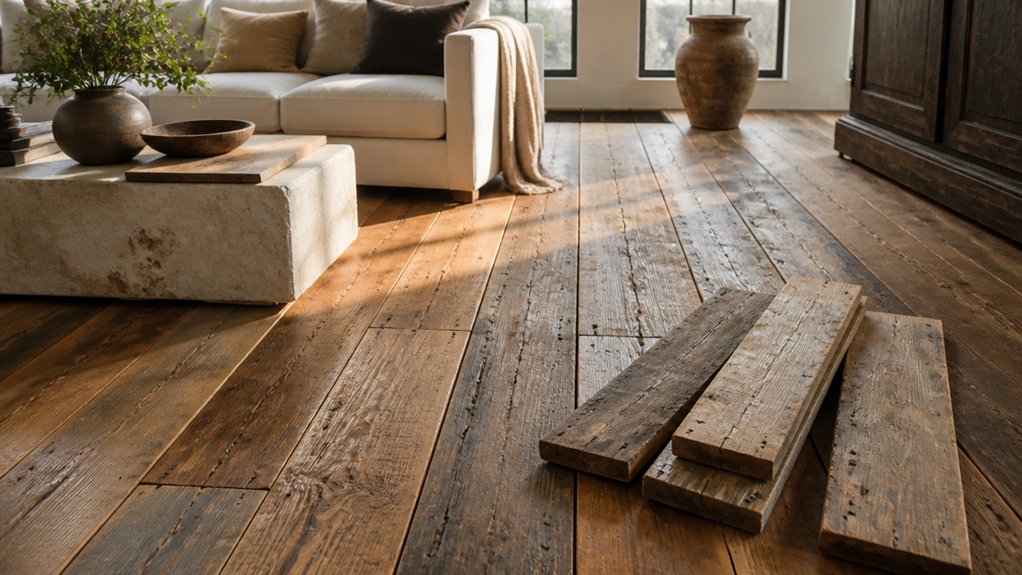
Before you buy reclaimed floorboards, check their species, dimensions, moisture content, and condition—not just their patina. Confirm the timber suits your design and that board widths and thicknesses work with your room and installation plan.
Ask the seller how the boards were stored and whether they’ve been kiln-dried; request recent moisture readings to reduce the risk of costly surprises during fitting.
Investigate Material sourcing: reputable suppliers should explain where the wood came from, how it was reclaimed, and whether its history can be verified.
Inspect samples in person, looking for signs of rot, insect damage, excessive splitting, or inconsistent grading.
Then make a Price comparison that accounts for sorting, preparation, delivery, and waste—not simply the price per square metre. A transparent quote helps you judge value and choose boards with confidence.
How Reclaimed Floorboards Hold Up to Daily Life?
Reclaimed floorboards are built to handle the demands of everyday life, giving you durable character underfoot. Their varied grain and patina help disguise minor scratches and scuffs, so wear adds charm rather than calling for concern.
With simple, routine care, you’ll keep your floors looking their best for years.
Built for Everyday Wear
How well do reclaimed floorboards handle the demands of daily life? Their performance depends on the timber’s species, previous use and condition, so you should choose boards assessed for structural soundness.
Properly prepared hardwood can deliver dependable service in busy homes, while professional installation and a suitable finish help protect it from routine wear. That durability makes reclaimed flooring more than a style choice: you’re investing in materials with proven longevity and character that new boards can’t replicate.
Before buying, ask your supplier about grading, moisture content and recommended maintenance. These details help you match the floor to your household, whether you’re furnishing a lively family room or a quieter bedroom.
With thoughtful selection, you’ll enjoy Vintage charm and Rustic appeal alongside practical performance—an enduring combination that supports both everyday living and long-term value.
Hiding Scratches and Scuffs
Even a well-chosen floor will pick up marks, but reclaimed boards can make everyday scratches and scuffs less conspicuous. Their varied grain, aged patina and natural colour shifts break up the uniform surface, so small blemishes blend into the character you chose the boards for.
This aesthetic concealment gives your room a lived-in finish without making wear look neglected. When a deeper mark does stand out, a specialist can assess the timber and recommend targeted surface repair, preserving the board’s original texture rather than disguising it with a glossy coating.
You’ll also find that reclaimed flooring offers a practical advantage over pristine, uniform finishes: new marks don’t instantly dominate the room. The result is a floor that keeps its visual appeal as daily life leaves its trace.
Simple Care and Maintenance
With a simple routine, reclaimed floorboards can handle daily life without demanding special care. Sweep or vacuum regularly to lift grit before it dulls the finish, and wipe spills promptly with a damp—not soaking—cloth. These Cleaning tips protect the wood while preserving its naturally varied character. Use a pH-neutral cleaner approved for your floor’s finish; harsh chemicals and excess water can cause damage.
Over time, small marks may appear, but they needn’t undermine your investment. Felt pads under furniture, entry mats, and sensible footwear limit everyday wear. For deeper scratches or loose boards, targeted Repair techniques—such as careful sanding, board replacement, or finish touch-ups—restore function without erasing the floor’s history.
Follow your supplier’s care guidance, and you’ll keep this durable, distinctive surface looking considered for years.
How to Style Reclaimed Floorboards in Any Room?
Reclaimed floorboards can anchor any room when you balance their character with the right colors, textures, and furnishings. Let their grain and patina lead your palette: pair warm boards with crisp whites, muted greens, or charcoal accents.
For Vintage charm, choose period-inspired lighting and simple, well-made furniture rather than matching every finish. Texture contrast keeps the look considered: layer a wool rug, linen curtains, or a sleek metal table against weathered timber.
In living rooms, define seating areas with rugs while leaving enough flooring visible to showcase its variation.
In kitchens, combine boards with durable stone counters and streamlined cabinetry.
Bedrooms benefit from soft textiles that temper the wood’s presence.
In smaller rooms, lighter finishes and restrained furnishings help preserve openness.
You’ll create a distinctive, adaptable interior that feels intentional and supports lasting value.
Frequently Asked Questions
How Much Do Reclaimed Floorboards Typically Cost to Install?
Reclaimed floorboard installation typically costs $8–$20 per square foot, including materials and labour, though premium wood or complex layouts can push prices higher.
You’ll pay less when boards need minimal preparation and more when installers must remove old flooring, repair subfloors, or fit intricate patterns.
Salvaged timber supports upcycling waste and choosing sustainable materials, but compare detailed quotes: ask what’s included, confirm finishing costs, and check whether delivery and subfloor preparation are extra.
Budget carefully before booking.
Can Reclaimed Floorboards Be Installed Over Underfloor Heating?
Yes, you can install reclaimed floorboards over underfloor heating, provided you choose suitable timber and follow the heating system’s specifications.
You’ll get the best results with stable, well-seasoned boards, professional installation, and gradual temperature changes; excessive heat can cause movement or gaps.
Check your supplier’s guidance and confirm compatibility before buying.
With careful planning, you can combine Sustainable sourcing and Historical aesthetics with modern comfort, protecting your investment while creating a distinctive, efficient interior.
How Long Does Reclaimed Flooring Installation Usually Take?
You can usually complete reclaimed flooring installation in two to five days for an average room—faster than a rocket crossing the sky. Your timeline depends on room size, subfloor preparation, board condition, and whether you choose glued or nailed installation.
Allow extra time for acclimatisation and finishing, especially with older timber. Experienced installers can protect Historical authenticity while managing Sustainable sourcing requirements, helping you plan confidently and avoid costly delays during your renovation.
Can Reclaimed Floorboards Be Used in Bathrooms?
Yes, you can use reclaimed floorboards in a bathroom, but you’ll need careful preparation and ongoing maintenance.
Choose stable, well-sealed boards, and have a professional install them with moisture-resistant adhesives and a waterproof subfloor.
Bathroom moisture can cause timber to swell, warp, or decay, so wipe up spills and maintain the finish.
For safety, assess slip resistance when wet; add suitable mats and avoid glossy coatings that become slick underfoot.
How Should Reclaimed Floorboards Be Cleaned and Maintained?
Clean reclaimed floorboards with a soft-bristle broom or vacuum, then wipe spills promptly with a barely damp cloth.
For routine care, use a pH-neutral wood-floor cleaner; avoid steam, harsh chemicals, and excess water, which can damage aged timber.
These cleaning techniques protect your floor’s character while keeping upkeep simple.
Follow these maintenance tips: add felt pads, use rugs in busy areas, and refresh the finish when it looks worn.
Check your supplier’s care guidance.