

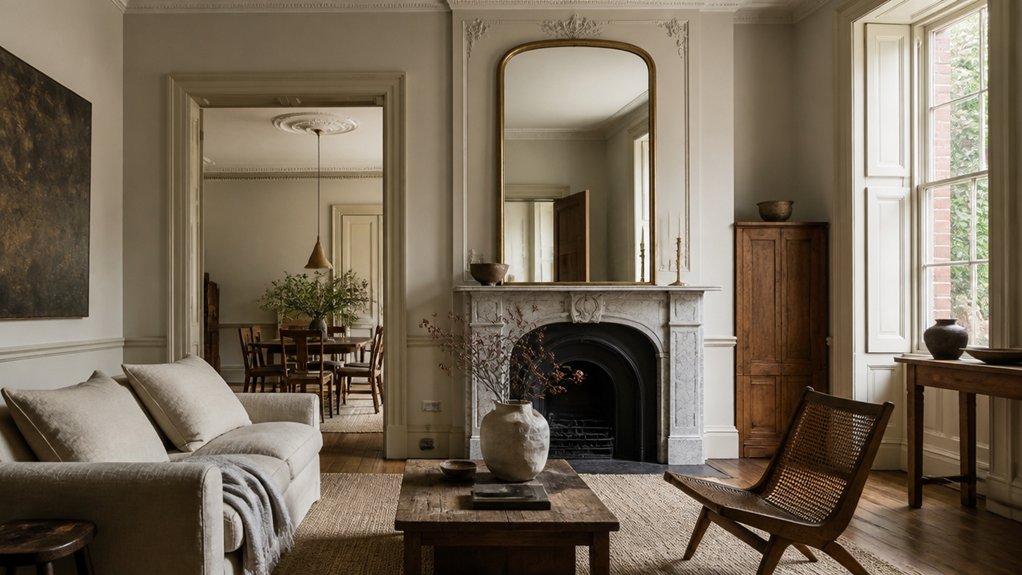
Transforming a period property starts with understanding what makes it distinctive. Assess original features, proportions, and room layouts, then preserve sound details and repair damage with suitable conservation methods. Choose heritage materials that complement the building’s age, such as timber, stone, and traditional tiles, while introducing restrained modern finishes for comfort and contrast. Protect original surfaces before work begins, and style each room around its architectural features. The following guidance shows how to bring these choices together.
Key Takeaways
- Assess and photograph original features, proportions, and damage before planning renovations or repairs.
- Preserve and repair historic details where possible, using conservation specialists for uncertain or delicate work.
- Choose materials that suit the property’s era, local traditions, and surviving finishes without resorting to false imitation.
- Pair heritage features with restrained modern colors, lighting, hardware, and furniture to create a balanced, contemporary look.
- Respect each room’s original scale and character, repeating complementary materials and finishes to create cohesion throughout.
Assess Your Period Property’s Original Character
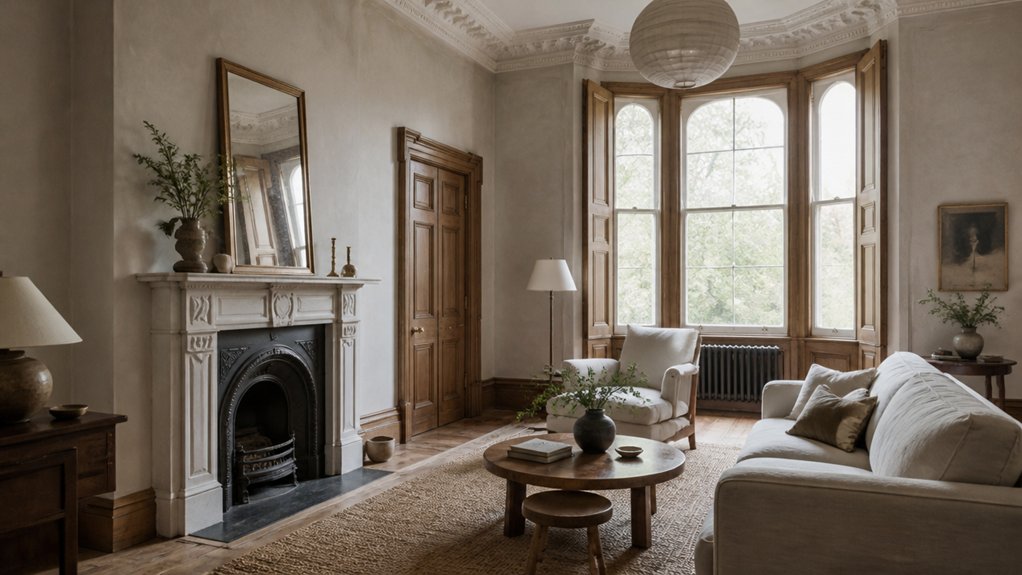
Before planning changes, identify the features that give your period property its character. Walk through each room and note original details, including cornices, fireplaces, staircases, doors, and floorboards.
Look beyond decoration: proportions, window placement, and the relationship between rooms can reveal how the home was designed to function.
Check for alterations that obscure or damage these features, and photograph what you find. If you’re unsure about a detail’s age or significance, consult a conservation specialist or review local records before making decisions.
This careful assessment supports Historical preservation and helps you distinguish later additions from defining elements.
By understanding what remains, you can set priorities, protect significant features, and plan Authentic restoration that respects your property’s history without relying on guesswork.
Keep your findings as a practical reference throughout the project.
Choose Materials That Suit Your Period Property
Choose materials that reflect your property’s era to preserve its original character. You can balance heritage and durability by selecting modern options that respect traditional finishes and perform well over time.
This careful choice will help your renovation feel authentic without sacrificing practicality.
Match Materials to the Era
Which materials will make your period property feel authentic rather than merely old? Start by identifying its architectural era and the features that define it. A Victorian home, for instance, may call for encaustic tiles, encaustic-style patterns, and richly grained timber; an earlier cottage might suit lime plaster, stone, and simple oak.
Study original details, local building traditions, and surviving finishes before you choose replacements. Restoration techniques should respect how historic materials were made and installed, so consult a specialist when evidence is unclear.
Modern interventions can still belong, but select them with care: let their scale, texture, and finish complement the period fabric rather than imitate it poorly. Request samples, compare them in the property’s natural light, and choose materials that reinforce its character without inventing a history it never had.
Balance Heritage and Durability
How can you preserve a period property’s character without sacrificing everyday performance? Choose materials that respect its architectural details while meeting the demands of modern life. Heritage craftsmanship offers lasting appeal: solid timber, natural stone, and traditional tiles develop character and can often be repaired rather than replaced.
Yet each material must suit its location. Consider moisture, foot traffic, sunlight, and maintenance before you commit.
A Modern reinterpretation can deliver better resilience without erasing historical charm. For example, use engineered timber where humidity fluctuates, or select durable, period-appropriate flooring in busy rooms. Pair authentic features with discreet upgrades, such as protective finishes that preserve natural texture.
You’ll create a cohesive interior by matching scale, colour, and finish to the original architecture. Prioritise quality and compatibility, and your choices will honour the property while serving you reliably for years.
Protect Original Details Before Renovating
Before work begins, identify and protect original features such as moldings, fireplaces, doors, and floorboards. Photograph each detail, note existing damage, and mark items that need specialist attention.
Cover surfaces with breathable, secure protection; avoid adhesive tapes or heavy coverings that can trap moisture or lift finishes. Ask your contractor to include these safeguards in the renovation plan, and make sure tradespeople understand what must remain untouched.
Historical preservation depends on informed choices, not simply retaining every old element. Consult a conservation professional before repairing damaged features or removing later additions; an expert can distinguish valuable fabric from unsuitable alterations.
Choose repair methods and materials that support Material authenticity and suit the building’s age. Keep removed fittings labeled and stored safely, so you can reinstate them where appropriate.
Combine Timber, Stone, and Traditional Tiles
Pair timber’s warmth with stone’s natural strength to create a grounded, period-appropriate foundation.
Choose traditional tiles that suit your property’s age and character.
Balance textures and tones so each material complements the others without competing.
Pair Timber and Stone
Timber, stone, and traditional tiles bring period properties to life when you combine them with care. Pairing timber and stone gives you a balanced foundation: warm grain softens the cool, solid character of masonry.
First, assess each surface’s condition and preserve sound original features. Skilled timber restoration can repair worn boards, beams, or joinery without erasing their age and character.
For stone, use gentle stone cleaning methods suited to its type; harsh chemicals and abrasive tools can damage historic surfaces.
Then consider how the materials meet. Repeating a timber tone in a mantel or frame can connect a stone wall to the room, while restrained contrast keeps both materials distinct.
Let natural textures lead, and avoid covering details that reveal the property’s history. This thoughtful pairing adds depth while respecting your home’s heritage.
Choose Traditional Tiles
Traditional tiles can complete a period room by adding pattern and colour that complement its timber and stone. Choose designs that suit your property’s age and architectural details.
Victorian tile patterns bring geometric borders and encaustic motifs to hallways, hearths, and entrance floors, where they create a historically grounded focal point.
For a later period look, consider Art Deco color schemes, using streamlined shapes and confident hues to echo the era’s distinctive style.
Before buying, check each tile’s material, finish, and suitability for the intended location; reclaimed options may need careful assessment for wear and consistency.
Plan the layout around doorways, fireplaces, and existing features, and use a skilled installer for intricate patterns.
With a well-chosen design, you’ll give the room character while preserving its period identity.
Balance Textures and Tones
To create a cohesive period interior, balance the warmth of timber with the cool character of stone and the pattern of traditional tiles. Start with one material as your anchor, then introduce the others in measured doses.
For example, pair oak floorboards with a limestone hearth and patterned tiles around a fireplace or in a kitchen splashback. Keep undertones compatible: honeyed wood suits warm stone, while darker timber can sharpen the definition of pale surfaces.
Use Vintage contrast to let age and finish enrich the scheme, rather than compete for attention. Texture layering adds depth, so combine smooth stone, visible wood grain, and glazed tile without overcrowding the room.
Repeat a tone or finish in small details, such as frames or hardware, to connect each material and make your period features feel intentional.
Pair Period Features With Modern Finishes
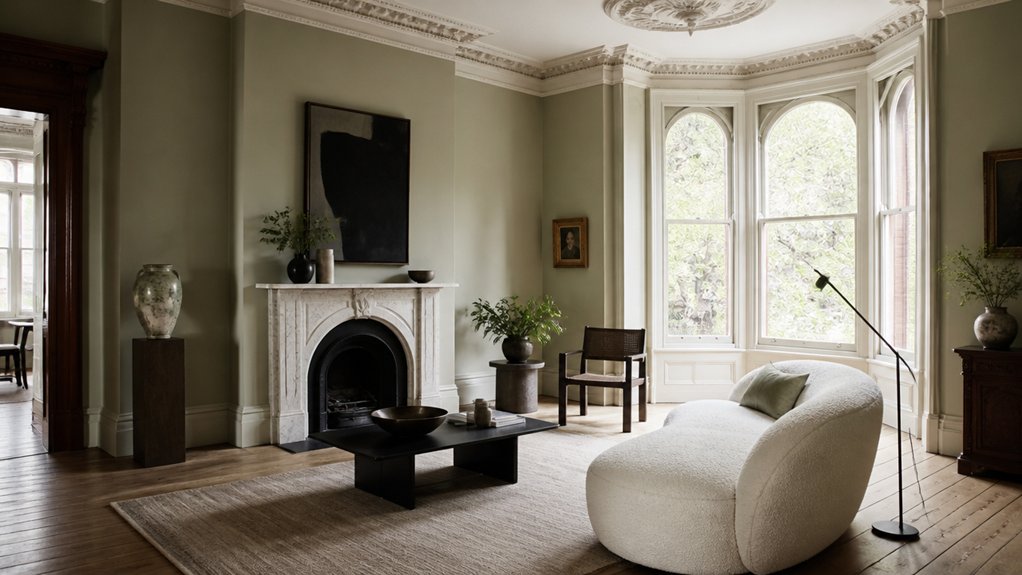
Pairing period features with modern finishes lets you preserve a home’s character without making it feel frozen in time. Keep original details, such as cornices, timber floors, or a fireplace, as visual anchors, then introduce clean-lined finishes that give them room to stand out.
Contemporary color schemes can refresh traditional architecture: try muted greens, warm whites, or deep blues against ornate mouldings. Choose modern hardware, lighting, or sleek cabinetry to create contrast without competing with historic craftsmanship.
Modern furniture accents can sharpen the look, but select pieces with simple forms and thoughtful proportions. You don’t need to imitate the past or strip it away; a deliberate mix makes both eras feel relevant.
Repeat a few finishes across adjoining spaces to create cohesion, and let each original feature retain its own presence.
Style Each Room Around Its Period Features
Once you’ve balanced original details with modern finishes, tailor each room’s style to the period features that give it character. In a Victorian living room, let a marble fireplace anchor your furniture plan; choose seating and lighting that respect its scale without recreating a museum.
In a Georgian dining room, emphasize symmetry with a centered table and balanced artwork. For bedrooms, work with original floorboards, cornices, or a distinctive window to create calm, uncluttered schemes.
Use Restoration techniques to repair plasterwork, timber, and decorative details before adding furnishings. Then introduce Contemporary accents—such as crisp textiles, sculptural lamps, or restrained color—to make the space feel current.
Match materials and proportions to the architecture, not a rigid historical template. You’ll create rooms that honor their heritage while supporting how you live today.
Frequently Asked Questions
Do I Need Planning Permission to Renovate a Period Property?
You don’t always need planning permission to renovate a period property; it depends on your location, the building’s status, and the work involved.
If your home is listed, you’ll usually need listed building consent for changes affecting its character, even inside.
Conservation areas may impose extra controls, too.
Check with your local planning authority before starting. Their guidance can help you balance Historic authenticity with Modern adaptations and avoid costly enforcement or restoration requirements.
Are Grants Available for Restoring Heritage Homes?
Yes, Heritage grants and other Restoration funding can help you restore a heritage home, but availability depends on your location, the property’s designation, and the proposed work.
Check with your local authority, heritage agency, or preservation charity for current schemes and eligibility rules.
You may need approval before starting, and funders often require specialist methods or materials.
Prepare a clear scope, cost estimates, and evidence of significance to strengthen your application and protect your investment.
How Can I Improve Energy Efficiency Without Damaging Historic Fabric?
You can improve energy efficiency by addressing draughts and upgrading services before altering historic fabric. Historic England estimates that draught-proofing can cut heat loss through windows by 33%, making careful sealing a smart first step.
Choose reversible insulation techniques, such as insulating lofts and suspended floors, and use breathable, eco-friendly materials like wood fibre or sheep’s wool. Avoid impermeable coatings that trap moisture.
Consult a conservation specialist before changing original windows, walls, or floors.
Should I Hire a Conservation Architect or a General Builder?
Hire a conservation architect first, then choose a builder with proven experience in historic properties. Architect advice helps you improve energy efficiency while protecting original materials and meeting conservation requirements.
Your architect can assess risks, recommend suitable upgrades, prepare clear specifications, and oversee sensitive work.
For builder selection, check references, inspect comparable projects, confirm heritage expertise, and compare detailed quotes.
You’ll avoid costly mistakes and give your building the careful treatment it deserves.
How Do I Insure a Period Property During Renovation?
Insure your period property with specialist renovation cover before work begins; think of it as a safety net beneath your project.
Tell your insurer the building’s age, listed status, planned work, and expected vacancy, then confirm cover includes the existing structure, materials, contractors, and public liability.
Protect Historical authenticity and Material preservation by documenting features and agreeing repair methods.
Review limits, exclusions, and policy conditions with a broker experienced in heritage properties.