

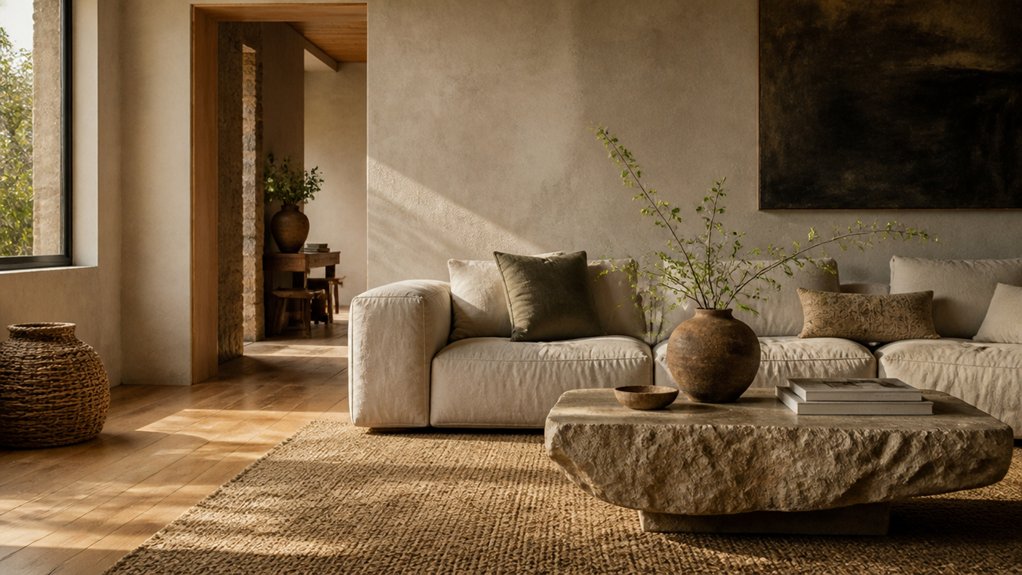
Natural materials can make your home feel warmer, more distinctive, and more valuable to buyers. Bring wood’s grain into living spaces, then pair stone or clay with wool, linen, and cotton for inviting contrast. Use durable, well-maintained finishes in kitchens and bathrooms, and layer natural-fiber rugs and bedding in bedrooms. A cohesive mix of warm timber, muted stone, and soft textiles adds texture without visual clutter. Explore how to match and layer these materials throughout your home.
Key Takeaways
- Use oak or walnut furniture to add warmth, character, and a focal point to living rooms.
- Choose stone surfaces, such as limestone or slate, for durable texture and visual depth in kitchens and bathrooms.
- Layer wool, linen, cotton, and jute textiles to bring softness, comfort, and authenticity to bedrooms.
- Pair contrasting materials, such as smooth wood and rough stone, for depth and subtle visual interest.
- Keep colors cohesive but varied, combining warm timber, muted stone, and natural fibers without matching everything exactly.
See How Natural Materials Warm a Room
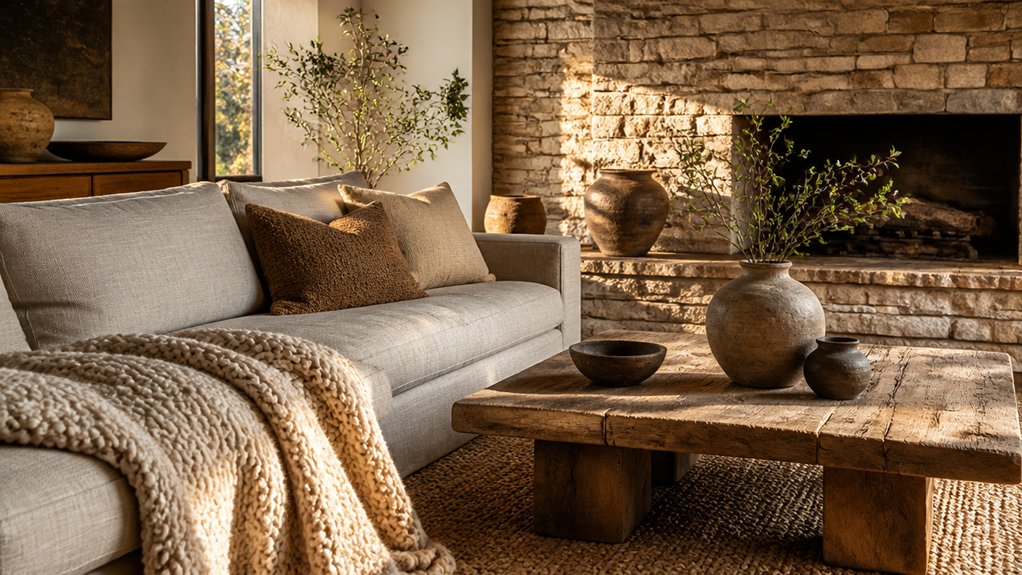
Natural materials bring visual warmth to a room, helping a property feel more inviting and considered. Their tactile surfaces soften clean architectural lines, while subtle variations add depth without overwhelming your scheme.
Natural textures soften modern lines, adding warmth, depth, and a more inviting feel to any room.
Use stone, clay, linen, or woven fibres to create a layered interior that feels grounded and distinctive. These finishes can also help your home stand apart in a competitive market, where buyers notice quality and character.
Choose pieces with Eco friendly sourcing to support responsible production and appeal to environmentally conscious purchasers. Look for Sustainable craftsmanship, too; skilled making often delivers durability that protects long-term value.
You don’t need to renovate extensively: thoughtful accents can shift a room’s atmosphere, strengthen its visual identity, and help prospective buyers picture a more welcoming, well-considered home.
Bring Wood’s Grain Into Living Spaces
Wood brings natural warmth and visible character to living spaces, helping a property feel both polished and welcoming. You can use wood grain to add depth without overwhelming a room, choosing finishes that complement your home’s architecture and existing palette.
Oak cabinetry, walnut shelving, or a well-made dining table can create a focal point while supporting everyday use. For a restrained approach, introduce timber through interior accents such as frames, stools, or a slim console.
Repeating a wood tone across a few pieces helps rooms feel connected, while varied grain patterns keep the look from feeling staged. Consider durability and maintenance as you choose finishes, especially in high-traffic areas.
Thoughtful wood details can make your home feel more inviting and memorable to buyers, adding lasting appeal without relying on short-lived trends.
Add Earthy Character With Stone and Clay
Stone’s natural texture gives your rooms a grounded, high-end feel that can strengthen a property’s appeal.
Clay adds earthy warmth through finishes and accents that make spaces feel more inviting.
Layer both materials to create depth and a cohesive look buyers notice.
Stone’s Natural Texture
When you want a room to feel grounded and distinctive, stone brings texture that paint and smooth finishes can’t match. Its natural texture adds visual depth, helping a fireplace, kitchen backsplash, or entryway become a memorable focal point.
Choose honed limestone for a quieter look, or let rough-cut slate create stronger contrast. Each surface varies in color and pattern, so you can give a property character without relying on decorative clutter.
Stone durability also makes it a practical investment in high-traffic spaces. Select finishes suited to the room’s use, and confirm that porous varieties receive proper sealing. You’ll preserve their appearance while supporting long-term value.
For a cohesive scheme, repeat the same stone in small accents, or balance a bold feature with simple furnishings. The result feels considered, enduring, and appealing to buyers.
Clay’s Earthy Warmth
Clay brings earthy warmth to a room through its rich tones and softly varied surfaces. From terracotta to muted ochre, these hues make interiors feel grounded and welcoming, qualities that can strengthen a home’s appeal to buyers.
You can introduce clay through a few well-chosen accents rather than a full renovation. A handmade vase, sculptural bowl, or set of clay pottery adds character to a shelf or dining table while keeping the room’s finish approachable.
Unglazed tiles can also give a kitchen backsplash or entryway a tactile, enduring look. Choose shapes and colors that suit your home’s architecture, and let natural variation provide interest without making rooms feel busy.
For earthy decor that photographs well and feels authentic in person, keep the palette considered and the details purposeful.
Layering Stone and Clay
Pairing stone with clay adds earthy character while giving a room a more considered, lasting look. Use honed limestone beside handmade clay tiles, or set a sculptural stone basin against warm plaster. The contrast between cool, irregular surfaces and softer, sunbaked tones brings depth without relying on costly decoration.
For a cohesive finish, repeat each material in small details, such as a stone hearth, clay pendant, or tiled entryway. This visual continuity can make interiors feel thoughtfully designed, supporting buyer appeal and long-term value.
Choose eco-friendly finishes with durable, low-maintenance surfaces, and check sustainable sourcing credentials before you buy. Locally quarried stone and responsibly made clay products can reduce transport impacts while giving your home a distinctive sense of place.
Keep the palette restrained so the materials, not clutter, lead the design.
Soften Rooms With Wool, Linen, and Cotton
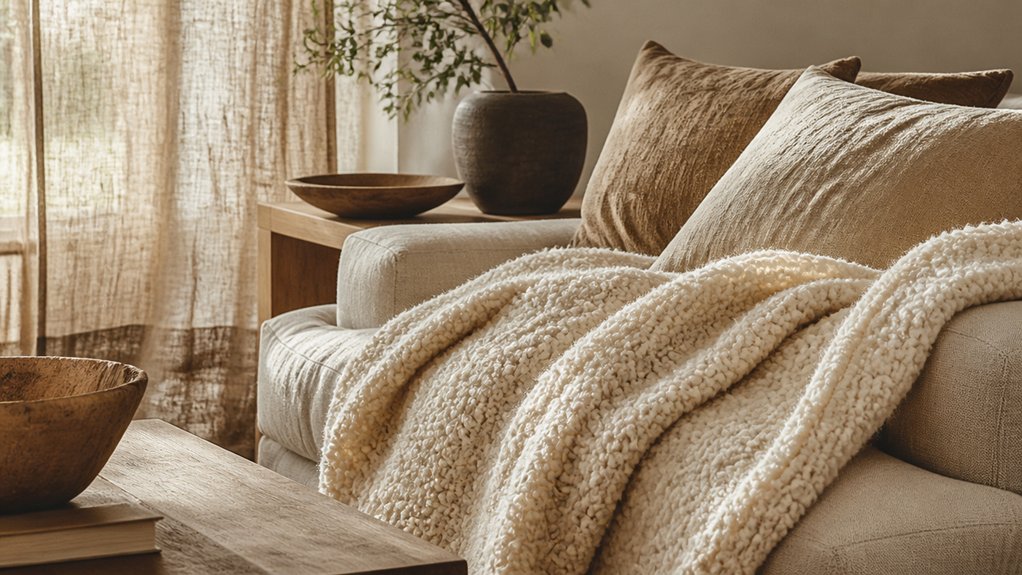
Wool, linen, and cotton add softness and warmth that help a room feel more inviting—and make a property easier to imagine as home. These natural fibers bring tactile appeal to hard-surfaced interiors, balancing stone and clay with a more relaxed feel.
Use Textile textures to create depth buyers can notice in photographs and during a viewing: a wool throw, linen upholstery, or cotton cushions can make a space feel considered without looking staged. Choose quality pieces that support Material durability, since lasting fabrics reduce replacement costs and help a home hold its appeal over time.
Their subtle variations also add authenticity, giving rooms character without demanding bold color or elaborate décor. When you present a property, these simple layers can signal comfort, care, and everyday livability—qualities that help prospective buyers picture themselves settling in.
Match Natural Materials to Each Room
Choose warm wood for your living room to create a welcoming focal point buyers value.
In kitchens and baths, stone adds durability and a polished, lasting finish.
Layer natural-fiber rugs and bedding in your bedroom for comfort that makes the space feel move-in ready.
Warm Wood for Living Rooms
Warm wood gives a living room lasting appeal, adding natural texture while making the space feel inviting. Choose oak flooring, walnut shelving, or a timber mantel to create a focal point buyers can picture themselves enjoying.
Rustic charm suits a relaxed home, while clean-lined finishes bring Modern elegance to a contemporary property. You can also use a wood coffee table or sideboard to add warmth without overwhelming the room.
Match the wood tone to your flooring and furnishings for a cohesive look that feels considered, not staged. If you’re preparing to sell, prioritize durable materials and timeless profiles; they photograph well and can help your listing stand out.
Keep the palette balanced with soft textiles and restrained accents, letting the grain show. Thoughtful wood details make your living room feel more valuable and welcoming.
Stone for Kitchens and Baths
In kitchens and baths, natural stone adds durability and a polished, high-value finish buyers notice. When you choose materials for these hardworking rooms, consider how they’ll perform as well as how they’ll look.
Granite countertops resist everyday wear and give your kitchen a substantial, upscale focal point. In a bath, polished marble can brighten the room and lend a refined feel, though you’ll want to seal it and clean spills promptly to protect its surface.
Stone varies in color, veining, and texture, so you can match a slab to your home’s architecture and price point. Keep surrounding finishes simple to let the natural pattern stand out.
With thoughtful selection and proper care, stone helps your property feel distinctive, supports buyer appeal, and offers lasting value without relying on fleeting design trends.
Natural Fibers for Bedrooms
Natural fibers bring comfort and texture to bedrooms while reinforcing a home’s sense of quality. Choose linen, cotton, or wool for bedding that feels inviting and photographs beautifully for listings.
Sustainable bedding can also appeal to buyers who value healthier materials and lower-impact choices, helping your property stand out without sacrificing everyday comfort.
Layer a wool throw, a cotton quilt, or a jute rug to add depth and soften hard surfaces. Keep colors restrained so natural textures complement the room rather than compete with its proportions.
Organic mattress options offer another way to support a cleaner, more considered bedroom, especially when paired with breathable sheets.
Prioritize durable, easy-care fibers to protect your investment and maintain a polished look between showings.
Thoughtful natural details make the bedroom feel restful, well finished, and ready for daily life. You’ll create lasting appeal with materials that balance comfort, performance, and timeless style.
Layer Natural Textures for an Authentic Look
Layering wood, stone, wool, and linen gives a room depth that buyers notice and a lived-in feel that polished finishes alone can’t deliver. Pair a smooth oak table with a rough stone surface, then soften the mix with a wool rug and linen cushions. This textural contrast makes rooms feel considered without looking staged.
Use color variation to connect materials: warm timber, muted stone, and natural fibers create a cohesive palette that feels easy to live with. You don’t need to match every tone; subtle shifts add character and help finishes look authentic.
Keep larger surfaces calm, then introduce texture through movable pieces, so buyers can imagine their own furnishings in the space. A balanced mix photographs well, highlights quality, and gives your property a distinctive, enduring appeal.
Frequently Asked Questions
How Can I Clean Natural Materials Without Damaging Them?
An ounce of prevention is worth a pound of cure: you’ll protect natural materials by dusting regularly and using gentle, surface-specific care.
For safe Cleaning techniques, test a barely damp cloth and mild, pH-neutral cleaner in an inconspicuous spot first; avoid soaking, harsh chemicals, and abrasive pads.
Blot spills promptly rather than rubbing.
For stain removal, follow the material’s care guidance or consult a specialist, preserving your home’s finish and value.
Are Natural Materials More Expensive Than Synthetic Alternatives?
Natural materials often cost more upfront than synthetic alternatives, but your cost comparison should include lifespan, maintenance, and resale appeal.
Stone, hardwood, and wool can deliver lasting value, while synthetics may lower initial project costs.
Your budget considerations should also cover installation, repairs, and replacement frequency.
If you’re improving a property, choose materials that fit your price range and buyer expectations; durable, well-chosen finishes can support stronger long-term returns.
How Can I Tell Whether a Material Is Sustainably Sourced?
You can assess sustainable sourcing by checking credible Eco friendly certifications, such as FSC for wood or GOTS for textiles, and asking suppliers for sourcing transparency.
Request documentation showing where materials originate, how they’re harvested, and whether workers receive fair treatment.
For a property project, compare lifecycle impacts, durability, and maintenance needs—not just purchase price.
If a seller can’t verify claims with clear records, treat sustainability promises cautiously and consider another supplier.
Do Natural Materials Require Special Maintenance?
Natural materials don’t always require special maintenance, but you’ll need to match care to each surface. Seal stone and timber where appropriate, wipe spills promptly, and use gentle cleaners to protect finishes and resale appeal.
Eco friendly finishes can reduce harsh chemicals, though they may need periodic renewal.
Consider Vintage vs modern pieces, too: older materials may need specialist restoration, while newer treatments can simplify upkeep.
Check manufacturer guidance before investing in your property.
Are Natural Materials Suitable for Homes With Pets or Allergies?
Yes, natural materials can suit pet-friendly, allergy-aware homes when you choose carefully. The EPA reports indoor air can be two to five times more polluted than outdoor air, making low-emission finishes a smart property investment.
For Pet safety, favor durable, non-toxic wood and tightly woven rugs; avoid splinter-prone surfaces and toxic treatments.
For allergy concerns, select smooth, sealed floors that trap less dust, and clean them regularly. You’ll protect comfort and long-term appeal.