

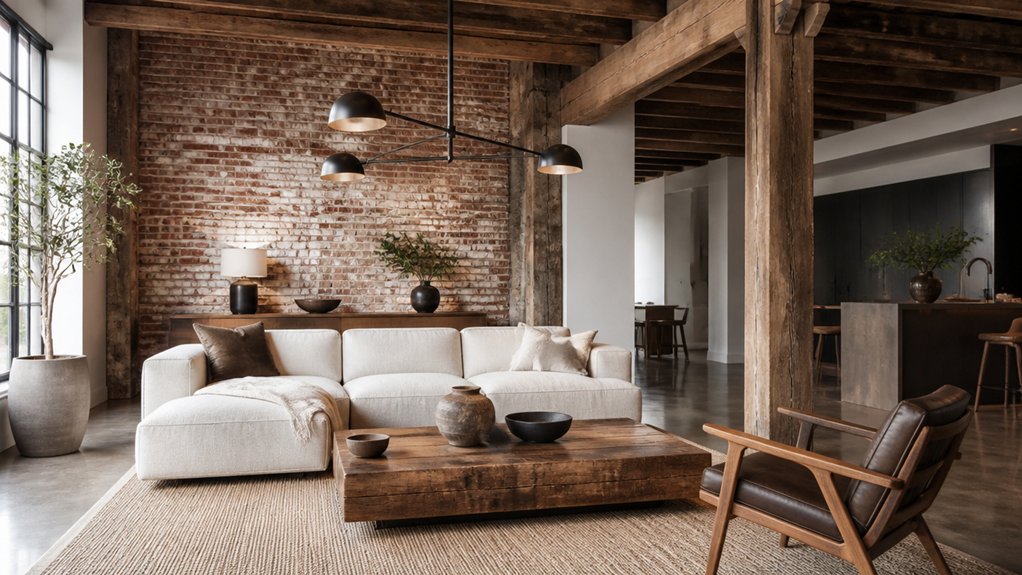
Blend reclaimed materials with contemporary design by choosing one well-crafted focal piece, such as a timber table or vintage cabinet, then pairing it with clean-lined furniture and smooth finishes. Repeat two or three complementary colors to keep the room cohesive, and balance rough textures with crisp upholstery, stone, or streamlined metal. Before buying, verify each item’s source and condition, and check for hazardous coatings or treatments. These choices create a distinctive, livable space; the details below can help you make every element count.
Key Takeaways
- Choose one standout reclaimed piece, such as a timber table or vintage cabinet, to anchor the room.
- Pair weathered materials with sleek furniture, smooth stone, crisp upholstery, or streamlined lighting for contrast.
- Draw a restrained palette of two or three complementary shades from the reclaimed piece’s grain, patina, and color.
- Use reclaimed materials selectively as focal features, avoiding scattered accents that can make the space feel cluttered.
- Verify materials’ origins and condition, and seek professional advice before altering older wood, paint, or treated materials.
Choose Safe Reclaimed Materials for Your Home
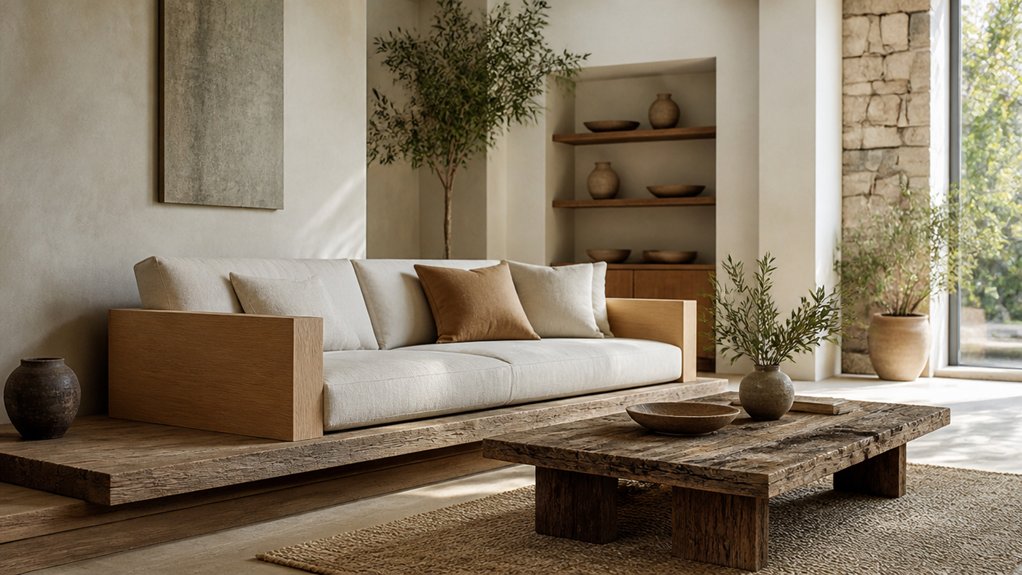
Reclaimed materials can give your home character while reducing demand for new resources, but choose them with safety in mind. Before buying, ask sellers about material sourcing, previous uses, and any treatments or coatings. Reputable suppliers should provide clear answers and documentation, helping you avoid hidden hazards and costly remediation.
Inspect each piece for mold, pests, chemical odors, and structural damage. Older paint may contain lead, while some treated wood can release harmful chemicals indoors. Don’t sand, cut, or install suspect materials until a qualified professional has assessed them.
Use appropriate safety precautions, including protective equipment and proper ventilation, during handling.
Check local regulations and hire certified specialists when testing or removal requires expertise. A lower purchase price isn’t a bargain if safety concerns compromise your household’s health or trigger expensive repairs.
Choose verified, sound materials that meet current requirements.
Start With One Reclaimed Focal Point
Choose one standout reclaimed piece, such as a timber dining table or vintage cabinet, to anchor your room.
Let its texture and history lead your palette, then pair it with modern elements for a polished, balanced look.
Choose a Standout Piece
Where should you begin when bringing reclaimed materials into a room? Choose one standout piece that earns attention and gives your design a clear starting point. A salvaged timber dining table, vintage textile, or restored cabinet can add history while serving a practical purpose.
Select an item that fits your room’s scale and meets your needs, not just one that looks striking in a showroom. Check its condition, dimensions, and finish before you buy; these details affect both value and everyday use.
Then let the piece anchor your choices. Pair it with contemporary furnishings that keep the space functional and current. Artistic accents can reinforce its character without competing for attention.
When you invest in one well-chosen reclaimed focal point, you create a memorable room with a distinctive story and lasting appeal.
Let Materials Lead
Once you’ve chosen a standout piece, let its material character guide the rest of the room. Read its grain, patina, texture, and color, then use those qualities to shape your palette and finishes.
A salvaged timber table, for example, can inspire warm tones and tactile surfaces; a weathered metal cabinet can bring industrial character into focus. This approach gives your space a clear point of view while keeping the reclaimed piece central.
Choose supporting materials that reinforce its distinctive features rather than compete for attention. You’ll make the craftsmanship easier to appreciate and create a more cohesive room.
Balance With Modern Elements
To balance reclaimed character with modern design, start with one focal piece, such as a salvaged-wood table or vintage cabinet. Let its grain, patina, or distinctive hardware set the room’s tone, then keep surrounding finishes clean and restrained.
Pair weathered wood with smooth stone, streamlined lighting, or contemporary upholstery to create contrast without visual clutter. Choose a limited palette so your reclaimed feature feels intentional, not out of place.
You’ll also make purchasing decisions easier: invest in one well-crafted centerpiece, then add modern pieces that meet your needs and budget.
Prioritize Sustainable sourcing and Eco friendly upgrades, such as reclaimed timber and efficient LED lighting, to strengthen your design story.
This measured approach gives you character, comfort, and a polished interior that feels current and built to last.
Pair Reclaimed Wood With Clean Lines
Reclaimed wood brings warmth and character to an interior, while clean-lined furniture and finishes keep the look fresh and intentional. Pair a weathered timber dining table with streamlined chairs, or set a reclaimed wood console against a simple, uncluttered wall. The contrast lets each element stand out without making your room feel busy.
Pair weathered wood with clean-lined furnishings to create a warm, characterful interior that feels fresh, balanced, and uncluttered.
Choose pieces with visible grain, subtle patina, and sturdy construction to deliver Rustic charm that feels considered, not dated. Balance those Natural textures with smooth cabinetry, crisp upholstery, or minimal metal accents.
A restrained palette helps the wood’s variation become a focal point and makes the overall scheme easier to update.
You don’t need to fill every corner with reclaimed pieces. One well-chosen feature can add depth, support a distinctive design story, and give contemporary furnishings a more welcoming feel.
Add Vintage Brick Without Overwhelming the Room
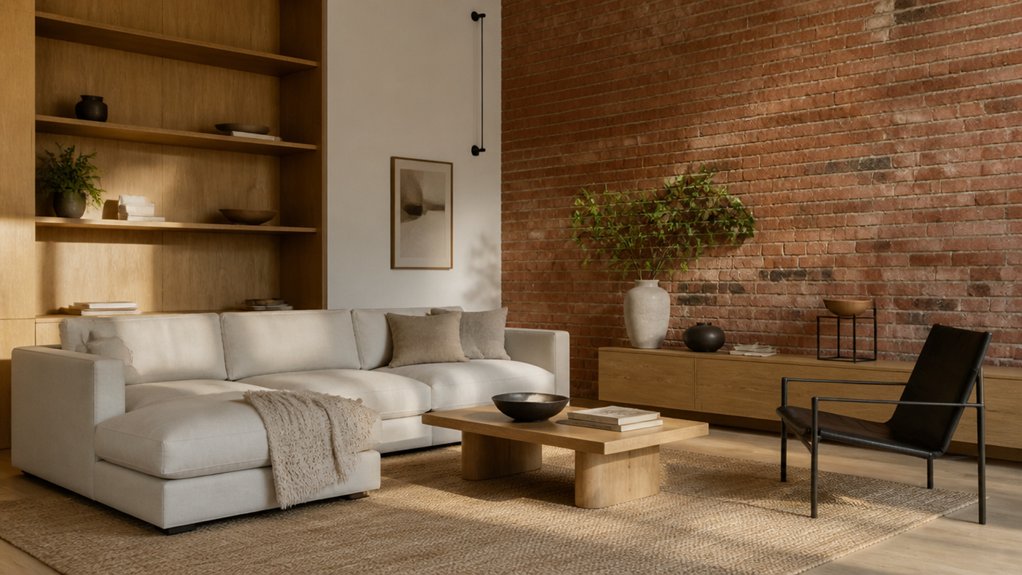
Vintage brick adds texture and history, but too much can make a room feel heavy. Use it as a focused feature, such as a fireplace surround, kitchen backsplash, or single accent wall. This approach gives you character without sacrificing the light, open feel contemporary buyers value.
For effective room integration, balance the brick’s warm tones and rough surface with smooth finishes, restrained furnishings, and a simple color palette. Let the masonry stand out rather than competing with busy patterns or multiple reclaimed materials.
If the brick looks dark or uneven, consider limewashing it to soften its impact while preserving its texture.
Before installation, confirm the material’s condition and suitability for your space. Thoughtful placement turns Vintage brick into a durable design asset that adds distinction, warmth, and lasting appeal.
Use Salvaged Metal for a Modern Edge
Salvaged metal gives your interior a modern edge while adding character and lasting appeal. Use it for industrial accents, such as lighting, shelving, or hardware.
Pair its cool finish with warm wood or soft textiles to keep your space inviting.
Add Industrial Accents
To give a room a modern edge, bring in salvaged metal through details like steel shelving, iron hardware, or a reclaimed-metal light fixture. Choose pieces with visible patina, rivets, or clean geometric lines to establish an industrial character without overwhelming your design.
A single statement fixture can draw attention, while metal shelving adds practical storage and display space. Before buying, check the item’s condition, dimensions, and finish so it suits your layout and daily needs.
Ask suppliers about sustainable sourcing, including where materials came from and how they were reclaimed. For added protection, select eco-friendly finishes that resist wear without compromising the metal’s original appeal.
These considered choices help you create a distinctive, durable interior and give reclaimed materials a clear role in your home’s contemporary style.
Pair Metal With Warmth
Pair salvaged metal with warm wood, soft textiles, or woven accents to keep its industrial edge from feeling stark. This warmth contrast makes reclaimed steel, iron, or brass feel intentional rather than imposing. Use a metal-framed table beside a timber bench, or add vintage hardware to cabinetry with a natural finish.
The mix gives your room a modern edge while preserving the character buyers value in reclaimed materials. Let the metal texture provide definition, then balance its cool surface with tactile layers such as wool, linen, or rattan. Choose finishes that suit your palette: blackened steel sharpens neutral schemes, while aged brass adds a softer glow.
Keep the combination focused; a few well-placed salvaged pieces create more impact than scattered accents. You’ll achieve a polished, welcoming interior with lasting appeal.
Balance Reclaimed Materials With a Simple Palette
Reclaimed materials bring character to a room, but too many competing textures and colors can make it feel cluttered. Choose a restrained palette to let their history stand out without overwhelming your design.
Start with two or three complementary shades, then repeat them across walls, furnishings, and accents. This Color harmony gives weathered wood, salvaged brick, or vintage metal a cohesive place in a contemporary interior.
You don’t need to match every finish; instead, create Texture contrast with a smooth countertop beside rough timber or crisp upholstery against aged leather.
Keep large surfaces neutral, and use reclaimed pieces as focal points. This approach helps you showcase distinctive materials while maintaining a polished, livable space.
A simple palette also makes future updates easier, protecting your investment and keeping the room appealing to a wider range of buyers.
Frequently Asked Questions
How Can I Estimate the Cost of Reclaimed Materials for a Renovation?
Start your cost estimation by measuring each project area and listing the reclaimed materials you need; apparently, “free” salvaged wood enjoys charging for itself.
Research material pricing from salvage yards, architectural reuse shops, online marketplaces, and local demolition contractors.
Compare prices by usable quantity, not sticker price, and include delivery, cleaning, repairs, and waste.
Request written quotes, add a 10–20% contingency, and confirm availability before you finalize your renovation budget.
Where Can I Find Reliable Suppliers of Reclaimed Building Materials?
You can find reliable reclaimed-building-material suppliers through architectural salvage yards, deconstruction companies, certified reuse networks, and established online marketplaces.
Check local directories and ask contractors or preservation groups for referrals.
Before buying, inspect materials in person, request provenance and condition details, and confirm delivery, return, and pricing policies.
Choose sellers with consistent reviews and clear inventory records.
Their Vintage textures and Eco friendly sourcing can strengthen your project’s appeal while reducing waste and sourcing risks.
How Should I Clean and Maintain Reclaimed Materials Over Time?
Treat reclaimed materials like treasured heirlooms: clean them gently and protect them consistently.
For Surface cleaning, use a soft brush or damp cloth with mild soap, then dry thoroughly; avoid harsh chemicals that can strip finishes or damage aged surfaces.
For Long term preservation, control indoor humidity, keep wood and metal away from standing water, and apply suitable sealants or waxes as needed.
Inspect regularly, and you’ll preserve their character while extending their useful life.
Can Reclaimed Materials Improve a Home’s Sustainability Rating?
Yes, reclaimed materials can improve your home’s sustainability rating by reducing demand for virgin resources and diverting usable materials from landfills.
You’ll strengthen your case when you document each material’s origin, condition, and installation.
A Material lifecycle analysis can reveal environmental savings across sourcing, transport, and use.
For Eco friendly certification, check the program’s criteria: some recognize reuse, while others require specific evidence, disclosures, or performance measures.
Confirm requirements before purchasing.
What Should I Check Before Installing Reclaimed Materials in a Rental?
Before installing reclaimed materials in a rental, get your landlord’s written approval; otherwise, your vintage charm could become a costly headache. Check lease terms, local rules, and whether changes must be reversible.
Inspect each item for pests, mold, lead paint, and structural damage, and confirm safe, professional installation. Ask who’ll cover repairs and removal when you move.
With clear permissions and careful checks, you can make eco-friendly choices without risking your deposit or tenancy.