

To revive an old coastguard cottage for modern coastal living, start with a qualified survey to identify roof defects, damp, salt damage, and unsafe services. Check which permissions you need before altering the building, and protect original features such as sash windows, fireplaces, and beams. Repair moisture sources before upgrading insulation, then choose breathable finishes and corrosion-resistant materials suited to salty air. With careful planning, you can improve comfort while preserving coastal character—and discover how to approach each stage with confidence.
Key Takeaways
- Commission a qualified surveyor to assess roofs, chimneys, walls, floors, timber, services, and signs of coastal weather damage.
- Check listed-building status and obtain required permissions before repairs or alterations; document original features and consult conservation specialists.
- Trace damp and salt damage to its source, repair leaks, improve ventilation, and avoid impermeable coatings unless specialists recommend them.
- Choose breathable lime finishes, corrosion-resistant fixings, durable exterior joinery, and locally appropriate materials suited to salty, wet conditions.
- Improve insulation only after addressing leaks and damp, using suitable breathable materials alongside effective ventilation and ongoing moisture monitoring.
Assess Your Coastguard Cottage’s Condition

Before planning any work, assess your cottage’s condition from roof to foundations. Start outside, where salt, wind, and rain can accelerate wear. Check slates, chimneys, gutters, pointing, and exterior paint for gaps, movement, or corrosion. Look closely at windows and doors; failed seals can invite damp and waste heat.
Inside, scan ceilings and walls for staining, cracking, or mould. Test floors for unevenness, and note musty smells that may signal hidden moisture. Inspect timber for rot and metal fittings for rust. Pay particular attention to ventilation, plumbing, wiring, and heating, recording concerns with photographs and dates.
Your cottage’s Seaside architecture and surrounding Coastal flora can reveal how weather affects its materials. A qualified surveyor can distinguish routine maintenance from urgent defects, helping you prioritize repairs and set a realistic budget.
Check Permissions and Protect Historic Features
Check which permissions your project needs before altering the cottage: listed-building consent, planning permission, or approval from a conservation officer may apply. Requirements vary by location and designation, so contact your local planning authority before commissioning work.
Don’t assume that internal changes or repairs are exempt; unauthorised alterations can lead to enforcement action and costly reinstatement.
Make Historical preservation part of your design brief. Photograph original features, record their condition, and identify elements such as sash windows, doors, fireplaces, staircases, and exposed beams.
Ask a conservation professional how to retain and repair them, rather than replace them for convenience. Choose compatible materials and methods, and document approved changes before work begins.
Clear plans help you secure Legal permissions, protect the cottage’s character, and create a modern home without erasing its history.
Repair Damp, Salt Damage, and Weathering
Coastal cottages often absorb moisture and salt through porous masonry, so diagnose the source before choosing a repair. Check gutters, downpipes, roof junctions, ground levels, and indoor humidity; trace leaks and rising damp rather than masking stains.
> Diagnose moisture and salt sources in coastal cottages before repairing; inspect drainage, roof junctions, ground levels, and indoor humidity.
Salt crystals can break down plaster and masonry, so remove loose, contaminated finishes carefully and let affected areas dry.
Improve ventilation strategies by clearing blocked vents, managing kitchen and bathroom extraction, and allowing air to circulate behind furniture. Don’t seal damp walls with impermeable coatings: trapped moisture can worsen decay.
Use moisture barriers only when a specialist confirms they suit the building’s construction and won’t redirect water into historic fabric.
Repair failed pointing and weathered details with compatible methods, then monitor humidity and surfaces through changing seasons.
If damage persists, consult a conservation professional before undertaking invasive work.
Choose Materials That Stand Up to the Coast
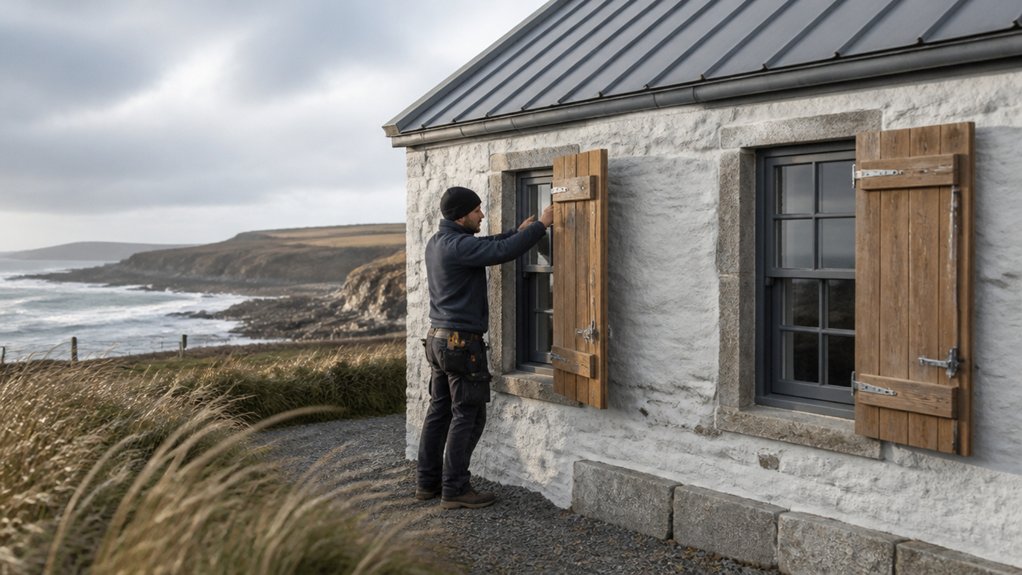
Choose materials for salt spray, driving rain, and fierce winds—not just appearance. On exposed walls, select breathable lime-based finishes that suit the cottage’s original construction and resist weathering.
For exterior joinery, use durable hardwood or high-quality, marine-grade coatings, and maintain them before cracks let water in. Choose corrosion-resistant stainless steel fixings; ordinary metal can stain, weaken, and fail in salty air.
For roofs and paving, prioritize proven local materials that handle repeated wetting and strong gusts. Slate, well-fired clay tiles, and textured stone can complement Seaside aesthetics while offering lasting performance.
Check that replacements match the building’s character and comply with conservation requirements. Choose paint and stains in tones that sit naturally beside Coastal flora, rather than competing with the landscape.
Your choices should protect the cottage and age gracefully, not demand constant repair.
Improve Insulation Without Trapping Moisture
Durable exterior materials protect a coastguard cottage from the weather, but good insulation must also let its walls dry. Before upgrading, check for leaks, damp, and damaged mortar; insulation won’t solve these problems and may conceal them.
Check for leaks, damp, and damaged mortar before insulating; repairs help protect your cottage from hidden moisture damage.
Ask a conservation specialist to assess the wall construction and recommend breathable materials suited to your cottage. Avoid sealing historic masonry between impermeable layers.
Use moisture barriers only where the building design calls for them, and install them correctly so they don’t trap water in the fabric.
Pair insulation with effective ventilation techniques, such as maintaining clear air paths and using extract fans in kitchens and bathrooms.
Monitor indoor humidity and inspect walls after installation. With careful choices, you’ll improve comfort, reduce heat loss, and protect the cottage’s structure from hidden moisture damage.
Modernize Your Cottage’s Kitchen and Layout
Modernizing a coastguard cottage’s kitchen means improving how it works without erasing its character. Keep original features, such as exposed beams, stone walls, or sturdy floorboards, and plan upgrades around them. Choose compact, durable cabinets and moisture-resistant worktops that suit the coastal climate. Add task lighting and efficient appliances to make daily cooking easier without crowding the room.
If you’re considering open plan design, first check whether removing walls could affect the cottage’s structure or historic fabric. A widened doorway or partial opening may bring in light and improve flow while preserving defined spaces.
Use consistent flooring and a restrained palette to connect kitchen and living areas. Layer seaside decor through natural textures and subtle coastal colors, rather than themed accessories.
With careful planning, you’ll gain comfort and function while retaining your cottage’s distinctive character.
Frequently Asked Questions
How Can I Make a Coastguard Cottage Safer for Young Children?
Start by securing hazards throughout your cottage with practical childproofing measures. Anchor tall furniture, lock cupboards containing medicines or cleaning products, cover outlets, and fit window restrictors.
Choose safety gate options that suit your layout: pressure-mounted gates work for doorways, while hardware-mounted gates offer stronger protection at stairways. Check gates regularly, and keep cords, heaters, fireplaces, and sharp tools out of reach.
Repair uneven floors and slippery steps to prevent falls.
What Outdoor Spaces Work Best for Coastal Cottage Living?
For coastal cottage living, you’ll get the best results from sheltered patios, wind-buffered courtyards, and hardy gardens that welcome sea air without surrendering to it.
Think of your outdoor space as a small harbor: sturdy walls and planting offer refuge, while open views keep the horizon in reach.
Choose salt-tolerant plants, permeable paving, and weather-resistant outdoor furniture.
Thoughtful garden design makes every corner useful, comfortable, and resilient through changing coastal weather.
How Can I Improve Mobile and Internet Connectivity in a Remote Cottage?
Start by testing mobile coverage across your cottage and checking providers’ coverage maps; a different network may work better.
Install Signal boosters only after confirming a usable outdoor signal, and choose equipment approved by your carrier.
If landline broadband isn’t available, compare Satellite internet plans for speed, latency, data limits, and installation needs.
Position your router centrally, use mesh Wi-Fi to reach distant rooms, and protect outdoor equipment from salt, wind, and moisture.
What Should I Consider When Choosing Insurance for a Coastal Property?
Choose insurance that covers coastal risks, not just standard home damage. Check that your property coverage includes storm surge, flooding, wind-driven rain, erosion-related damage, and rebuilding costs that reflect local labor and materials.
Ask about exclusions, deductibles, and limits, especially for roofs, outbuildings, and unoccupied periods.
If you own a boat, dock, or shoreline access, consider marine liability.
Compare insurers’ claims support and review your policy annually as risks change.
How Can I Prepare My Cottage for Storms and Coastal Flooding?
Prepare your cottage by strengthening its exterior, protecting utilities, and planning for evacuation. Install storm shutters, secure roof tiles, reinforce doors, and trim nearby trees as storm proofing measures.
Use flood prevention strategies such as fitting flood barriers, sealing ground-level openings, raising electrical systems, and keeping drains clear.
Store valuables and emergency supplies upstairs, review your insurance, and create a family communication plan.
Check local alerts and evacuation routes before severe weather arrives.