
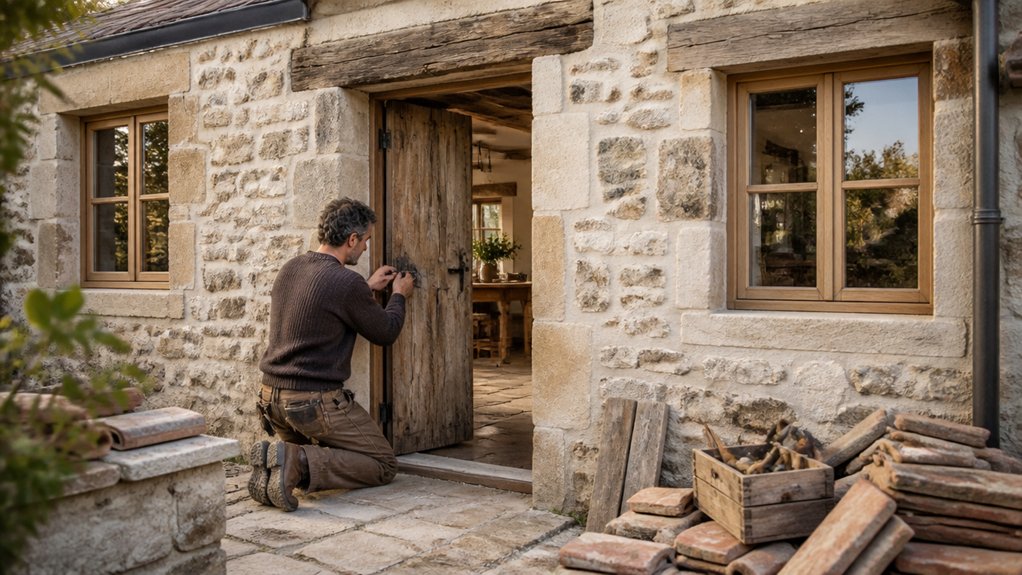
To renovate a traditional farmhouse without losing its heritage, start by learning how it was built and inspecting it from roof to foundation. Preserve sound beams, stonework, floors, trim, and other original features; repair them with compatible, breathable materials instead of replacing them unnecessarily. Upgrade plumbing, wiring, and heating discreetly, then improve insulation and ventilation to manage comfort without trapping moisture. Choose experienced tradespeople, document decisions, and balance upfront costs with lasting value. The steps ahead show how to plan each improvement thoughtfully.
Key Takeaways
- Research the farmhouse’s history and inspect its roof, structure, utilities, and grounds before planning renovations.
- Preserve sound original features, using minimal repairs and traditional, compatible materials such as lime mortar.
- Upgrade plumbing, wiring, and heating with qualified specialists, routing new systems discreetly and meeting current safety codes.
- Improve comfort through targeted draught-proofing, roof and floor insulation, and ventilation that manages moisture.
- Choose experienced tradespeople, document changes, and balance heritage requirements, long-term maintenance, budget, and modern needs.
Plan a Farmhouse Renovation That Respects Its History
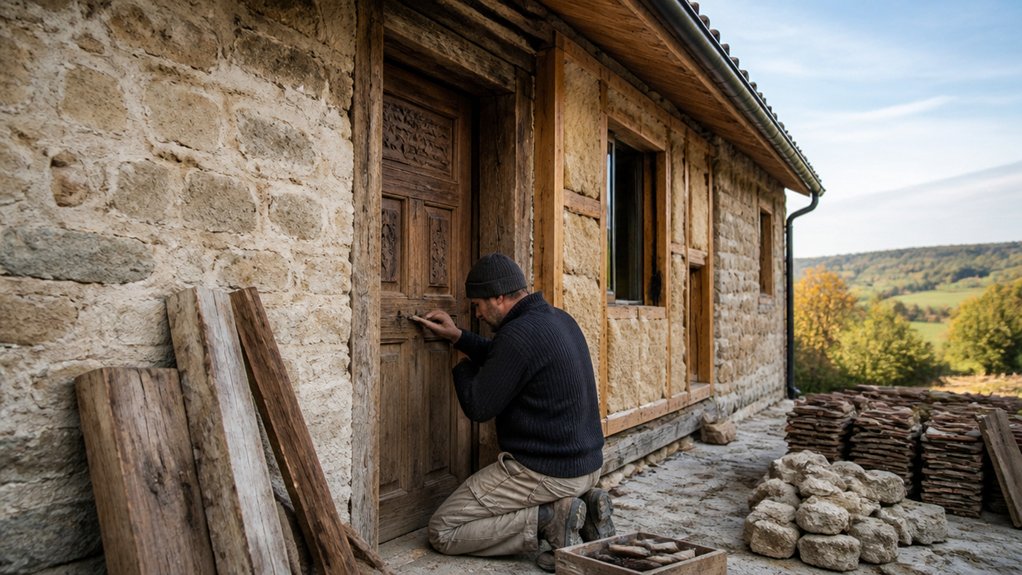
Before choosing finishes or updating the layout, learn how the farmhouse was built and changed over time. Use that history to set priorities, not to freeze the house in one era.
Learn the farmhouse’s history before choosing finishes or changing its layout, using the past to guide—not constrain—your plans.
Decide which features give it character—such as original trim, a porch, or a working fireplace—and make those elements guide your renovation choices. Then match upgrades to your budget and the home’s likely resale appeal.
You don’t need to reproduce every historic detail; choose durable materials and compatible proportions that feel authentic without limiting modern comfort. Research period-appropriate colors before selecting restoration paint, and consider historical landscaping that suits the property’s original setting.
A clear plan helps you avoid costly design reversals and protects the farmhouse’s identity while making it more functional for today’s needs. Keep each change purposeful and well documented.
Inspect the Farmhouse Before You Start Work
Once you’ve set your renovation priorities, inspect the farmhouse from roof to foundation before work begins. A thorough assessment helps you spot safety issues, avoid surprise costs, and protect features that add historic and resale value.
Check the roof, gutters, chimneys, windows, and drainage, noting leaks, cracks, and signs of pests. Photograph each concern and record its location; dated evidence helps contractors price repairs accurately and supports permit or insurance discussions.
Walk the Farmhouse exterior in daylight, then inspect interior rooms, the attic, and basement. Look for dampness, uneven floors, damaged finishes, and outdated wiring or plumbing. Don’t disturb suspect materials; ask qualified professionals to test them.
Review the site, too: Landscape preservation can protect mature trees, stone paths, and established grades. Get specialist advice before excavation, and use your findings to refine scope, bids, and contingency funds.
Stabilize and Preserve Beams, Stone, and Floors
Before finishing surfaces, have a qualified professional assess historic beams and reinforce them where needed.
Preserve original stone and floors wherever possible; targeted repairs usually cost less and retain more character than replacement.
Choose compatible materials and methods to protect the farmhouse’s value and integrity.
Reinforce Historic Beams
How can you strengthen a farmhouse’s historic structure without erasing its character? Start with a qualified structural engineer who can assess each beam’s condition, load, and connection before recommending repairs.
Targeted beam reinforcement often preserves more original material—and costs less—than wholesale replacement. Your options may include discreet steel plates, sistered timber, or traditional scarf joints, selected to suit the building and remain visually compatible.
Ask your contractor to document existing damage and explain how each intervention will affect the structure.
Choose seasoned, appropriately graded timber when replacement proves necessary, and retain sound historic fabric wherever possible.
This measured approach supports historic preservation while improving safety and long-term value.
Confirm that proposed work meets local code and any heritage requirements before construction begins, so you avoid costly revisions and protect the farmhouse’s authentic appearance.
Preserve Stone and Floors
Preserve original stone and floors by stabilizing them before considering replacement. Start by asking a conservation-minded contractor to assess movement, moisture, and previous repairs.
For restoring stonework, use compatible lime mortar rather than hard cement, which can trap moisture and damage softer masonry. Replace only stones that can’t be safely repaired, matching their type and finish to protect both character and resale appeal.
When preserving historic floors, identify the material and check for rot, loose boards, or uneven subfloors. Repair and refinish sound timber instead of covering it with new flooring; retain worn surfaces where they remain safe.
If you need insulation or services, plan discreet routes that won’t compromise original fabric. Get itemized quotes and confirm repair methods before work begins.
Careful stabilization protects heritage value while controlling future maintenance costs.
Upgrade Farmhouse Plumbing, Wiring, and Heating
You’ll protect your farmhouse’s value by modernizing plumbing and wiring without disturbing historic features. Have a qualified electrician plan discreet routes and bring circuits up to current safety standards.
Choose efficient heating that suits the building’s layout and preserves its character.
Modernize Plumbing Systems
Modernize a farmhouse’s plumbing, wiring, and heating to meet today’s safety and comfort standards while respecting its historic character. Start with a licensed plumber’s inspection of supply lines, drains, and venting; hidden leaks or corroded pipes can damage original floors and walls.
Replace failing materials with durable, code-compliant systems, routing new lines through closets or service areas to limit disturbance. Check water pressure before selecting plumbing fixtures: oversized showers or multiple outlets may strain older pipes and pumps.
Add shutoff valves where you can reach them quickly, and insulate exposed lines against freezing. Choose fixtures that suit the home’s scale and style without sacrificing efficiency.
Before work begins, confirm permits, water-heater capacity, and local requirements. Keep photographs of concealed pipes and updated plans for future repairs and resale documentation.
Rewire With Care
When rewiring a traditional farmhouse, bring the system up to current safety standards while minimizing damage to original walls, floors, and trim. Hire a licensed electrician to inspect existing circuits, identify hazards, and plan discreet cable routes through attics, basements, or existing chases.
Don’t assume old wiring can support modern appliances; size circuits and install grounded outlets where you need them. Protect plaster, exposed beams, and historic details by opening only targeted sections, then patching with compatible materials.
Thoughtful lighting design can improve comfort without compromising character: combine carefully placed task lighting with period-appropriate fixtures and efficient bulbs.
Ask your electrician to include smoke and carbon monoxide alarms, accessible shutoffs, and clearly labeled panels. Keep permits, inspection records, and updated circuit plans for safer maintenance and smoother resale.
Upgrade Heating Efficiently
Improve comfort and cut energy costs by matching your heating system to the farmhouse’s layout, insulation, and existing fuel supply. Before choosing equipment, have a qualified installer assess heat loss, drafts, and the condition of existing pipes and radiators.
Sealing gaps and insulating discreetly can reduce demand without altering historic features. If you retain radiators, review radiator placement to warm rooms evenly and protect original woodwork from heat damage.
A high-efficiency boiler, heat pump, or hybrid system may suit your property; compare installation costs, running expenses, and available incentives before committing.
Smart thermostats let you schedule heat by room and avoid warming unused spaces. Ask your installer to balance the system and explain maintenance needs.
Choose controls and pipe routes that preserve original details while delivering reliable, efficient warmth through every season.
Improve Insulation, Ventilation, and Everyday Comfort
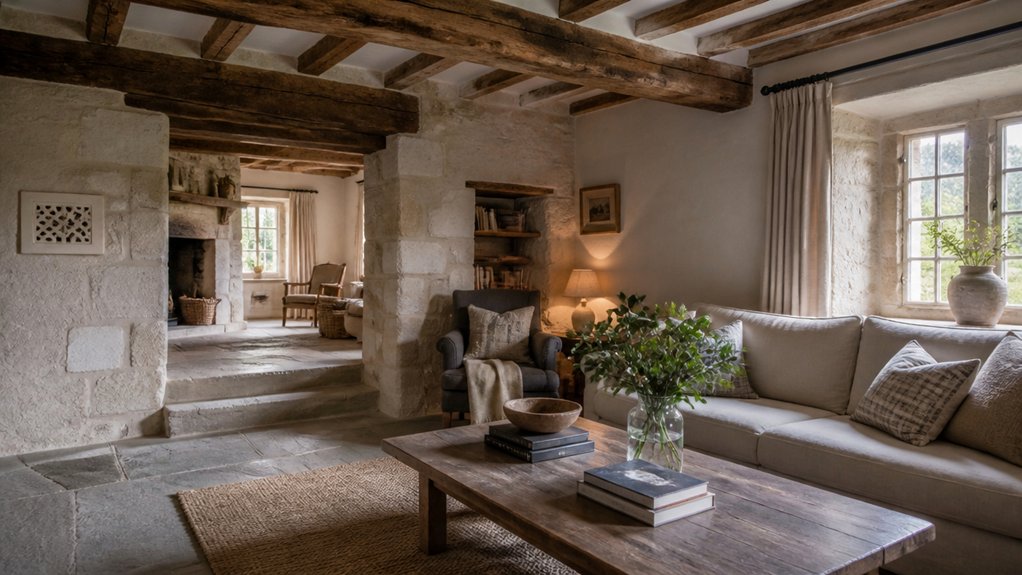
A farmhouse can feel draughty in winter and stifling in summer, but sealing it without a plan can trap moisture and damage historic materials. Start with an energy assessment to locate heat loss and identify damp risks before choosing upgrades.
Insulate the roof and accessible floors first; address walls only where the construction can safely manage moisture. Use reversible measures where possible, and preserve original features that contribute to thermal comfort.
Pair insulation with controlled ventilation. Repair leaks, then provide reliable extraction in kitchens and bathrooms so moisture doesn’t build up. Keep vents clear, and monitor humidity to protect timber, plaster, and indoor air quality.
Draught-proof doors and windows selectively, retaining necessary airflow rather than sealing every gap. These targeted steps can reduce bills, steady indoor temperatures, and make daily life more comfortable without compromising the farmhouse’s character.
Choose Farmhouse-Friendly Materials and Skilled Trades
Choose materials that suit the farmhouse’s age and construction, not just its look or price. Match repairs to what’s already there: lime mortar for historic masonry, breathable finishes for old walls, and reclaimed or locally milled timber where appropriate. These farmhouse materials can protect original fabric and help you avoid costly moisture problems.
Before buying, compare durability, maintenance, lead times, and whole-life cost; the cheapest option may demand replacement sooner.
Hire skilled trades with proven experience in traditional buildings, not just general renovation credentials. Ask for references, inspect comparable projects, and confirm they understand how older structures move and breathe.
Get a written scope that identifies salvageable features, compatible products, and approval requirements. Agree on samples and mock-ups before work begins.
A knowledgeable team can flag hidden risks early, preserve character, and keep your budget focused on lasting improvements.
Frequently Asked Questions
Do Farmhouse Renovations Require Planning Permission or Heritage Approvals?
Your farmhouse renovation may need planning permission or heritage approval; the rules aren’t a one-size-fits-all map. Check local zoning regulations and ask your planning office whether your property is listed or lies in a protected area.
You’ll often need construction permits for structural changes, additions, or major systems work. Confirm requirements before hiring contractors or starting work—unapproved changes can trigger fines, delays, or costly reversals.
Keep written approvals and plans on file.
How Can I Preserve Original Farmhouse Features While Adding Modern Accessibility?
You can preserve original farmhouse features and add modern accessibility by adapting routes and services with minimal disruption.
Prioritize a step-free entrance, wider doorways, and an accessible bathroom, placing changes in less significant areas where possible.
Retain historic doors, floors, beams, and hardware; use reversible ramps or discreet lifts when practical.
Consult an accessibility specialist and conservation professional early.
This coordinated approach supports heritage preservation while delivering modern accessibility and protecting your home’s long-term value.
What Grants or Tax Incentives Are Available for Renovating Historic Farmhouses?
You may qualify for federal and state Tax credits if your farmhouse meets historic-preservation standards, especially when you use it for income-producing purposes.
Preservation grants may support surveys, repairs, or restoration, but availability varies by location and project. Check your State Historic Preservation Office, local heritage agencies, and the National Park Service before work begins.
Confirm eligibility, deadlines, matching-fund requirements, and approval rules first; unauthorized changes can jeopardize benefits.
Compare programs and document costs carefully.
How Should I Document a Farmhouse’s History During Renovation?
Document your farmhouse’s history before, during, and after renovation. Start with Farmhouse storytelling: interview family members and longtime neighbors, gather deeds, photographs, letters, maps, and newspaper clippings, and record dates, names, and memories.
Create Preservation documentation by photographing every room and exterior feature before work begins. Capture construction details as crews uncover them. Label images, note sources, and store digital copies securely.
Your organized archive can guide decisions, strengthen future resale, and support grant applications.
Can a Renovated Farmhouse Be Used as a Vacation Rental or Business?
Yes, you can turn your renovated farmhouse into a vacation rental or business, provided local zoning, permits, safety codes, and insurance allow it.
Think welcoming, not wasteful: preserve character while adding durable, guest-ready features.
Use Farmhouse landscaping to create attractive outdoor spaces, and plan Interior decorating that balances heritage details with comfort.
Before investing, check demand, operating costs, accessibility requirements, and tax rules.
A clear business plan helps your farmhouse earn without compromising its appeal.