
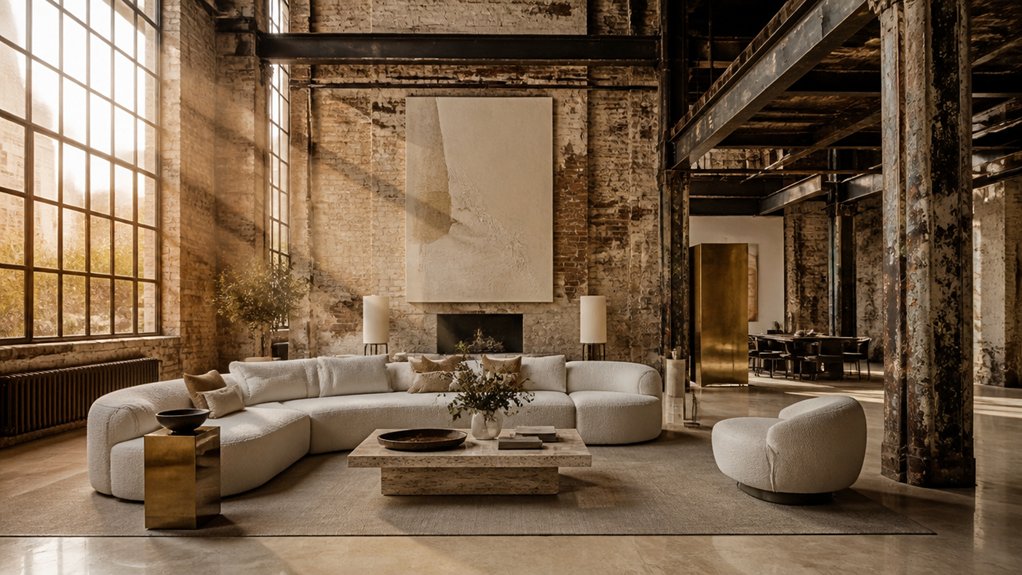
You can balance raw industrial character with ultra-luxury by letting exposed brick, steel, and concrete keep their edge while adding polished stone, warm brass, and tailored finishes. Soften hard surfaces with substantial rugs, linen or velvet upholstery, layered cushions, and warm, dimmable lighting. Choose sculptural fixtures and fewer, better furnishings to create impact without clutter. The result feels authentic, comfortable, and elevated—not overly polished. Explore how thoughtful choices bring this refined industrial look to living rooms, kitchens, and bedrooms.
Key Takeaways
- Preserve exposed brick, concrete, steel, and timber, then pair them with refined finishes that highlight rather than conceal their character.
- Balance rugged surfaces with tactile luxury—plush rugs, tailored upholstery, linen, velvet, and warm-toned textiles.
- Create depth through restrained contrast, such as matte metal beside polished stone or aged wood alongside clean-lined furnishings.
- Use sculptural lighting, warm layered illumination, and dimmers to add atmosphere while softening industrial spaces.
- Choose fewer, well-crafted pieces and durable materials that combine everyday function, lasting quality, and understated luxury.
Balance Industrial Luxury With Refined Finishes
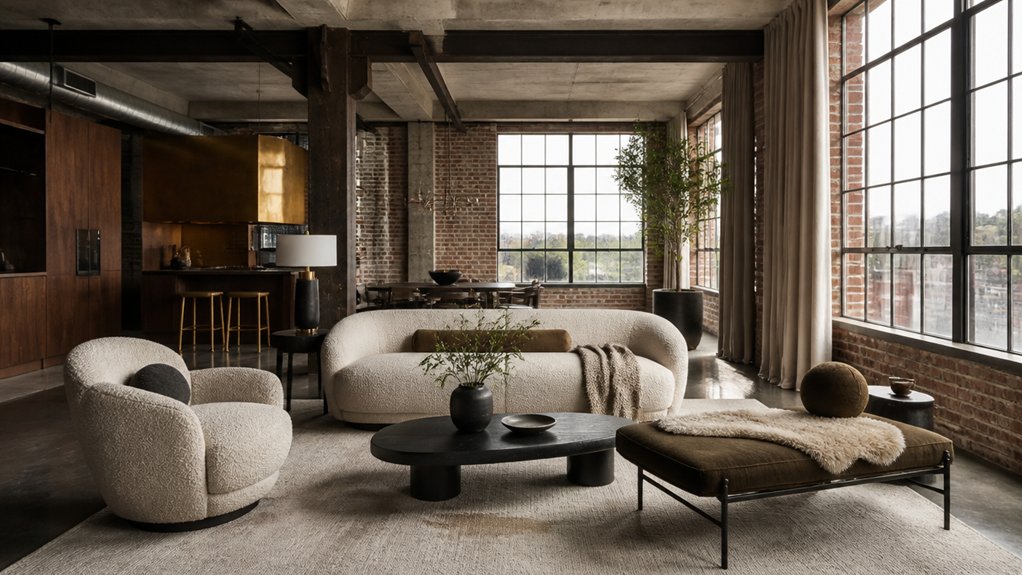
Balance industrial character with refined finishes to create a space that feels both striking and livable. You can make that contrast feel intentional by pairing bold architectural presence with tailored comfort and thoughtful restraint. Choose lighting, furnishings, and textiles that soften the room’s mood without diminishing its edge.
Vintage industrial accents add a sense of history, while streamlined silhouettes keep the overall look current and elevated. Pay attention to Industrial acoustics, too: hard, open spaces can amplify noise, so use rugs, upholstered seating, and layered window treatments to create a quieter, more welcoming experience.
These choices don’t just improve daily comfort; they help your interior feel polished and memorable. When every detail supports both atmosphere and function, you’ll create a distinctive space that appeals to design-conscious buyers and feels rewarding to live in.
Choose Raw Materials and Polished Details
Pair tactile raw materials with polished finishes to give your space contrast buyers notice. Set matte metal against marble’s shine for a refined industrial edge.
Then sharpen raw wood with clean lines and considered details—you’ll make rugged feel intentional.
Balance Texture and Shine
To keep an industrial interior from feeling cold or a luxury scheme too precious, contrast tactile raw materials with polished details. Let exposed brick, rough timber, or concrete establish an authentic foundation, then introduce glossy surfaces to reflect light and sharpen the room’s profile. This interplay gives you visual depth without sacrificing comfort or refinement.
Choose a velvet sofa, a handwoven rug, or softly grained wood to temper harder architectural elements. Add neon lighting as a deliberate accent, not a gimmick; its vivid glow can energize a restrained palette and make a memorable focal point.
Keep finishes selective so each polished element earns attention. When you balance texture with shine, you create an interior that feels lived-in, elevated, and distinctive—qualities that strengthen both emotional appeal and market value.
Pair Metal With Marble
Metal and marble bring industrial character and luxury polish into sharp focus. Pairing them gives you a compelling contrast that feels considered, not cold.
Choose metal accents in blackened steel, brushed brass, or aged bronze to echo the honest edge of industrial design. Then introduce marble countertops with expressive veining to add refinement and a premium focal point.
The key is balance: let one material lead while the other supports it. A dark metal island base, for example, can ground a luminous stone surface without overwhelming the room.
Repeat each finish sparingly across lighting, hardware, or shelving for a cohesive look. You’ll create a kitchen or entertaining space that photographs beautifully, signals quality to buyers, and feels distinctive in person.
Select durable finishes, too, so daily use won’t diminish the appeal.
Refine Raw Wood Details
Raw wood adds warmth and texture to an industrial interior, while polished details keep the look intentional and refined. Choose raw wood accents with visible grain, subtle knots, and natural variation to bring authenticity without making your space feel unfinished. A reclaimed oak dining table or walnut shelving can anchor a room and signal quality to discerning buyers.
Balance rustic craftsmanship with precise finishes: pair a hand-hewn surface with slim metal legs, tailored upholstery, or discreet brass hardware. Seal wood with a matte, durable finish that protects its character without adding artificial shine.
Repeat the tone in smaller touches, such as a console or frame, to create cohesion. By editing carefully, you’ll make each material feel considered, elevate perceived value, and deliver an industrial interior that feels warm, sophisticated, and distinctly yours.
Warm Brick, Steel, and Concrete With Texture
Pair brick, steel, and concrete with soft textiles to make industrial spaces feel inviting without losing their edge. Choose tactile finishes—such as nubby wool, brushed metal, or honed stone—to give your palette depth and a more considered, premium feel.
You’ll create a balanced interior that looks distinctive and lives comfortably.
Layer Soft Textiles
To soften brick, steel, and concrete without losing their character, layer in tactile textiles that invite touch. Choose a substantial wool rug to anchor the room, then add linen drapery to temper hard edges and filter daylight.
A velvet sofa or boucle chair brings a refined focal point, while cushions in varied weaves make textile layering feel intentional, not overly styled. Use fabric contrast to sharpen the palette: pair warm camel, ivory, or rust with charcoal and cool gray.
These tones connect soft furnishings to industrial surfaces, creating a cohesive look that feels both elevated and livable. Scale matters, too. Generous rugs and full-length curtains lend polish to lofty rooms, while tailored upholstery keeps the composition crisp.
You’ll create comfort buyers can feel without masking the architecture that makes the space distinctive.
Add Tactile Finishes
Texture gives industrial materials their warmth and luxury appeal. When you choose tactile finishes, you turn brick, steel, and concrete into refined focal points rather than cold backdrops.
Expose brick with a softly aged surface, then seal it to preserve its character without adding visual gloss. Pair brushed or patinated steel with polished accents, giving your space contrast that feels considered and premium.
For concrete, specify a honed, troweled, or lightly textured finish; each adds depth while keeping the palette restrained.
Sensory textures also shape how buyers experience a room. They invite touch, create memorable moments, and signal craftsmanship—qualities that support a more elevated perception of value.
Balance rough surfaces with clean lines and warm lighting, so your materials feel intentional, not unfinished. The result is industrial character with comfort, distinction, and lasting market appeal.
Soften Industrial Spaces With Sculptural Lighting
While exposed brick, concrete, and steel give industrial interiors their edge, sculptural lighting brings a softer, more luxurious counterpoint. Choose sculptural chandeliers with fluid silhouettes, refined finishes, or hand-blown glass to draw the eye upward and temper hard architectural lines.
In open-plan spaces, a striking pendant can define a dining zone without adding visual bulk. Use warm, layered illumination to make the room feel inviting after dark, while dimmers let you shift from practical brightness to an intimate glow.
For a bolder, more contemporary note, add neon accents sparingly; a subtle wash of color can energize a brick wall without competing with its texture. Select fixtures that feel distinctive yet purposeful, and your lighting will turn industrial character into a polished, memorable experience buyers and guests will notice.
Pair Industrial Architecture With Luxury Furnishings
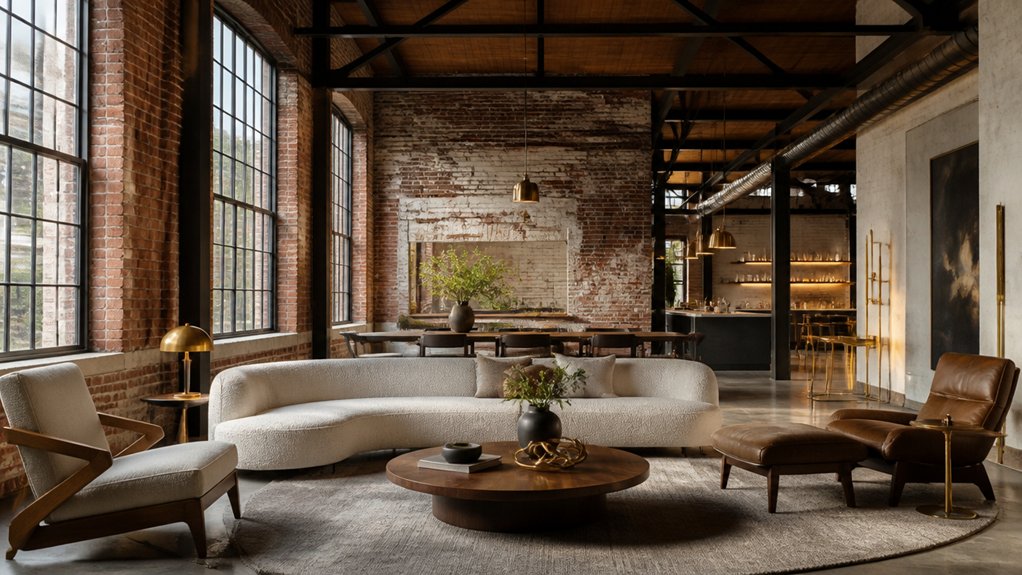
Pair industrial architecture with luxury furnishings to create contrast that feels intentional, not stark. Set a tailored velvet sofa against exposed brick, or place a sculptural stone table beneath steel beams. These choices let texture carry the story while keeping the space polished and inviting.
For compelling Industrial contrast, balance hard surfaces with tactile upholstery, refined finishes, and confident silhouettes. Choose fewer, better pieces; generous proportions make a stronger statement than crowded accessories. A leather lounge chair, polished metal accent, or hand-knotted rug can soften the architecture without disguising its character.
Thoughtful Luxury integration also supports lasting value. Invest in craftsmanship and materials that age well, then repeat select tones or finishes to connect old and new. You’ll create a distinctive interior that feels curated, comfortable, and premium—an atmosphere buyers and guests recognize as both authentic and elevated.
Style Living Rooms, Kitchens, and Bedrooms
Carry the industrial-luxe balance into each room with choices tailored to how you live.
In your living room, pair a sculptural leather sofa with a reclaimed-wood coffee table, then soften exposed brick with plush rugs and layered lighting. Vintage accents add character, while color contrasts—think charcoal against cream—make the palette feel intentional and elevated.
In the kitchen, combine matte-black metal shelving with polished stone counters and streamlined cabinetry. Choose durable, high-performance finishes that look refined and work hard every day. Warm brass hardware can bridge rugged structure and luxury.
For your bedroom, balance steel-framed details with tactile linen, velvet, and a generous upholstered headboard. Keep the palette calm, then introduce a bold fixture or artwork for impact.
Across every room, invest in fewer, better pieces to create cohesion, comfort, and lasting appeal.
Frequently Asked Questions
How Can I Improve Acoustics in an Industrial-Style Home?
You can improve acoustics by softening hard surfaces without sacrificing your industrial aesthetic. Install Acoustic panels in rich fabrics or sculptural finishes, and pair them with thick rugs, lined curtains, and upholstered seating to absorb echoes.
Add bookshelves or textured wall treatments for stylish diffusion. For noise between rooms, use Soundproofing solutions such as door seals, dense insulation, and acoustic glazing.
You’ll create a quieter, more comfortable home while keeping its character intact.
Which Window Treatments Work Best for Factory-Style Windows?
For factory-style windows, choose treatments that soften light without hiding their striking frames.
Curtain styles such as linen panels on a ceiling-mounted track add warmth and height, while keeping the hardware simple preserves the industrial edge.
For a cleaner profile, explore Blinds options like slim metal or wood slats, which offer precise light control and privacy.
Layer sheer curtains with blinds to create a polished, flexible look that feels both architectural and inviting.
How Can I Make an Industrial Interior More Energy-Efficient?
Let your industrial space breathe easier—and your energy bills shrink—by sealing drafts around steel-framed windows and doors.
Add Insulation improvements in walls, ceilings, and floors, choosing discreet materials that preserve exposed brick and concrete.
Swap outdated bulbs for Energy efficient lighting, such as warm-toned LEDs that flatter metal finishes while using less power.
Install smart controls to dim lights and adjust temperatures automatically.
You’ll keep the raw character and gain lasting comfort, lower costs, and market appeal.
What Maintenance Do Exposed Brick and Steel Require?
You’ll keep exposed brick and steel striking with gentle, regular care. Dust brick with a soft brush, vacuum mortar joints, and address moisture or crumbling promptly.
Brick sealing can help resist stains, but choose a breathable product and test an inconspicuous patch first.
Wipe steel with a microfiber cloth and mild cleaner; dry it thoroughly to prevent rust.
Steel polishing restores sheen, while protective wax helps preserve the finish without sacrificing industrial character or visual appeal.
Can Industrial Design Work in a Small Apartment?
Yes, industrial design can make your small apartment feel distinctive without sacrificing comfort. Use Industrial zoning to define living, dining, and work areas with rugs, lighting, or open shelving instead of bulky partitions.
Choose slim-profile Vintage furniture, then pair it with exposed brick, metal accents, and warm wood for character. Keep your palette cohesive and storage streamlined; you’ll preserve visual openness while creating a polished, market-ready home that feels thoughtfully designed.