

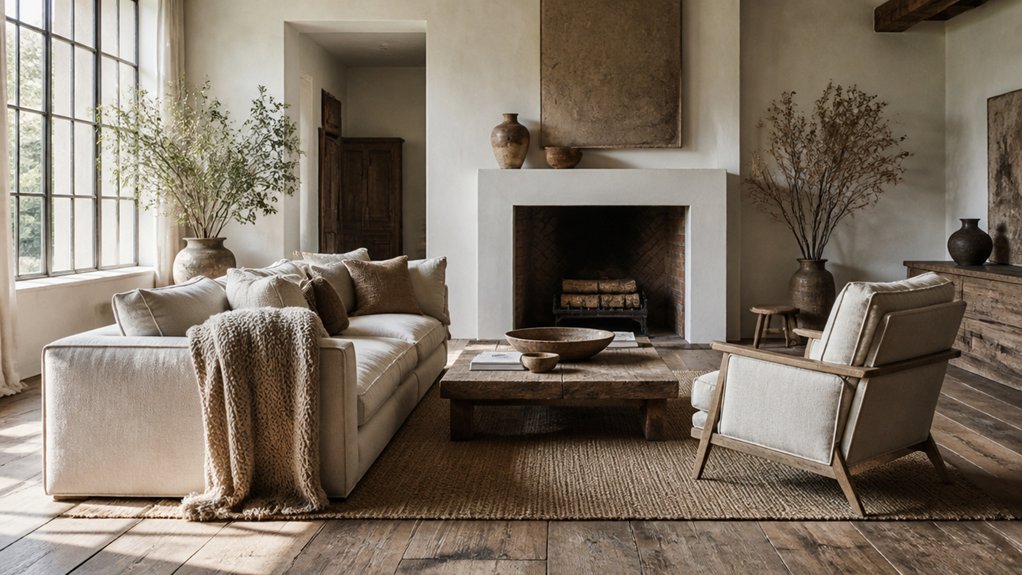
Let reclaimed floorboards set your room’s palette, and preserve their grain, saw marks, and patina instead of hiding their history. Choose warm neutrals such as ivory or oatmeal, then add slate blue or soft gray for contrast. Layer linen, wool, stone, and woven grasses to bring depth without competing with the wood. Pair these textures with clean-lined, well-made furniture and carefully chosen accents. The right rug can define a space, protect the boards, and reveal their character; discover how to make every choice last.
Key Takeaways
- Treat reclaimed floorboards as the room’s anchor, preserving their distinctive grain, saw marks, patina, and natural wear.
- Choose warm neutrals that complement the wood’s undertones, adding restrained cool accents for contrast.
- Pair timber with linen, wool, stone, and woven textures, repeating tones to keep the mix cohesive.
- Balance rustic flooring with timeless, clean-lined furniture, thoughtful finishes, and a few meaningful vintage or modern accents.
- Clean regularly, limit moisture, protect boards from furniture scratches, and choose suitable finishes to preserve their character.
Read the Character of Your Reclaimed Floors
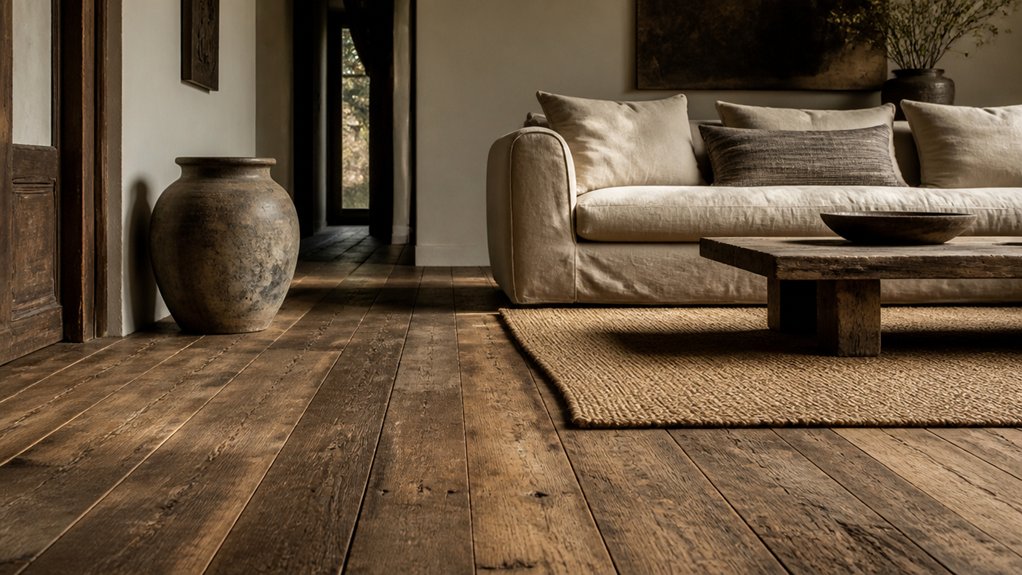
Before choosing a finish, take time to read what your reclaimed floors already bring to the room. Notice the board widths, grain patterns, saw marks, and wear. These details reveal a past life and give your interior a sense of authenticity that new materials can’t replicate.
Read the floor’s grain, saw marks, and wear before choosing a finish; its imperfections tell a story new materials can’t replicate.
Use Character storytelling to guide your design decisions. A floor with visible tool marks may suit a relaxed, collected scheme, while refined boards can anchor a more tailored interior. Look for variation and imperfections that feel intentional, not distracting.
Consider how natural textures elsewhere can complement these features.
Historical preservation also matters: retain distinctive features where practical, and avoid treatments that erase the floor’s provenance. When you understand its age, condition, and character, you can choose furnishings and finishes that respect its history while making the room feel current.
Choose Colours for Reclaimed Wooden Floors
Choose warm neutrals to bring out the richness and patina of your reclaimed wood floors.
For a sharper, more contemporary look, balance their warmth with cool shades like slate blue or soft gray.
Let your floor’s undertones guide the palette for a polished, cohesive finish.
Pair With Warm Neutrals
Warm neutrals bring out the depth and character of reclaimed wood without competing with its natural patina. Pair your floorboards with soft ivory, oatmeal, sand, or creamy beige to create a welcoming foundation that feels considered, not predictable. These hues let varied grain, knots, and aged marks take the lead, while keeping the room bright and easy to style.
For a polished palette, layer warm neutrals across walls, upholstery, and window treatments, shifting tones and textures to add dimension. A linen sofa, wool rug, or matte plaster finish can soften the boards’ stronger lines. Choose undertones that echo the wood’s honey, amber, or muted brown notes, and your scheme will feel cohesive.
The result balances Vintage charm with Rustic elegance, giving you a versatile backdrop that supports standout furnishings and lasting appeal.
Balance With Cool Shades
Cool shades can balance the warmth of reclaimed wood while letting its aged grain remain the focal point. Pair your floorboards with soft blue, muted sage, or crisp grey to create contrast without making the room feel cold.
Choose wall colours with enough depth to complement the wood’s varied patina, and test samples in changing daylight before you commit.
Layer in cool tones through upholstery, rugs, and ceramics, keeping larger surfaces restrained so the boards retain visual impact. Modern lighting in brushed nickel or matte black sharpens the palette and brings out the floor’s texture.
Add Artistic accents, such as cobalt glass or a sculptural green vase, for a considered pop of colour. Repeat one shade across a few details to make the scheme feel cohesive, polished, and personal—not overly matched.
Mix Natural Textures With Reclaimed Timber
Pair reclaimed timber with tactile natural materials—linen, wool, stone, or woven grasses—to give a room depth without tying it to a passing trend. Let the floor’s grain and patina anchor the palette, then layer contrasting textures to add dimension.
A nubby wool rug softens the boards, while linen curtains filter light and bring an easy, relaxed finish. Stone accents introduce a cooler, grounded note; woven baskets add pattern without visual clutter.
Keep the mix edited: repeat a texture or tone so the room feels considered, not crowded. When sourcing materials, look for Eco friendly sourcing and Sustainable manufacturing credentials, and check durability alongside appearance.
These choices support a more responsible interior while helping you invest in finishes that age gracefully and keep the space feeling current for years.
Pair Reclaimed Floors With Timeless Furniture
Reclaimed floors bring character to a room, so choose furniture with clean lines and enduring proportions to keep the look balanced. A streamlined sofa, solid-wood dining table, or tailored armchair lets the boards’ grain and patina stand out without making the space feel dated.
Match finishes thoughtfully: warm timber pairs well with natural upholstery, while black or brushed-metal details add definition. You don’t need a matching furniture set; combining a few well-made pieces creates a collected look that feels personal and lasts beyond seasonal trends.
Add Vintage accessories sparingly, choosing pieces with useful forms or meaningful detail. Modern artwork can introduce contrast and give the room a fresh focal point.
Keep the palette cohesive, and let each selection support the floor’s distinctive character rather than compete with it.
Choose Rugs That Suit Reclaimed Wooden Floors
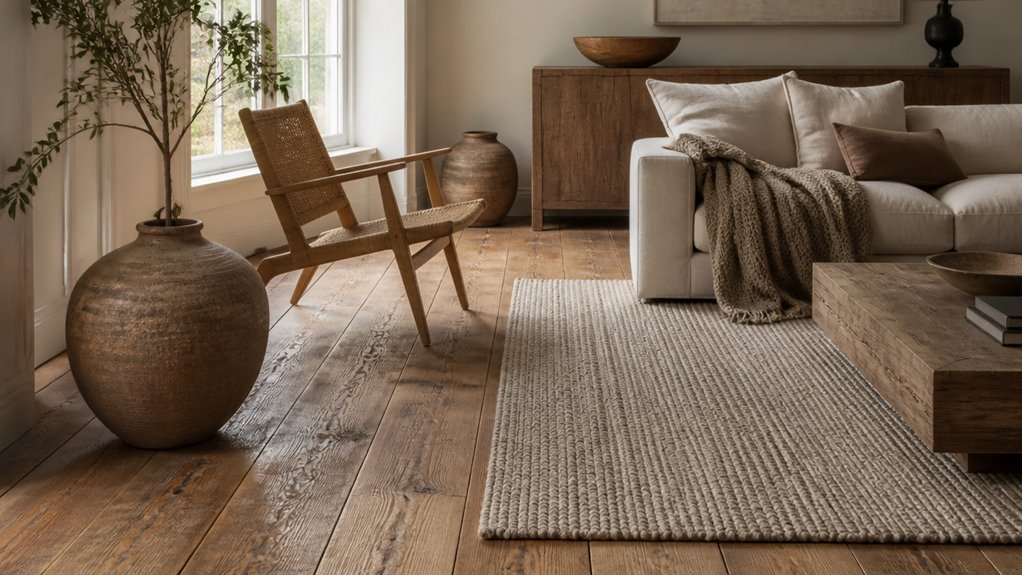
Choose rug colors that complement your reclaimed floor’s undertones, whether warm and honeyed or cool and weathered.
Let the rug’s pattern add character without competing with the wood’s natural grain.
Balance texture, too, pairing a plush or flatweave rug with the floor’s distinctive patina.
Choose Complementary Colors
How can a rug bring out the character of reclaimed wood? Choose complementary colors that let your floor’s history feel intentional, not dated. Warm oak and honey tones pair beautifully with muted sage, soft ivory, or dusty blue. Deeper walnut suits clay, rust, and warm cream. If your boards carry varied undertones, use a rug color that picks up one subtle note rather than competing with every shade.
Consider color psychology when setting the mood: cool hues can calm a sunlit room, while terracotta adds warmth to a north-facing space. Test samples beside the floor at different times of day, since lighting techniques can shift a color’s appearance. You’ll make a more confident choice by checking the rug against your walls, upholstery, and natural light before buying.
Balance Pattern and Texture
When reclaimed boards already bring knots, grain, and age marks into view, a rug with a restrained pattern keeps the room balanced. Choose a subtle stripe, softened geometric motif, or tonal weave to complement the floor without competing with its character.
If your boards look especially varied, let the rug’s surface stay simple; quieter flooring can handle more pattern diversity.
Build texture contrast with a flat-woven wool rug, nubby natural fiber, or plush pile against the wood’s worn finish. Consider how each option feels underfoot and performs in high-traffic areas: durable wool suits busy living spaces, while jute adds relaxed warmth in quieter zones.
Keep the palette connected to your room’s colors, and use a properly sized rug to define seating without hiding the floor. A thoughtful pairing makes both materials feel intentional and enduring.
Protect Reclaimed Wooden Floors for Lasting Beauty
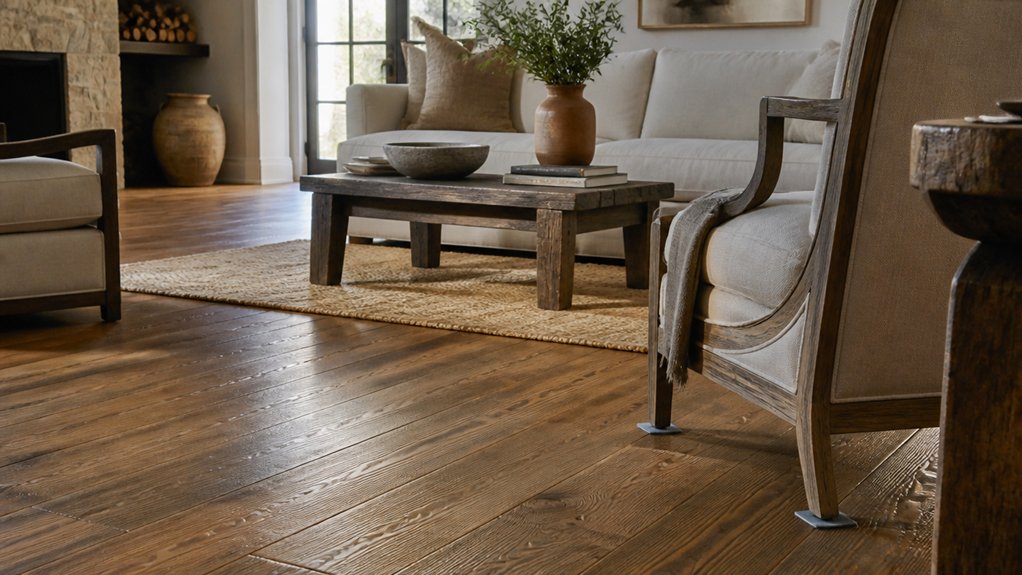
Reclaimed wood brings character to a room, and the right finish helps that beauty endure. Choose a low-sheen, hard-wearing sealant that protects the boards without hiding their grain, patina, or subtle color shifts. Match the finish to your lifestyle: matte oils suit relaxed spaces, while durable water-based coatings handle busy households with less upkeep.
Pair protection with thoughtful daily care. Add felt pads beneath furniture, use breathable rugs in high-traffic zones, and wipe spills promptly to prevent stains and moisture damage. Avoid harsh cleaners and excess water; a soft broom and wood-safe cleaner preserve the surface. These practical maintenance tips keep your floor looking considered, not overly polished.
Coordinate furniture finishes with the wood’s natural tones, letting reclaimed boards anchor your palette. With consistent care, you’ll retain their lived-in appeal and long-term value.
Frequently Asked Questions
How Can I Check Reclaimed Floorboards for Pests Before Installation?
Before you bring those reclaimed boards indoors, pause: tiny clues could hide beneath their weathered charm. For a thorough Pest inspection, examine both faces, edges, and end grain under bright light. Look for fresh, powdery frass, pinholes, tunnels, shed wings, or live insects.
Tap boards and listen for hollow spots. Quarantine suspicious planks, and ask a pest professional to identify activity. Before installation, choose suitable Wood treatment to protect your design investment.
What Should I Budget for Sourcing and Installing Reclaimed Wooden Flooring?
Budget roughly $8–$25 per square foot for reclaimed boards, plus $4–$12 for installation. Premium species, sorting, repairs, and regional labor can push totals higher.
For accurate cost estimation, measure your floor, add 10–15% for waste, and request itemized quotes covering delivery, acclimation, subfloor preparation, finishing, and installation.
Smart material sourcing—salvage yards, architectural reclaimers, or vetted online sellers—can balance character, condition, and price.
Confirm grading, pest treatment, and return terms before purchasing.
Can Reclaimed Floorboards Be Installed Over Underfloor Heating?
Yes, you can install reclaimed floorboards over underfloor heating, provided you choose stable, kiln-dried boards and follow the heating system manufacturer’s guidance.
Have your installer check moisture levels, subfloor compatibility, and temperature limits before fitting.
Gradual heat-up helps reduce movement and gaps.
For strong aesthetic considerations, expect natural variation in tone and grain to complement your interior.
Include Floorboard maintenance in your plan: keep humidity steady, clean gently, and avoid sudden temperature changes to protect your investment.
How Can I Verify the Origin and Sustainability of Reclaimed Timber?
Treat every board like a passport: ask your supplier for its original location, previous use, and chain-of-custody records.
Verify claims against invoices, salvage documentation, and independent Certification standards, such as FSC Recycled where applicable.
For Ethical sourcing, check that timber wasn’t illegally harvested or taken from protected sites, and confirm the seller follows local regulations.
Request written proof, not just a compelling story; transparent provenance protects your project’s integrity and gives your design story lasting value.
What Preparation Is Needed Before Reclaimed Floorboards Are Installed?
Before installing reclaimed floorboards, you’ll need to inspect, clean, and acclimate them to your home’s humidity for several days. Remove nails, sort boards by thickness, and check for pests, rot, or damage.
Prepare a level, dry subfloor, and plan your layout to minimize waste. Anticipating installation challenges, such as uneven widths and hidden fasteners, helps you budget time and labor.
Choose finishing options early to coordinate color, sheen, and protection with your design vision.