

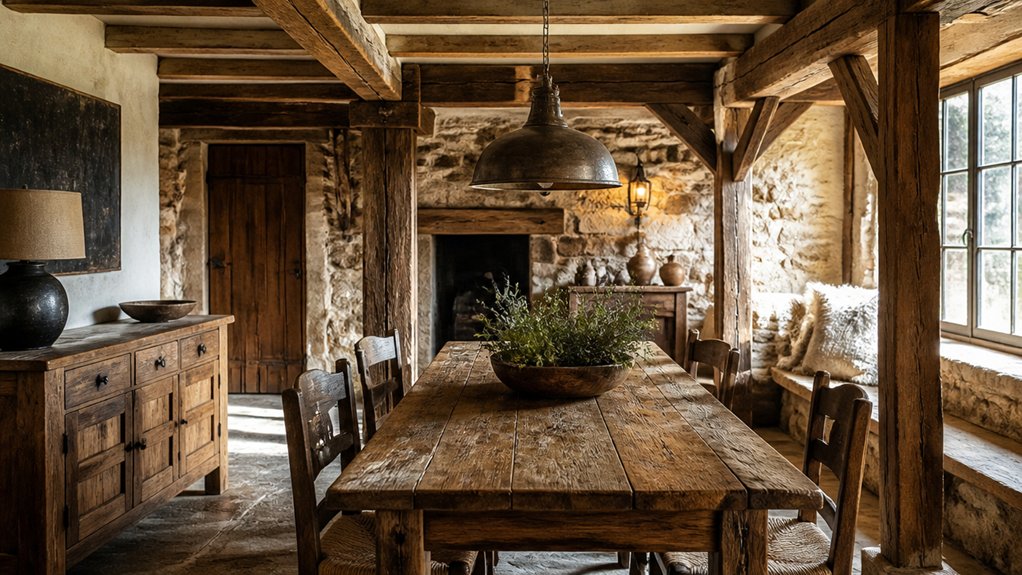
Create a characterful interior by pairing salvaged timber’s warmth with stone’s texture and patinated iron’s definition. First, check each material’s provenance, condition, dimensions, and suitability for its intended use; get expert advice on structural concerns. Choose timber and stone that complement your room’s palette and function, then use ironwork to add crafted detail. Balance rustic features with modern finishes for a fresh, move-in-ready feel. With thoughtful placement and proper care, you’ll preserve lasting appeal—explore how to get every detail right.
Key Takeaways
- Inspect salvaged timber, stone, and iron for damage, contamination, provenance, and suitability before incorporating them into your design.
- Choose timber by species, grain, color, and dimensions; use expressive pieces as focal points and calmer finishes for balance.
- Pair natural stone with patinated ironwork, checking stability and finish while using contrasting textures to highlight craftsmanship.
- Blend reclaimed materials with modern cabinetry, lighting, and smooth surfaces to create a characterful yet contemporary interior.
- Protect timber from moisture, seal porous stone, and keep iron clean and dry to preserve their appearance and longevity.
Check Condition, Source and Suitability
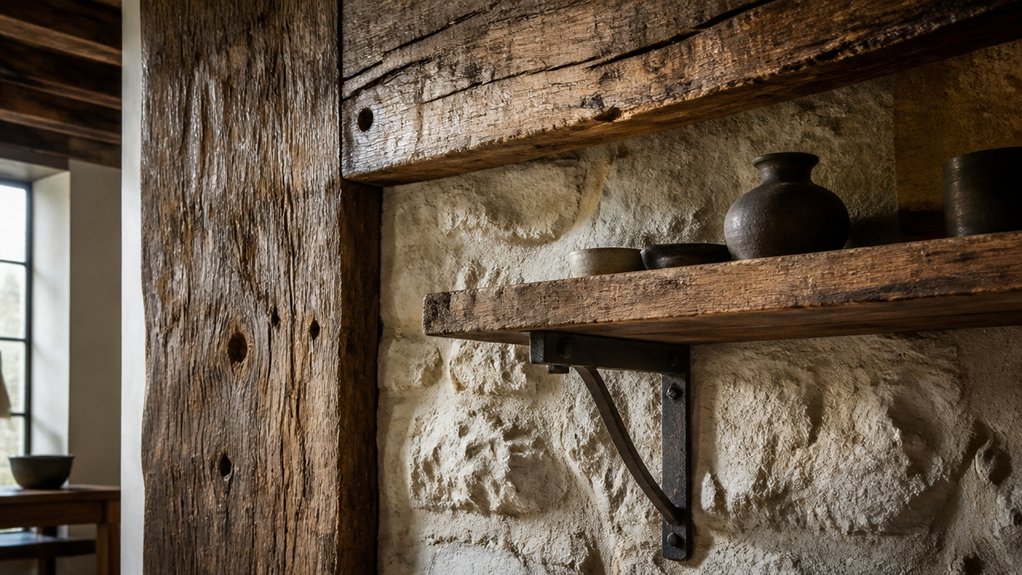
Before bringing salvaged timber, stone or iron into your interior, check its condition, provenance and suitability for the job. Ask suppliers where each piece came from, how it was stored and whether they can document its history. Clear records help you assess quality, meet project requirements and present a more compelling story to clients or buyers.
Inspect materials for rot, cracks, corrosion, contamination and hidden repairs. If you can’t verify structural integrity, consult a qualified professional before committing. Match each item to its intended use, considering load, exposure, dimensions and applicable building codes.
Some restoration techniques can preserve character, but repairs may add cost or alter the finish.
Expect sourcing challenges: reclaimed stock varies, and availability can change quickly. Confirm quantities, condition and delivery terms early so your budget and schedule stay realistic.
Choose and Place Salvaged Timber
Choose salvaged timber by matching its species, grain, color and dimensions to the room’s purpose and palette. For a welcoming dining area, select boards with expressive timber grain for a table or feature wall; choose calmer, tighter patterns where you want a quieter backdrop. Coordinate tones with existing furnishings, or use contrast to create a focal point. Before buying, confirm each piece suits its intended use and can be cut or installed to fit your layout.
Place timber where it adds warmth and practical value. Use reclaimed beams to draw the eye upward, wide planks to anchor a floor, or a salvaged mantel to frame a fireplace. Balance bold reclaimed finishes with simpler surfaces so the room feels considered, not crowded.
You’ll create a distinctive interior that showcases the material’s history while supporting lasting appeal and a more memorable property.
Choose and Place Salvaged Stone
Inspect each piece for cracks, wear, and stability before you buy, so your salvaged stone delivers lasting value. Match its color, texture, and scale to your space, then plan placement to balance visual impact with everyday function.
Done well, salvaged stone adds distinctive character and elevates your interior’s appeal.
Assess Stone Condition
Salvaged stone can add lasting character to an interior, but its condition determines where it belongs. Before you buy, inspect each piece in good light. Look for cracks, loose layers, crumbling edges, and stains that may signal deeper damage. Natural erosion can lend a surface appealing age, but don’t confuse it with active deterioration.
Ask how the stone was stored and whether it has faced moisture, frost, or chemical exposure.
Test structural integrity by checking for movement, hollow sounds, or weak spots, and have a qualified professional assess pieces intended for demanding use. Confirm that repairs won’t compromise safety or erase the stone’s distinctive character.
A careful condition check helps you avoid costly surprises, protect your project, and invest in salvaged material that delivers enduring value.
Match Stone to Space
Once you’ve confirmed the stone is sound, match its weight, texture, and finish to the room and its purpose. A thick, rugged slab can anchor a fireplace surround or kitchen island, while thinner pieces suit shelving, thresholds, and compact accents.
Choose a surface that supports daily use: honed stone feels refined and wipes clean, while a weathered finish brings tactile character to low-traffic areas. Let color and veining complement your palette, or use Material contrast to give timber and ironwork sharper definition.
Salvaged stone adds Historical authenticity, especially when its original tool marks and patina remain visible. Check that its scale and weight suit the room’s structure, and select a format that delivers impact without overwhelming the space.
The right match makes reclaimed material feel considered, distinctive, and valuable.
Plan Placement and Balance
Before placing salvaged stone, decide where it will make the strongest visual and practical contribution. A fireplace surround, entry wall, or kitchen island can showcase its texture while adding lasting character. Consider focal point placement early, so the stone draws attention without competing with windows, artwork, or other finishes. Its weight and visual density also affect how a room feels; balance a substantial feature with lighter materials, open space, and restrained accents.
Review furniture arrangement before installation. Keep seating oriented toward the stone feature, preserve clear walking routes, and avoid crowding the surface with bulky pieces. In smaller rooms, use stone selectively, such as a hearth or niche, to create impact without overwhelming the space. Choose a scale and location that suit daily use as well as your design goals.
Thoughtful placement helps your salvaged stone feel purposeful, polished, and valuable.
Add Character With Patinated Ironwork
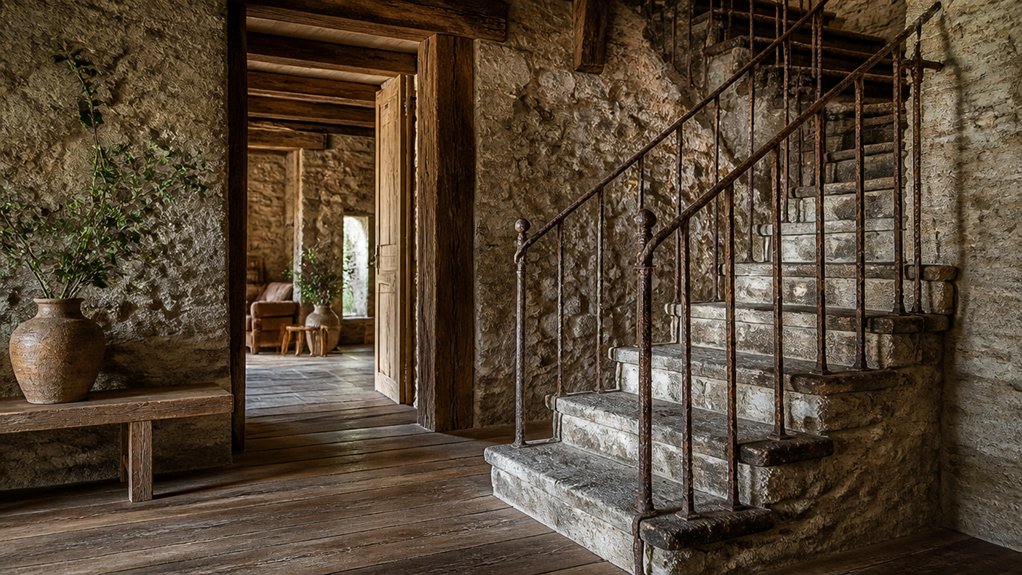
Let natural oxidation bring depth and a one-of-a-kind finish to your ironwork.
Pair it with salvaged stone to create a rich, enduring contrast.
Highlight hand-forged details to give your interior distinctive character.
Embrace Natural Oxidation
Patinated ironwork brings depth and quiet character to an interior, so you don’t need to polish away every trace of age. Natural patina reveals the metal’s history, giving your space an authentic finish that new hardware can’t replicate. Choose pieces with weathered textures, from softly mottled hinges to darkened handles, to add visual interest without overwhelming the room.
Before installation, check that oxidation is stable and the iron remains sound. Brush away loose rust, then apply a clear protective coating where you need to limit transfer or further corrosion. Keep areas exposed to moisture properly sealed, and use suitable care products to preserve the finish.
Pair Iron With Stone
Pairing patinated iron with natural stone creates a striking balance of rugged texture and refined detail. Bring this combination into your home to give fireplaces, kitchens, and entryways a grounded, distinctive presence.
Iron brackets, rails, or frames can sharpen the organic character of stone without overwhelming its natural variation. Choose warm-toned limestone for a softer, welcoming effect, or pair dark iron with slate for a bolder contrast.
This thoughtful mix delivers Rustic elegance while adding Industrial charm, making your space feel both enduring and current. You can repeat the materials across a room to create visual cohesion, or use one iron accent against a stone surface for a focused statement.
Either way, the pairing adds depth and lasting appeal, helping your interior stand apart without relying on passing trends.
Highlight Hand-Forged Details
When you choose hand-forged ironwork, subtle variations in each piece bring warmth and individuality to your interior. Let those details take the lead: choose a forged handle, hinge, or lighting fixture with visible hammer marks and a finish that develops character over time.
These tactile accents complement salvaged timber and stone, adding depth without overwhelming the room.
Look for hand forged craftsmanship in carefully shaped edges, balanced proportions, and joints that reveal the maker’s skill. A dark, patinated surface can soften a crisp renovation, while a lighter waxed finish highlights the metal’s natural texture.
Repeat ironwork selectively across doors, cabinetry, and furniture to create a cohesive look. By prioritizing ironwork authenticity over uniformity, you’ll give your space a distinctive, lasting appeal—and invest in details that feel as considered as they look.
Pair Salvaged Materials With Modern Finishes
Let salvaged materials bring history to your interior without making it feel dated. Pair reclaimed timber, stone, and iron with clean-lined cabinetry, polished concrete, or sleek metal fixtures to create a balanced, current look. You’ll preserve the character buyers value while giving each room a refined, move-in-ready feel.
Use Rustic charm as an accent, not a theme: a weathered beam can warm a minimalist kitchen, while a salvaged stone wall can anchor a crisp, neutral living space. For visual contrast, set rough textures against smooth surfaces and deep, timeworn tones against light finishes.
Choose modern lighting and restrained hardware to keep the composition intentional. This thoughtful mix makes your interior feel distinctive yet versatile, helping it appeal to design-conscious homeowners without sacrificing authenticity or everyday function.
Protect and Maintain Timber, Stone and Iron
A characterful interior stays appealing when its reclaimed materials are properly cared for. With a few consistent habits, you’ll protect the timber, stone and iron that give your home distinctive appeal—and help your investment last.
Dust timber regularly, wipe spills promptly and use a suitable wax or oil to preserve its finish. Keep reclaimed wood away from excess moisture and direct heat to reduce warping and cracking.
Regular dusting, prompt spill cleanup and suitable wax or oil help preserve reclaimed timber’s finish and prevent damage.
For stone, choose a pH-neutral cleaner; acidic products can etch delicate surfaces. Seal porous stone as recommended, especially around kitchens and bathrooms.
Remove dust from iron with a soft cloth, then dry it thoroughly to discourage rust. Apply protective wax or a suitable coating when needed.
These simple steps keep Vintage furniture looking inviting and Artistic accents striking, so your carefully curated interior retains its character and value.
Frequently Asked Questions
Can Salvaged Materials Work in a Small, Contemporary Apartment?
Yes, salvaged materials can make your small, contemporary apartment feel distinctive without overwhelming it. Choose one focal feature, such as reclaimed timber shelving or a stone backsplash, then balance it with clean lines and light colors.
Vintage textures add warmth, while restrained Rustic finishes keep the look polished rather than cluttered. Use compact, functional pieces to maximize space, and repeat materials sparingly for cohesion.
You’ll create a modern home with lasting character and appeal.
How Can I Combine Different Salvaged Materials Without Making a Room Feel Cluttered?
Less is more: choose one salvaged material as your focal point, then use two others sparingly to keep your room cohesive. Build a clear palette through color coordination, repeating a few tones across timber, stone, and iron.
For effective mixing of textures, balance rough surfaces with smooth finishes. Leave breathing room around statement pieces.
You’ll create a distinctive interior that feels curated, not crowded—and make every reclaimed detail work harder.
Are There Building Regulations for Using Reclaimed Materials in Renovations?
Yes, building codes and safety standards apply when you use reclaimed materials in renovations. You’ll need to show that each item meets local requirements for structural strength, fire resistance, sanitation, and energy performance.
Ask your building department and contractor to assess materials before installation, and keep documentation on their origin and treatment. This step protects your project, avoids costly delays, and helps you create a distinctive interior that’s safe, compliant, and market-ready.
Can Salvaged Materials Improve a Home’s Environmental Credentials?
Yes, salvaged materials can improve your home’s environmental credentials: new may look pristine, but reclaimed can carry a lighter footprint.
By reusing timber, stone, or iron, you reduce demand for virgin resources and help keep usable materials out of landfill.
Choose suppliers who verify Sustainable sourcing, and pair reclaimed features with Eco friendly practices, such as efficient insulation.
You’ll gain distinctive character while supporting a more responsible renovation—and a compelling story for future buyers.
How Can I Verify the History and Provenance of Salvaged Materials?
Verify salvaged materials by asking suppliers for Historical documentation, including invoices, demolition records, photographs, and previous ownership details.
Check dates, addresses, and descriptions against public archives or property records, and request independent Provenance verification when available.
Inspect materials for maker’s marks or distinctive features, then compare them with documented sources.
A reputable seller will welcome questions and provide clear evidence, helping you buy confidently, reduce sourcing risks, and add a compelling, credible story to your project.