

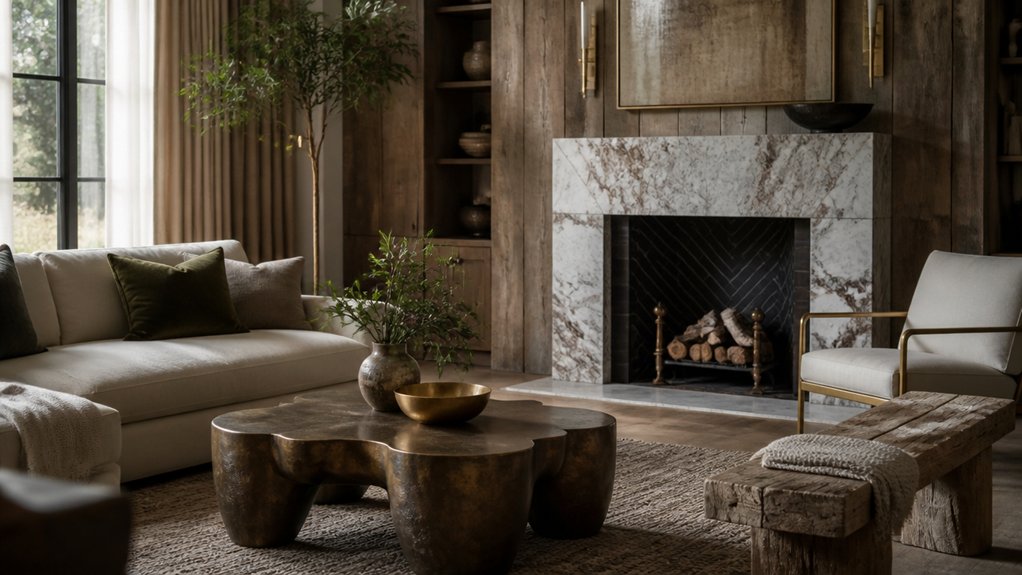
Layer reclaimed wood, marble, and metal by giving each a clear role: wood brings warmth, marble adds crisp pattern, and metal delivers polish. Match the wood’s undertones to the marble’s veining, then choose brass, blackened steel, or nickel to sharpen the contrast. Keep bold grain or dramatic veining in the lead, and let the other finishes stay quieter. Repeat a few textures and tones across the room for cohesion; thoughtful proportions make every pairing feel intentional. Explore how to adapt this balance to each space.
Key Takeaways
- Assign each material a clear role: reclaimed wood adds warmth, marble provides crisp contrast, and metal supplies definition and polish.
- Match wood tones to marble veining, using shared warm or cool undertones to create a cohesive palette.
- Balance visual weight: pair bold marble patterns with quieter wood grain and restrained metal accents.
- Vary textures and sheens, combining tactile wood, smooth stone, and selectively reflective or matte metal finishes.
- Repeat two or three finishes throughout the room to create rhythm and cohesion without visual clutter.
Balance Wood, Marble, and Metal
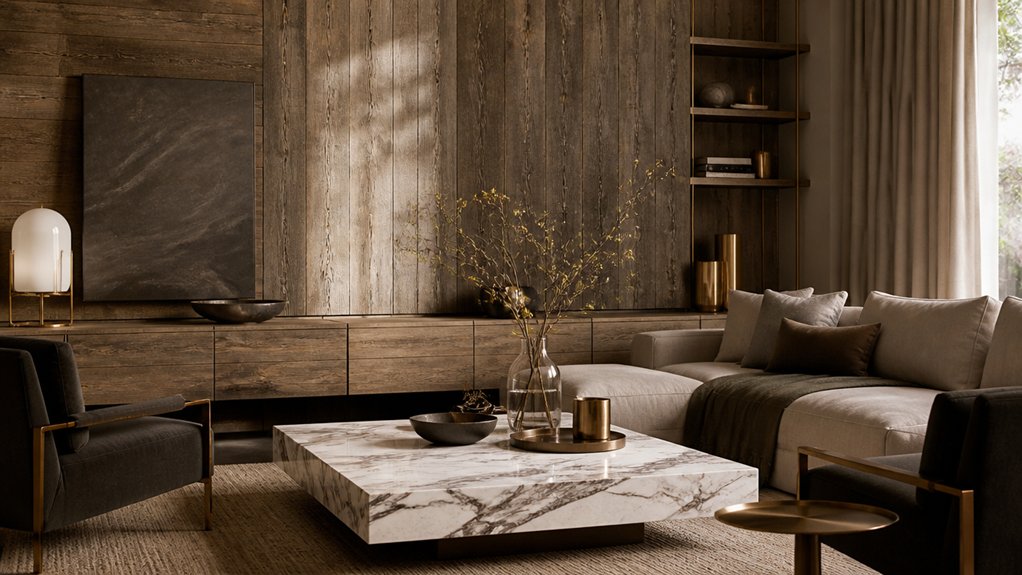
To balance reclaimed wood, marble, and metal, give each material a clear role rather than letting them compete. Let wood bring warmth: a reclaimed oak dining table or ceiling beam adds rustic charm and a lived-in focal point.
Use marble as a crisp counterpoint, perhaps on a kitchen island or side table, where its cool surface catches the light without dominating the room.
Let marble add a cool, light-catching contrast on an island or side table without overpowering the room.
Then introduce metal through a slim pendant, chair legs, or cabinet hardware. These industrial accents sharpen the composition and lend a polished edge.
Keep the mix intentional by varying scale and finish: pair substantial wood with a restrained marble surface and finely detailed metal. You’ll create contrast that feels curated, not crowded, and a layered interior that reads as both inviting and sophisticated.
Match Wood Tones to Marble Veining
Start by identifying your marble’s undertones—cool gray, creamy beige, or soft green.
Choose reclaimed wood that echoes the veining for a polished, cohesive look.
If the match feels too warm, balance it with cooler accents or a lighter wood finish.
Identify Marble Undertones
Marble’s veining can reveal whether its undertones lean warm, cool, or neutral—and that clue helps you choose reclaimed wood that feels intentional beside it. Look closely at the stone in natural light: honey, rust, or taupe threads suggest warmth, while blue-gray or crisp white markings signal cooler notes. Soft beige or balanced gray often reads neutral.
This undertone—not just the marble’s surface color—should guide your color palette and wood selection.
For warm marble, consider reclaimed oak, chestnut, or weathered pine with amber depth. Cool marble pairs comfortably with ash, pale oak, or timber washed to a silvery finish. If your stone reads neutral, you’ve got more flexibility; compare samples side by side before committing.
Check them in morning and evening light, since shifts can change how the materials relate. A well-matched pairing feels considered, not forced.
Echo Vein Colors
Once you’ve identified the marble’s undertones, pick up one of its vein colors in the reclaimed wood. A gray thread running through white marble, for example, can find a partner in weathered oak with cool, silvery grain. This quiet connection makes your materials feel curated, not matched from a set.
Look for subtle color variations in reclaimed boards rather than a uniform finish. Their aged surfaces offer shifts in tone that can echo vein colors without copying the stone too literally.
If your marble carries rust or honey streaks, choose wood with a trace of that hue in its knots or patina. Keep the reference selective: one shared note is often enough to link a dramatic slab and expressive timber.
You’ll create a polished, layered composition that feels considered from every angle.
Balance Wood Warmth
When marble veining runs cool, warm reclaimed wood can keep the room from feeling stark; honeyed oak or aged walnut brings inviting contrast without competing with the stone. Let the grain echo the veining’s movement, not imitate its color exactly.
With blue-gray marble, choose wood with golden undertones; with creamy stone, lean toward deeper, smoke-toned boards for definition. You’ll create a layered palette that feels considered, not matched from a showroom set.
Keep the balance intentional: use reclaimed wood on a vanity, shelving, or a single accent wall, then let marble hold the visual spotlight. A slim brass detail can bridge the materials and sharpen the finish.
This pairing gives Rustic charm a polished edge, while clean lines preserve Modern minimalism. You’ll get warmth, texture, and a distinctly elevated look without crowding the room.
Choose Metal Finishes for Contrast
Metal finishes can sharpen the contrast between reclaimed wood’s warmth and marble’s cool polish. Choose a finish that gives each surface a distinct visual edge.
Aged brass brings a golden glow to weathered grain, while blackened steel adds crisp definition beside pale stone. For a quieter effect, let metal patina soften hardware or trim; its subtle shifts in tone feel collected rather than showroom-new.
Polished finishes, such as chrome or nickel, reflect light and lend marble a brighter, more contemporary look. Match the finish to the room’s character, not every fixture: a deliberate mix can feel curated when undertones connect.
Consider how handles, lighting, and table legs catch the eye from different angles. Your metal choices should frame the wood and stone, adding contrast without competing with their natural marks.
Set the Right Material Proportions
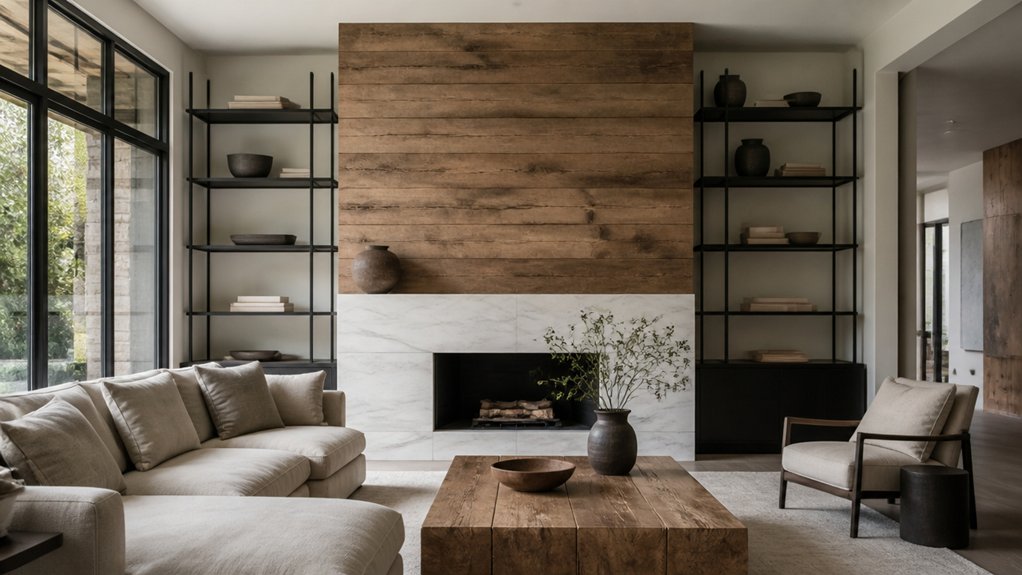
To keep reclaimed wood, marble, and metal in balance, give each material a clear role rather than equal billing. Let wood anchor the palette with warmth and grain. Then use marble as a crisp counterpoint through a substantial surface or a few sculptural accents. Reserve metal for fine punctuation: a slim frame, hardware, or a restrained lighting detail.
This hierarchy keeps the room polished without muting the Vintage patina that gives reclaimed boards their character. Judge proportions by visual weight, not just square footage. A dark, heavily textured beam can command attention, so pair it with quieter stone and lighter metal touches.
If the marble veining is bold, scale back the wood’s color variation and metal shine. You’ll preserve rustic charm while creating a considered mix that feels valuable, cohesive, and easy to live with.
Layer the Materials Room by Room
Once the proportions feel right, give each room its own take on the wood, marble, and metal mix.
Once the proportions feel right, let each room reinterpret the mix of wood, marble, and metal.
In your living room, anchor seating with a reclaimed-wood coffee table, then add a slim metal floor lamp and a marble side table for a polished focal point.
In the kitchen, let a veined Kitchen backsplash bring movement behind open reclaimed-wood shelves; choose metal hardware to sharpen the cabinetry.
Your bedroom can feel quieter: use a weathered wood headboard, marble-topped nightstands, and discreet metal sconces.
Carry the palette outdoors with an Outdoor patio dining set that pairs sturdy reclaimed boards with a metal frame, plus a small marble serving surface under cover.
Match each material to the room’s needs, and you’ll create a home that feels considered, functional, and distinctly yours.
Prevent Clashes in Color and Texture
Pair reclaimed wood’s warmth with cool marble and metal to create contrast without visual friction.
Vary rough grain, polished stone, and sleek finishes so each texture has room to stand out.
Repeat accent metals across the room, and your layered palette will feel intentional and polished.
Balance Warm and Cool Tones
Warm reclaimed wood can make cool marble and metal feel more inviting, while those cooler surfaces keep the room from looking too rustic or heavy. To balance these tones, choose a dominant finish, then use the others as accents.
Honeyed oak cabinetry, for example, pairs naturally with a pale marble island and brushed steel hardware. If your reclaimed boards lean red or amber, temper them with charcoal metal or softly veined stone rather than adding more golden hues.
Vintage furniture can bring depth to a neutral palette, while modern lighting adds a crisp, polished note. Repeat a warm or cool shade in small details, such as a frame or lamp base, to make the mix feel intentional.
You’ll create contrast that looks curated, not competing, and keeps the room welcoming.
Vary Texture Intentionally
Texture adds depth to a mix of reclaimed wood, marble, and metal, but too many competing surfaces can make a room feel busy. Let one material lead, then use quieter finishes to support it.
A reclaimed oak table with pronounced grain pairs well with smooth marble and restrained metal details; together, they create Textural contrast without visual noise. If your marble has dramatic veining, choose wood with a subtler surface and metal with a clean, understated profile.
This balance also helps prevent colors from competing: varied textures can enrich a palette, but strong patterns and highly reflective finishes may overwhelm it. Consider how each surface catches light and feels to the touch.
Aim for Material harmony, so every piece feels distinct yet connected, and your layered interior reads as polished, not crowded.
Repeat Accent Finishes
Once you’ve balanced texture, repeat accent finishes to make reclaimed wood, marble, and metal feel connected. Echo a warm brass tone in cabinet pulls, a slim floor lamp, and a mirror frame; the repetition creates rhythm without making the room look overly matched.
If your marble has cool gray veining, pick up that note in a steel detail or charcoal textile, then let the wood’s natural patina soften the palette. Keep each decorative accent purposeful: two or three recurring finishes usually feel polished, while too many competing metals can muddy the scheme.
Consider sheen as carefully as color. Pair brushed hardware with a matte surface treatment on nearby cabinetry, or repeat a subtle gloss in a pendant and tabletop accessories. These small links guide the eye and help varied materials read as a considered whole.
Frequently Asked Questions
How Can Reclaimed Wood Be Cleaned Without Damaging Its Patina?
For gentle wood cleaning, start with a soft, dry brush or vacuum’s brush attachment to lift loose dust.
Wipe the surface with a barely damp microfiber cloth, following the grain, then dry it promptly.
If grime remains, test a drop of mild, pH-neutral soap diluted in water on a hidden spot.
Avoid soaking, abrasive pads, bleach, and harsh solvents; they can strip patina.
Regular dusting supports patina preservation while keeping the wood’s aged warmth visible.
Should Reclaimed Wood Be Sealed Before Installation?
Yes—seal reclaimed wood before installation, but pause before choosing a finish: the wrong coating can erase the patina you’re trying to preserve.
First, let the boards acclimate indoors and confirm they’re clean and completely dry.
Then select Wood finishing products suited to their location and desired sheen.
Use careful sealing techniques, testing a hidden spot first.
A breathable matte sealer can guard against moisture and stains while keeping the grain’s weathered character visible.
How Can I Verify Reclaimed Wood Was Responsibly Sourced?
Verify reclaimed wood’s origin by asking your supplier for sourcing transparency: request the previous structure’s location, species, harvest history, and chain-of-custody records.
Look for Sustainable certification from a recognized organization, and confirm the certificate applies to that specific product, not just the company.
Check invoices, permits, and salvage documentation, then contact the certifier if details seem vague.
A reputable seller will welcome scrutiny and help you trace each board’s story before it enters your home.
What Maintenance Does Marble Require in a High-Traffic Area?
In a high-traffic area, protect marble with regular sealing, prompt spill cleanup, and daily dust mopping to prevent stains and scratches.
Use pH-neutral cleaner; acidic products can etch its polished surface.
Place mats at entrances and felt pads beneath furniture to limit grit and impact.
Schedule professional Marble polishing when wear dulls the finish.
If metal borders sit nearby, wipe them dry to prevent Metal corrosion and preserve the crisp contrast between stone and gleaming details.
Can Reclaimed Wood, Marble, and Metal Work in a Small Space?
Yes, you can combine reclaimed wood, marble, and metal in a small space when you keep the mix balanced. Choose one dominant material, then use the others in smaller touches, such as a slim marble tabletop or metal lighting.
Repeat warm or cool tones for easy color coordination, and add decorative accents sparingly. Reflective marble and polished metal can brighten the room, while reclaimed wood brings texture and warmth without overwhelming your compact layout.